

Golf Club Fitting
December 13, 2025
Is Golf Club Fitting Worth It for High Handicappers?
If you're a high handicapper, you've probably heard conflicting advice about club fitting. Some say fitting is only for good players. Others insist everyone should get fitted. So what's the truth?
Here's the honest answer: club fitting can help high handicappers, but the benefits are different than they are for low handicappers. Understanding what fitting can and can't do for your game helps you decide whether it's worth the investment right now.
This guide breaks down when fitting makes sense for high handicappers, when to wait, and what alternatives exist if you're not ready for a full fitting.
The Case for Fitting High Handicappers
Let's start with why fitting can actually help players who are still developing their games.
Equipment Mistakes Compound Skill Issues
High handicappers already struggle with consistency. Playing clubs that don't fit makes that worse. If your clubs are too long, too short, too heavy, or have the wrong lie angle, you're fighting both your swing and your equipment.
Properly fitted clubs remove one variable from the equation. You still need to develop your swing, but at least your equipment isn't working against you.
Bad Specs Create Bad Habits
When clubs don't fit, golfers unconsciously compensate. Too-long clubs force you to stand too upright. Too-stiff shafts teach you to swing harder than necessary. Wrong lie angles make you aim incorrectly.
These compensations become ingrained habits that persist even after you get better equipment. Fitting early can prevent bad habits from forming in the first place.
Length and Lie Matter for Everyone
Two specs matter regardless of skill level: length and lie angle.
Club length affects posture, balance, and contact. Playing the wrong length makes solid contact harder—something high handicappers already struggle with.
Lie angle affects aim and ball flight direction. If your lie angle is wrong, you could be aimed left or right without knowing it. No amount of practice fixes an equipment-induced aim problem.
Shaft Flex Affects Ball Flight
Even high handicappers can be hurt by drastically wrong shaft flex. If you're playing stiff shafts but swing 80 mph, you're losing distance and fighting a slice that's partially equipment-induced.
Getting into the right flex ballpark helps high handicappers see more consistent ball flight, even if their swings aren't yet consistent.
The Case Against Fitting High Handicappers
Now the other side. There are legitimate reasons to wait on fitting if you're a higher handicap player.
Your Swing Is Still Changing
A proper fitting captures your swing as it is today. If you're taking lessons and actively changing your swing, today's optimal specs may not work next month.
High handicappers often see rapid improvement when they start practicing seriously. A fitting done at 25 handicap may not suit you at 18 handicap six months later.
Contact Quality Affects Fitting Data
Launch monitor fittings rely on capturing your typical ball flight and impact conditions. If you're mishitting half your shots, the data becomes noisy and harder to interpret.
A fitter can work around inconsistency to some degree, but fitting becomes more precise when you can hit the center of the face with some regularity.
You Might Not Notice the Difference
Subtle spec differences—like 1° of lie angle or 5 grams of shaft weight—matter most to players with consistent swings who can feel and see small changes.
A high handicapper might not perceive or benefit from fine-tuned adjustments. The fitting is still valid, but you may not get as much value per dollar as a more consistent player would.
Cost vs. Lesson Value
If budget is limited, lessons often provide more improvement per dollar than fitting for high handicappers. A better swing with mediocre equipment typically beats a mediocre swing with perfect equipment.
This isn't either/or forever—eventually you want both. But if you can only afford one right now, instruction usually wins at higher handicaps.
When High Handicappers Should Get Fitted
Given both sides, here's when fitting makes sense for higher handicap players.
You're Playing Seriously Mismatched Equipment
If your clubs came from a garage sale, were handed down from someone significantly different in height, or were bought without any fitting consideration, a basic fitting helps.
You don't need a $400 Tour fitting. But getting into the right length, lie angle, and flex range removes equipment as a limiting factor.
Your Swing Has Stabilized
If you've taken lessons, practiced consistently, and your swing isn't changing dramatically week to week, fitting becomes more valuable. The data captured reflects your actual swing rather than a snapshot of swing-in-progress.
You don't need a perfect swing. You need a repeatable swing—whatever that looks like for you.
You're Buying New Clubs Anyway
If you're purchasing new equipment regardless, getting fitted during that purchase makes sense. Most retailers offer free or discounted fitting with purchase.
Even if your swing isn't yet stable, starting with clubs in the right ballpark beats buying random off-the-rack specs.
Physical Characteristics Require Adjustments
If you're particularly tall, short, or have arm length that doesn't match standard proportions, fitting helps at any skill level. Standard clubs literally don't fit you, and that's not something skill development fixes.
When High Handicappers Should Wait
Consider postponing fitting in these situations.
You Just Started Playing
If you've been golfing less than a year and haven't taken any lessons, it's too early. Your swing will change dramatically as you develop basic fundamentals.
Focus on learning to swing first. Fitting comes later when you have something consistent to fit.
You're Actively Rebuilding Your Swing
If you're in the middle of a major swing overhaul with an instructor, wait until the changes settle in. Fitting during a transition period captures the old swing, the new swing, or some inconsistent mix of both.
Budget Is Extremely Limited
If choosing between fitting and lessons, choose lessons. If choosing between fitting and practice range time, choose practice. Equipment optimization provides smaller returns than skill development at high handicaps.
Get fitted when you can afford it without sacrificing the fundamentals that matter more.
Fitting Alternatives for High Handicappers
You don't need a full professional fitting to improve your equipment situation.
Static Fitting
A static fitting measures your height, wrist-to-floor distance, and hand size to recommend length, lie angle, and grip size. No launch monitor needed.
This catches the biggest mismatches without the cost of a full dynamic fitting. Many retailers offer this free.
Demo Days
Manufacturer demo days let you hit clubs on a launch monitor at no cost. You won't get personalized spec recommendations, but you can compare how different clubs feel and perform for your swing.
DIY Assessment
You can evaluate some fitting basics yourself. Check if your posture feels natural at address. Look at your divots to see if you're hitting toe or heel heavy. Notice if your grips feel too small or large.
Our guide on how to fit your golf clubs at home walks through what you can assess without professional help.
Budget Fitting Options
Several alternatives exist between free and premium fitting. Our golf club fitting cost guide covers what every option costs, including the free ones.
App-Based Analysis
Technology now allows equipment analysis through your smartphone. You can identify your clubs, assess your setup, and flag potential issues without an in-person fitting appointment.
What to Prioritize in a High Handicap Fitting
If you do get fitted as a high handicapper, focus on these specs first.
Length
Getting club length right affects posture, balance, and contact more than almost any other spec. This should be nailed down regardless of skill level.
Lie Angle
Wrong lie angle creates directional misses that feel like swing problems. Getting lie angle correct ensures you're actually aimed where you think you're aimed.
Shaft Flex (Ballpark)
You don't need the perfect shaft. You need to be in the right general category—regular vs. stiff vs. senior. Major flex mismatches hurt everyone.
Grip Size
Grips that are too small or large affect your ability to release the club properly. This is an easy fix that helps immediately.
Don't Over-Optimize
As a high handicapper, don't obsess over shaft tip profiles, swing weights to the decimal, or exotic customizations. Get the basics right and leave fine-tuning for when your swing matures.
The Bottom Line
Golf club fitting can help high handicappers, but with realistic expectations. Fitting won't fix your slice or add 30 yards—those improvements come from swing development.
What fitting does is remove equipment as a limiting factor. Clubs that fit your body and match your swing speed let you develop without fighting your gear.
If you're just starting out, focus on lessons and practice first. If you've been playing a while and have a reasonably stable swing, basic fitting helps. If your physical dimensions differ significantly from average, fitting matters regardless of handicap.
Match your fitting investment to your commitment level. A simple static fitting or DIY assessment works fine for casual players. More serious high handicappers benefit from a basic launch monitor session to confirm specs.
The goal is equipment that doesn't hurt you—not equipment that's Tour-level optimized. Get the basics right and let your improving swing do the rest.
🎯 Want the full picture?
See our guide to free golf club fitting tools — check your flex, weight and length, then grade your whole bag free, no launch monitor. See the free tools →
Frequently asked questions
At what handicap should you get fitted for golf clubs?
There’s no handicap threshold — swing stability matters more than the number. If your swing is repeatable (not perfect), fitting produces useful data even at a 25 handicap. Get fitted at any handicap when you’re buying new clubs anyway, and at any skill level if you’re notably taller or shorter than average.
Is club fitting worth it for high handicappers?
Yes, with realistic expectations. Fitting won’t fix a slice or add 30 yards — that comes from swing development. What it does is remove equipment as a limiting factor: the right length and lie for solid contact and true aim, a ballpark-correct shaft flex, and grips that fit your hands.
Should a high handicapper spend on lessons or a fitting first?
Lessons, if you must choose — a better swing with mediocre equipment beats a mediocre swing with perfect equipment, and instruction returns more per dollar at higher handicaps. The exception: if you’re buying clubs anyway, take the free or discounted fitting that comes with the purchase.
What club specs matter most for a high handicapper?
In order: length (drives posture and contact), lie angle (a wrong lie is a built-in aim error), ballpark shaft flex (regular vs stiff vs senior), and grip size. Skip the fine-tuning — tip profiles, swing weights to the decimal — until your swing matures.
Are premium golf clubs worth it for high handicappers?
Usually not. A midrange game-improvement set in the right specs outperforms a premium set in the wrong ones, and high handicappers rarely benefit from the fine differences premium lines sell. Put the savings toward lessons or a basic fitting instead.
Can you get fitted with an inconsistent swing?
Yes, to a point. A good fitter reads through moderate inconsistency and can still nail length, lie, and flex category. You need a repeatable swing, not a good one — if half your shots are mishits, start with a static fitting and lessons, then return for the launch-monitor session.
Want to know if your current clubs are hurting your game?
FitMyGolfClubs analyzes your equipment and identifies potential fitting issues—no appointment needed. Download the app and see what your clubs reveal, regardless of your handicap.
On a computer? You can also grade your bag in your browser — no app to install.
Related Articles
Golf Club Fitting
October 8, 2026
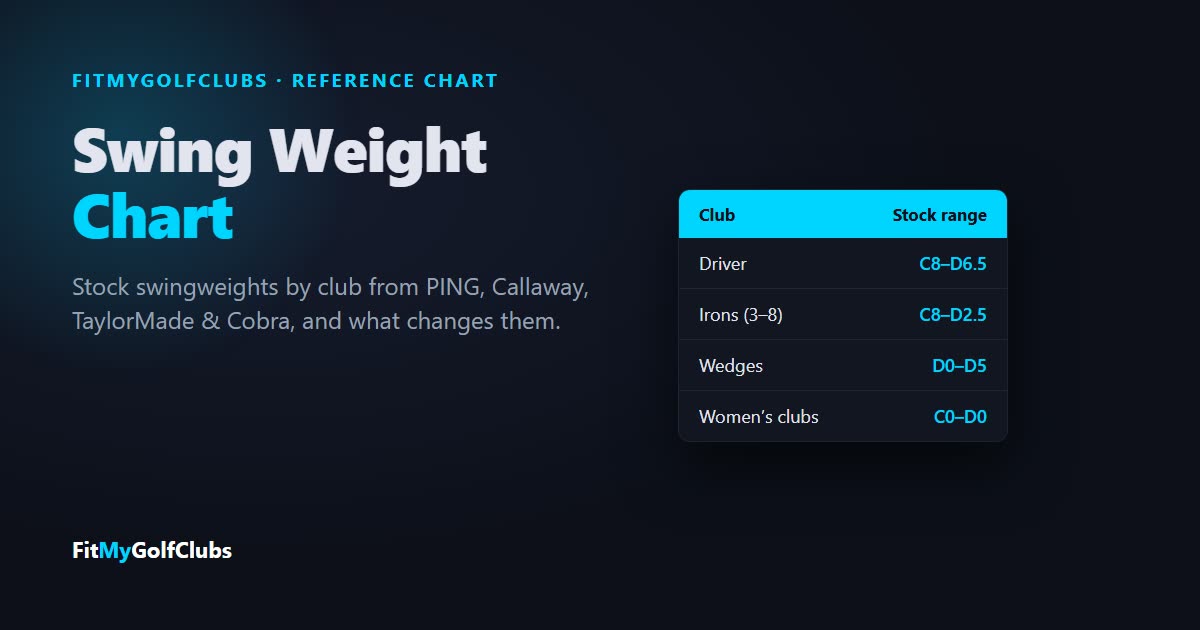
Swing Weight Chart: Standard Swingweights by Club and Brand
Swing weight chart: the A0–G9 scale, stock swingweights for drivers, irons and wedges from PING, Callaway, TaylorMade and Cobra, and what changes them.
Golf Club Fitting
October 8, 2026
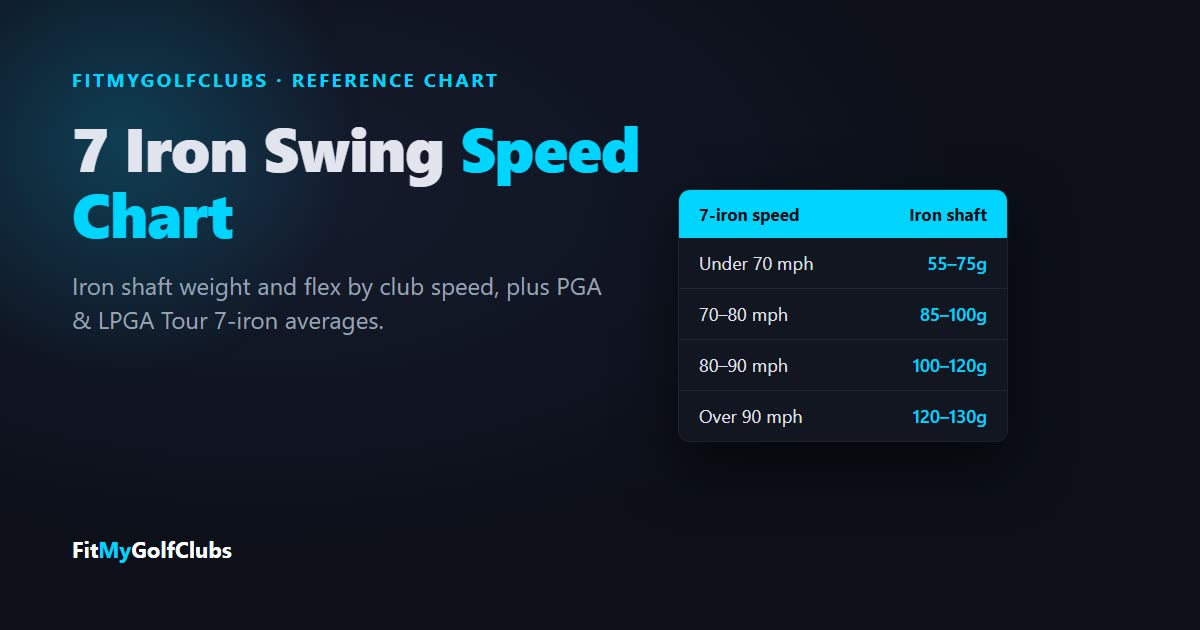
7 Iron Swing Speed Chart: Iron Shaft Weight, Flex & Carry
7 iron swing speed chart: iron shaft weight and flex by club speed, PGA (92 mph) and LPGA (78 mph) Tour averages, and 7-iron carry by speed.
Golf Club Fitting
October 8, 2026
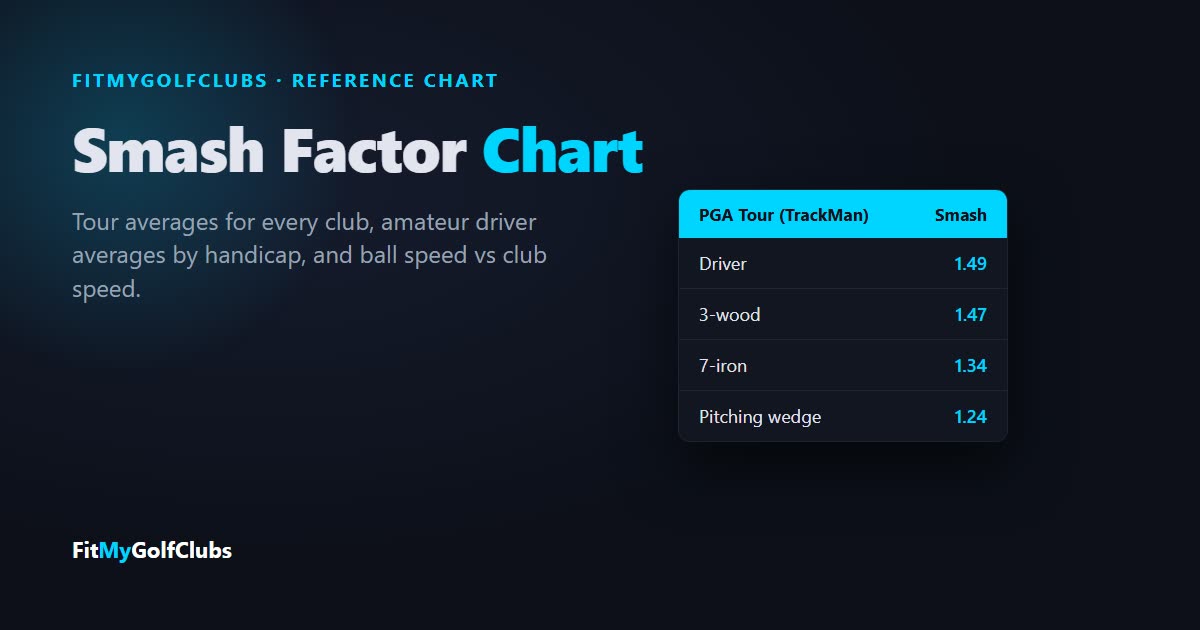
Smash Factor Chart: Tour Averages by Club + Ball Speed
Smash factor chart by club from TrackMan PGA and LPGA Tour averages, amateur driver averages by handicap, and a club speed to ball speed table.


© 2026 FitMyGolfClubs. All rights reserved. | Patent Pending
Contact: sean@fitmygolfclubs.com