
Golf Club Fitting
December 23, 2025
How often should you replace your golf clubs? It depends on which club, how often you play, and whether you're chasing performance or just maintaining playability.
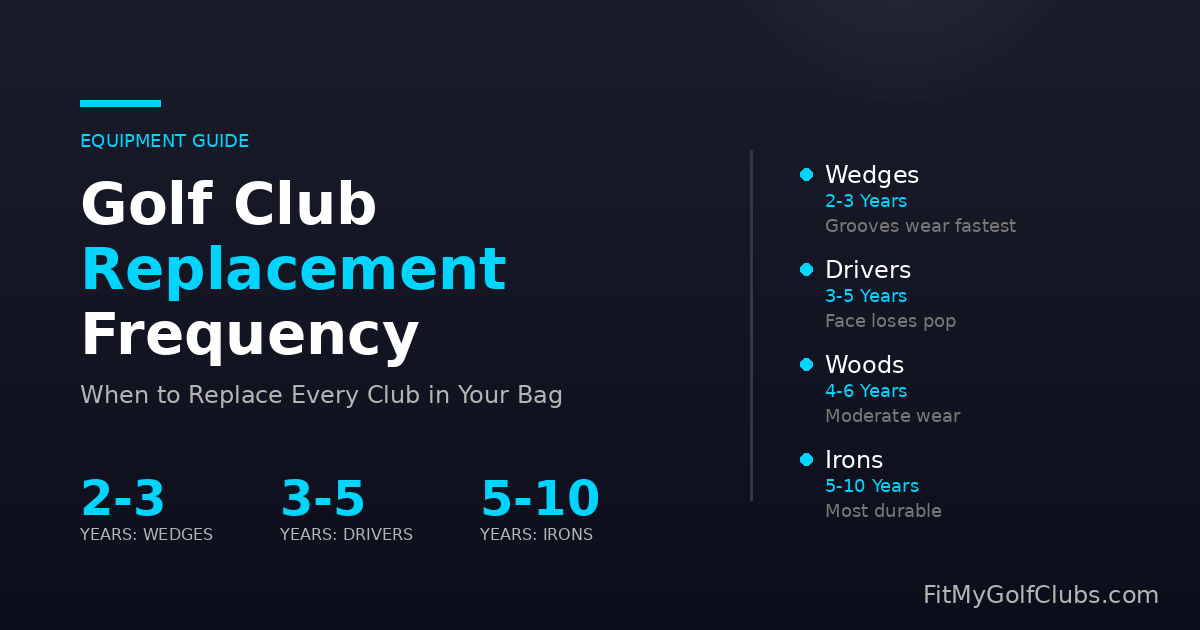
Here's the short answer: wedges need replacing every 2-3 years, drivers every 3-5 years, and irons can last 5-10 years. But those numbers mean nothing without context.
This guide breaks down the replacement frequency for every club in your bag, the warning signs that it's time, and how to avoid replacing clubs that still have life left.
Golf Club Replacement Frequency by Club Type
Not all clubs wear at the same rate. Your wedges take a beating every round while your 4-iron might go weeks without leaving the bag. Here's what the data shows for each category.
Wedges: Every 2-3 Years (or 65-75 Rounds)
Wedges have the shortest lifespan in your bag. The grooves that create spin wear down with every shot, especially from sand and tight lies.
Fresh wedge grooves can generate 9,000+ RPM on a full swing. Worn grooves might produce 7,000 RPM or less. That's the difference between a ball that checks and one that releases off the back of the green.
The math: If you play 30 rounds per year and hit your sand wedge 3-4 times per round, that's 90-120 impacts annually. Add practice sessions and you're looking at 150-200 strikes per year. After 2-3 years, groove edges round off significantly.
The test: Run your fingernail across the grooves. Fresh grooves catch your nail with a sharp edge. Worn grooves feel smooth. If yours feel smooth, you're losing spin.
For more signs your equipment needs attention, see our guide on how to tell if your golf clubs are too old.
You also can run any individual club through our free Single-Club Fit Grader for a fit-based answer specific to your goals.
Drivers: Every 3-5 Years
Driver faces are engineered to flex at impact—that's what creates ball speed. Over time, this repeated flexing causes metal fatigue, and the face loses its "pop."
High-frequency players (100+ rounds per year) may notice performance decline after 3-4 years. Weekend golfers can stretch a driver to 7+ years without significant loss.
Warning signs:
- Shots that used to carry 240 now carry 225 with the same swing
- Visible wear patterns, dents, or scratches on the face
- The impact sound has changed (duller, less crisp)
Technology factor: Driver technology improves meaningfully every 4-5 years. A 2015 driver versus a 2025 driver shows real gains. But 2022 versus 2025? Probably not worth upgrading for most players.
Fairway Woods: Every 5-7 Years
Fairway woods fall between drivers and irons in terms of wear. The face experiences less stress than a driver (slower swing speeds) but more than irons (still hitting off the deck).
Most golfers can play the same fairway woods for 5+ years without performance issues. Replace when you notice distance loss or when technology has leapfrogged your current model.
Hybrids: Every 5-7 Years
Similar to fairway woods, hybrids have a long lifespan. The hollow construction and moderate swing speeds mean less wear over time.
Unless you're hitting hybrids off hardpan daily, expect 5+ years of solid performance. The face won't wear like wedge grooves, and shaft fatigue is minimal at hybrid swing speeds.
Irons: Every 5-10 Years
Irons are the workhorses of your bag—and surprisingly durable. A quality set of forged or cast irons can last a decade or more with proper care.
What actually wears:
- Grooves (but slower than wedges due to less sand/rough contact)
- Grips (replace every 1-2 years regardless)
- Lie angles can bend from repeated turf impact
What doesn't wear: The clubhead itself. Unless you're hitting off rocks, iron heads maintain their integrity for years.
The bigger question with irons isn't wear—it's whether they still fit your game. Your swing changes over 5-10 years. Shafts that fit you in 2015 might not fit your 2025 swing speed.
Learn more about how club wear affects performance in our article on do golf clubs wear out.
Putters: 10+ Years (Basically Forever)
Putters don't wear out in any meaningful way. The face insert might show cosmetic wear, but performance remains consistent for decades.
Replace your putter when you lose confidence in it—not because it's worn. Many tour pros use the same putter for 15-20 years.
Factors That Affect Golf Club Replacement Frequency
The timelines above assume average use. Your actual replacement frequency depends on several variables.
Playing Frequency
A golfer who plays 100 rounds per year wears clubs 3-4x faster than someone playing 25 rounds. Adjust expectations accordingly.
High frequency (75+ rounds/year): Use the shorter end of replacement rangesModerate frequency (30-75 rounds/year): Use the middle of rangesLow frequency (under 30 rounds/year): Use the longer end—your clubs may outlast the averages significantly
Practice Habits
Range sessions accelerate wear, especially for wedges. Hitting 50 wedge shots off mats twice a week adds 5,000+ impacts per year—more than most golfers accumulate in actual rounds.
If you practice frequently, your wedges may need replacing annually rather than every 2-3 years.
Playing Conditions
Courses with firm, sandy conditions wear grooves faster than soft, lush courses. Bunker practice accelerates wedge wear dramatically.
Hitting off mats (vs. grass) can also affect clubhead wear, though the impact is debated.
Maintenance Habits
Clean clubs last longer. Dirt and debris in grooves accelerate wear. A post-round wipe-down extends groove life measurably.
Proper storage matters too. Extreme temperatures (hot car trunks, freezing garages) can affect shaft integrity and grip degradation.
Signs It's Time to Replace (Beyond the Timeline)
Replacement schedules are guidelines, not rules. These symptoms indicate it's time regardless of how old your clubs are.
Performance Decline
The clearest sign: shots that used to work don't anymore. If your 56-degree wedge won't hold greens like it used to, worn grooves are likely the culprit.
Track your distances. A sudden 5-10 yard drop with a specific club (without swing changes) suggests equipment issues.
Visible Damage
- Dents or dings on clubfaces
- Cracks in graphite shafts
- Rust on steel shafts
- Worn-through face inserts on putters
Any structural damage warrants replacement. Playing damaged clubs risks injury and guarantees poor performance.
Feel Changes
Shafts can develop micro-fractures that affect feel before causing visible damage. If a club suddenly feels "dead" or unpredictable, the shaft may be compromised.
This is especially common in graphite driver and fairway wood shafts after 4-5 years of heavy use.
Your Game Has Changed
This isn't about wear—it's about fit. If you've gained or lost significant swing speed, your current shafts may no longer match your game.
A player who swung 95 mph five years ago but now swings 85 mph might be fighting too-stiff shafts. The clubs aren't worn; they're just wrong.
Consider a professional fitting or equipment analysis if your game has changed significantly.
When NOT to Replace Your Clubs
Golf marketing creates pressure to upgrade constantly. Resist it when these conditions apply.
Your Clubs Were Custom Fit
Properly fitted clubs—matched to your height, swing speed, and tendencies—often outperform newer off-the-rack options. The fit matters more than the model year.
A 2018 set fitted to your specs beats a 2025 set with standard specs for most golfers.
You Play Infrequently
If you play 10-15 rounds per year, your equipment wear is minimal. A 10-year-old set could have decades of life left at that usage rate.
Don't replace functional clubs just because the calendar says so.
You Haven't Identified the Problem
Before buying new clubs, know what's actually wrong. Is it wear? Wrong specs? Or just a swing issue?
Buying a $600 driver won't fix a slice caused by swing mechanics. Get diagnosed before you prescribe treatment.
If you're unsure whether your current clubs fit properly, read our guide on should you get fitted for golf clubs.
Cost-Effective Replacement Strategies
Replacing your entire bag every few years isn't realistic for most golfers. Here's how to prioritize.
Replace Wedges First
Wedges have the biggest performance drop-off when worn and the lowest replacement cost ($100-150 each). Prioritize keeping fresh wedges in your bag.
Many serious golfers replace wedges every 1-2 years while keeping the same irons for a decade.
Regrip Before Replacing
Worn grips feel like worn clubs, but regripping costs $8-15 per club versus hundreds for new equipment. Fresh grips make old clubs feel new.
Consider Used/Previous Generation
Last year's driver model performs nearly identically to this year's but costs 40-50% less. The performance gap between generations is smaller than marketing suggests.
Get Analyzed Before Buying
Know what's actually wrong before spending money. You might discover your 8-year-old irons are fine, but your shaft flex is wrong for your current swing speed.
FitMyGolfClubs offers free equipment analysis that evaluates your clubs across multiple factors. No sales pitch—just data on what's helping and hurting your game.
The Bottom Line
Golf club replacement frequency varies by club type:
- Wedges: 2-3 years (65-75 rounds)
- Drivers: 3-5 years for frequent players, longer for weekend golfers
- Fairway woods/Hybrids: 5-7 years
- Irons: 5-10 years
- Putters: Basically never (unless confidence fades)
But timelines are just starting points. Pay attention to performance changes, visible wear, and whether your clubs still fit your current game.
The most expensive mistake isn't keeping clubs too long—it's replacing clubs that weren't the problem.
Want to know if your clubs need replacing?
FitMyGolfClubs analyzes your entire bag and identifies what's actually affecting your performance—no appointment needed. See which clubs are helping your game and which are holding you back.
Frequently asked questions
How often should you replace golf clubs?
Wedges every 2-3 years (65-75 rounds), drivers every 3-5 years, fairway woods and hybrids every 5-7 years, irons every 5-10 years, and putters basically never. Play frequency shifts these: 100 rounds a year roughly halves them, 15 rounds a year roughly doubles them.
Which golf club should I replace first?
Wedges. They have the biggest performance drop-off when worn and the lowest replacement cost ($100-150 each). Many serious golfers replace wedges every 1-2 years while keeping the same irons for a decade.
Do I need to replace clubs just because they are old?
No. Properly fitted or lightly used clubs can last far beyond the averages. Replace based on real triggers — measurable performance decline, visible wear, a swing change, or a 5-7+ year technology gap — not calendar age.
How often should I replace my grips?
Every 1-2 years, or roughly every 40-60 rounds. Fresh grips are the cheapest way to make old clubs feel new and prevent the over-gripping that adds swing tension.
On a computer? You can also grade your bag in your browser — no app to install.
Related reading
- When Should You Replace Your Golf Clubs? — The real triggers beyond the calendar.
- How Much Does Golf Club Fitting Cost? — Prices at every provider, plus free and low-cost alternatives.
- Golf Driver Fitting: Is It Worth It? — What a driver fitting costs and who it helps.
Related Articles
Golf Club Fitting
October 8, 2026
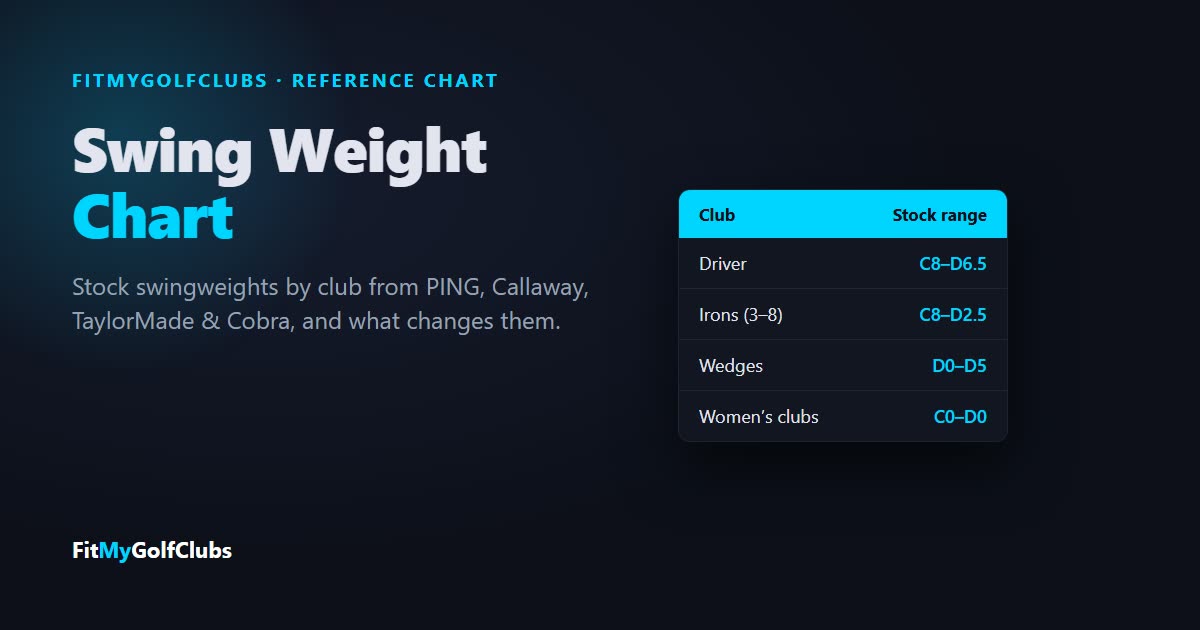
Swing Weight Chart: Standard Swingweights by Club and Brand
Swing weight chart: the A0–G9 scale, stock swingweights for drivers, irons and wedges from PING, Callaway, TaylorMade and Cobra, and what changes them.
Golf Club Fitting
October 8, 2026
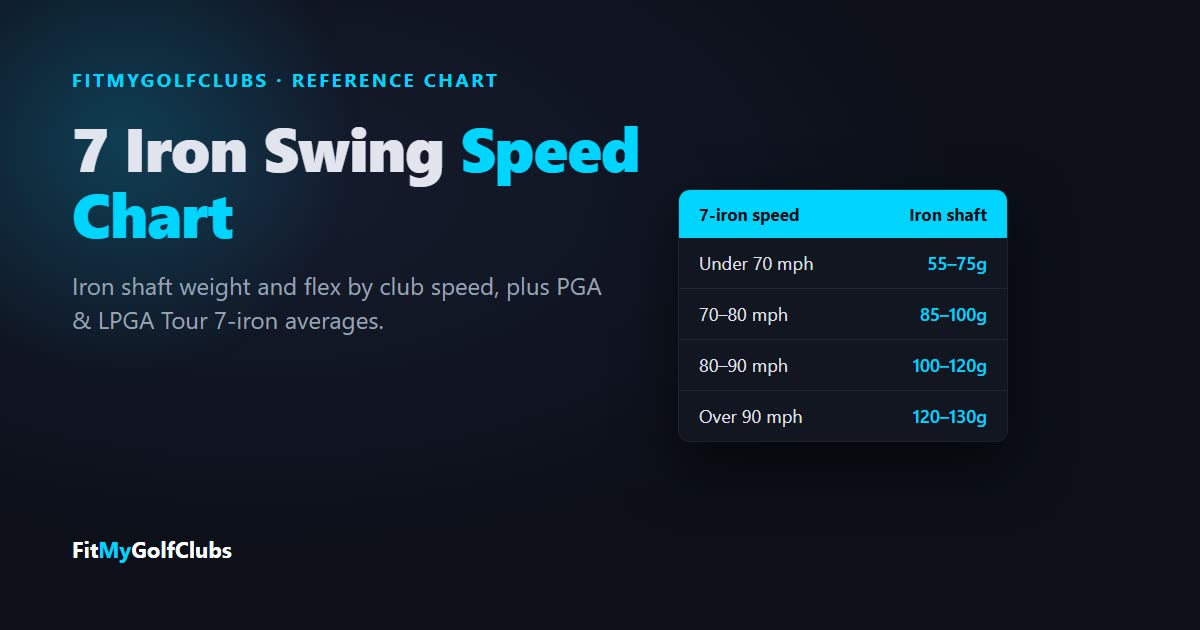
7 Iron Swing Speed Chart: Iron Shaft Weight, Flex & Carry
7 iron swing speed chart: iron shaft weight and flex by club speed, PGA (92 mph) and LPGA (78 mph) Tour averages, and 7-iron carry by speed.
Golf Club Fitting
October 8, 2026
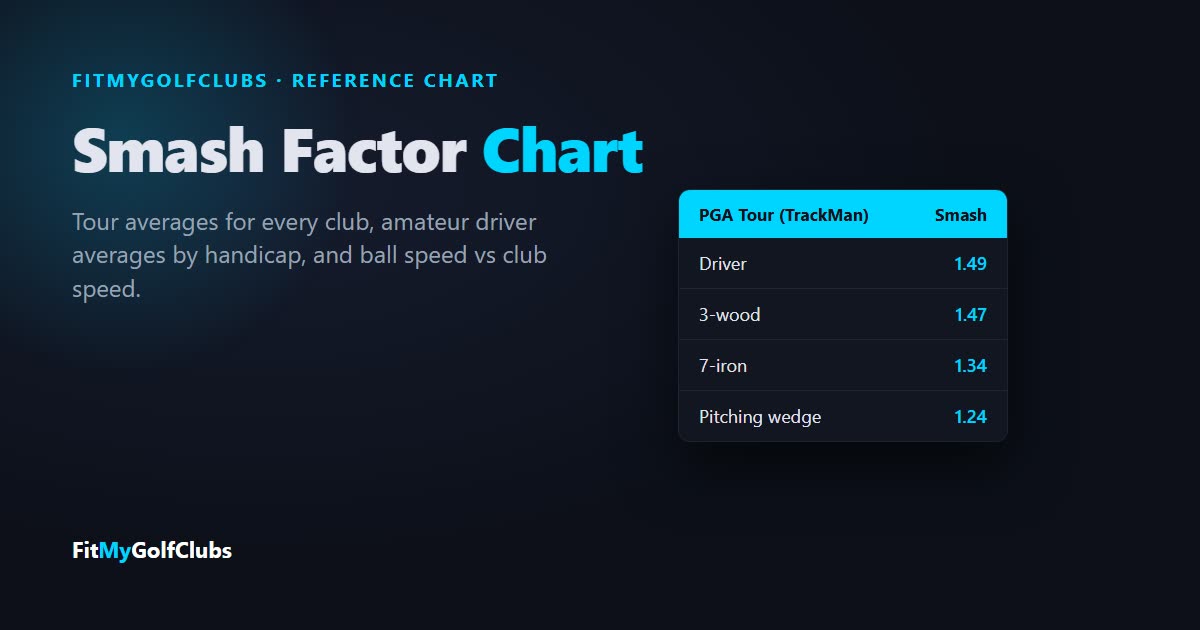
Smash Factor Chart: Tour Averages by Club + Ball Speed
Smash factor chart by club from TrackMan PGA and LPGA Tour averages, amateur driver averages by handicap, and a club speed to ball speed table.


© 2026 FitMyGolfClubs. All rights reserved. | Patent Pending
Contact: sean@fitmygolfclubs.com