

Golf Club Fitting
December 7, 2025
Most golf clubs last 3-7 years for regular players—but age alone doesn't tell the whole story. Here's how to know if your clubs are holding back your game.
---
The Short Answer
If you play 2-3 times per week, your wedges typically need replacing every 2-3 years and your irons every 5-10 years. Drivers last 3-5 years and fairway woods 5-7 years. But here's what most golfers get wrong: calendar age matters less than wear, technology gaps, and whether your clubs still fit your current swing.
A 10-year-old set of well-maintained Titleist irons might outperform brand-new off-the-rack clubs that don't fit you. Meanwhile, heavily-used wedges can lose their effectiveness in just 2 years.
Let's break down exactly how to evaluate your clubs.
---
5 Signs Your Golf Clubs Are Too Old
1. Your Wedge Grooves Are Worn Smooth
This is the most common issue—and the easiest to check. Run your fingernail across the face of your wedges. Fresh grooves should catch your nail with a distinct edge. If they feel smooth or rounded, you're losing spin.
The science: Worn grooves can cost you 1,500-2,000 RPM of spin on approach shots. That's the difference between a ball that checks and one that rolls off the back of the green.
Timeline: If you practice regularly and play weekly, wedge grooves typically wear down in 65-75 rounds. For most golfers, that's 2-3 years.
2. Your Shafts Have Lost Their Feel
Graphite shafts fatigue over time, especially in drivers and fairway woods. Steel shafts are more durable but can develop micro-fractures from repeated impact.
Warning signs:
- Shots that used to feel solid now feel "dead"
- Inconsistent ball flight with the same swing
- A new vibration or buzzing at impact
Timeline: Driver shafts typically last 3-5 years of regular use. Steel iron shafts can last 10+ years if not abused.
3. The Technology Gap Is 5+ Years
Golf club technology genuinely improves—but not as fast as manufacturers want you to believe. The meaningful threshold is about 5 years.
What's actually changed:
- Driver faces are more forgiving on mishits (higher MOI)
- Irons have better weight distribution and lower centers of gravity
- Adjustable hosels let you fine-tune loft and lie
A 2015 driver versus a 2025 driver? You'll likely see real gains. A 2022 versus 2025? Probably not worth the upgrade for most players.
4. Your Grips Are Hard, Slick, or Cracked
This one's obvious but often ignored. Worn grips force you to squeeze harder, creating tension that kills your swing.
The test: If your grips feel slick when wet, or you can see shiny spots where your hands sit, it's time.
Good news: Regripping costs $5-15 per club and makes old clubs feel new. This is maintenance, not replacement.
5. Your Driver Face Shows Wear Patterns
Modern driver faces are designed to flex in specific ways. Heavy use creates wear patterns—small dents and scratches—that can alter ball flight.
What to look for:
- Visible dents or rough patches on the face
- Paint wearing through to bare metal
- Cracking around the face perimeter (rare but serious)
Timeline: High-frequency players (100+ rounds/year) may need a new driver every 3-4 years. Weekend players can go 5-7 years.
Want to evaluate a specific club objectively? Our free Single-Club Fit Grader takes your launch monitor numbers and tells you whether that club is still fitting you — before you replace it.
---
When Age Doesn't Matter
Before you buy a new set, consider these situations where your current clubs might be just fine:
You play infrequently. If you're a 10-15 rounds per year golfer, your equipment wear is minimal. A 10-year-old set could have decades of life left.
Your clubs were custom fit. Properly fitted clubs—matched to your height, swing speed, and tendencies—often outperform newer off-the-rack options. The fit matters more than the model year.
You maintain your equipment. Clean clubfaces, fresh grips, and proper storage extend club life significantly.
You haven't changed physically. If your swing speed, flexibility, and playing style are the same as when you bought your clubs, they're probably still appropriate.
Age is just one factor. The real question is when you should actually replace your golf clubs—and when age doesn't matter at all.
---
How to Check Your Clubs Without Visiting a Pro
You don't need an expensive fitting session to evaluate your equipment. Here's what you can do at home:
The Groove Test
Use a fingernail or credit card edge on your wedges and short irons. Compare the feel to a new club at a golf store. If yours feel noticeably smoother, they're losing spin.
The Shaft Flex Check
Grip your driver at address and waggle it. Does the flex feel consistent, or does the shaft feel "loose" or unpredictable? Fatigued shafts lose their responsiveness.
The Lie Angle Test
Take your normal stance with an iron on a hard surface. Is the sole flat on the ground, or is the toe or heel lifted? If it's not flat, your lie angle may have bent over time—or may have never been right.
The Grip Test
Squeeze your grip normally. If you can feel the hard underlisting beneath the rubber, your grips are worn too thin.
The Technology Comparison
Check when your clubs were released (Google the model). If it's been 7+ years, at minimum look at what's changed in your category.
If your clubs are getting old but budget is tight, consider whether you should get fitted for golf clubs before buying new ones. Sometimes a fitting reveals your current clubs just need adjustments.
---
The Smart Approach: Analyze Before You Buy
Here's what too many golfers do: They feel like something's off, walk into a golf store, get talked into a new $800 driver, and wonder why their slice didn't disappear.
The problem isn't always the equipment—and when it is, buying new isn't always the answer.
Before spending money, you need to understand:
- Which clubs in your bag are actually costing you strokes
- Whether your current specs (length, lie, shaft flex) still match your swing
- If the issue is equipment age or equipment fit
This is exactly why we built FitMyGolfClubs. Our AI analyzes your entire bag—club age, specifications, and how everything works together—to identify what's actually holding you back. You might discover that your 8-year-old irons are fine, but your shaft flex is wrong for your current swing speed.
The result: You make smart decisions based on data, not guesswork or sales pressure.
---
The Bottom Line
Your golf clubs aren't like milk—they don't have an expiration date. The question isn't "how old are my clubs?" but rather:
1. Are they worn? (Check grooves, grips, faces)
2. Are they outdated? (5+ year technology gap)
3. Do they still fit? (Your swing may have changed)
If you answer "yes" to any of these, it's worth investigating. But investigating doesn't mean buying—it means understanding what you have and what you actually need.
---
Ready to Find Out?
FitMyGolfClubs offers a free bag analysis that evaluates your equipment across 8 different factors. No sales pitch, no pressure to buy—just an honest assessment of whether your clubs are helping or hurting your game.
Curious how your club age compares? FitMyGolfClubs grades your bag on age, technology, and 6 other factors to show exactly what needs attention.
On a computer? You can also grade your bag in your browser — no app to install.
Frequently asked questions
How long do golf clubs last?
For a regular player (2–3 rounds a week), wedges last 2–3 years, drivers 3–5 years, fairway woods 5–7 years, and irons 5–10 years. Play 10–15 rounds a year and those timelines stretch dramatically — a 10-year-old set can have decades of life left.
Are 30-year-old golf clubs still good?
They’re playable, but the technology gap is real: modern drivers are far more forgiving on mishits, and modern irons launch easier with more consistent distance. For casual rounds they’re fine. If you’re trying to score, a 30-year-old driver is measurably costing you — though a classic putter loses nothing with age.
Are 10-year-old golf clubs too old?
Not automatically. Well-maintained, properly fitted 10-year-old irons can outperform new off-the-rack clubs that don’t fit you. The exceptions are wedges — grooves wear smooth in 2–3 years of regular play — and drivers, where 10 years of face and forgiveness improvements are meaningful.
How can I tell if my golf clubs are too old?
Run a fingernail across your wedge grooves — smooth means worn. Check grips for hard, slick, or shiny spots. Look for dents or wear patterns on the driver face. And check your model’s release year: a 5+ year technology gap is when upgrades start to matter.
Is it worth buying second-hand golf clubs?
Often, yes — 2–3-year-old used clubs are some of the best value in golf, giving you most of the current technology at a fraction of the price. Check wedge and short-iron grooves before buying, and make sure the specs (length, lie, shaft flex) match you — fit matters more than model year.
Do golf clubs go bad if you don’t use them?
Mostly no. Heads and steel shafts don’t degrade sitting in a garage. Grips are the exception — they harden and get slick within a few years regardless of use, and a $5–15 per club regrip fixes that. Extreme temperature swings can weaken epoxy over many years.
Related reading
- Do Golf Clubs Wear Out? When to Replace Your Equipment — Wear timelines for every club, and how to tell.
- How Do I Know If My Golf Clubs Fit Me? — 7 warning signs your gear does not match your swing.
- AI Golf Equipment Analysis — How AI analyzes your bag without a launch monitor.
- How Much Does Golf Club Fitting Cost? — What fittings cost, and the free ways to dial in your gear.
Club age is one of the eight factors we grade. Find out in five minutes with the FitMyGolfClubs app — grade your whole bag free, no launch monitor.
Related Articles
Golf Club Fitting
October 8, 2026
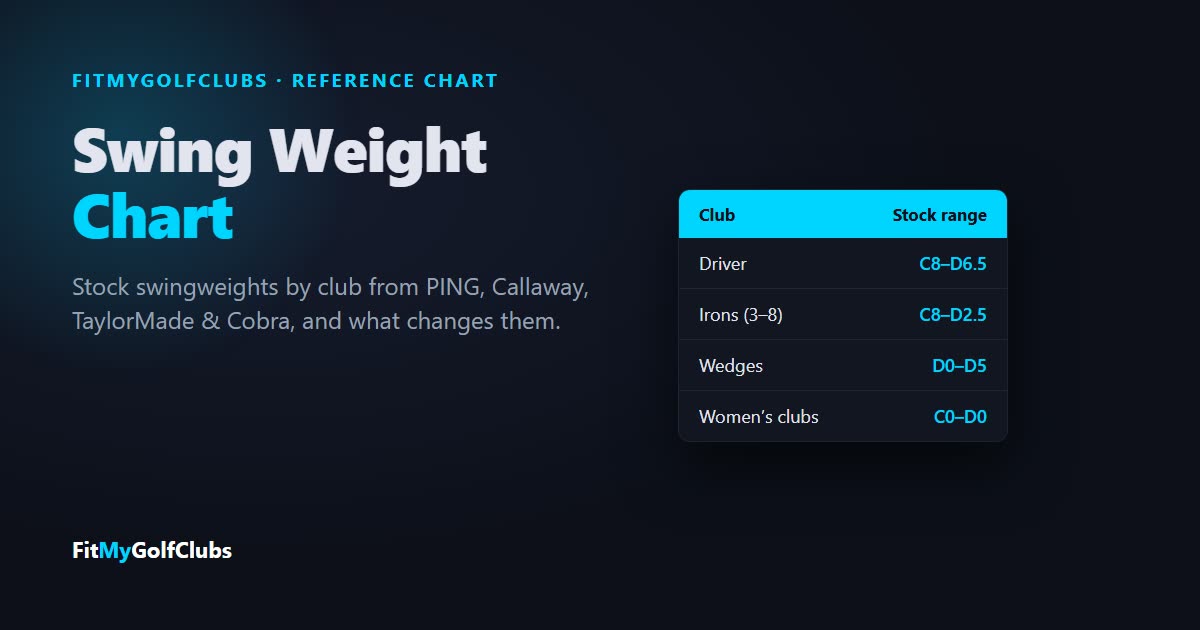
Swing Weight Chart: Standard Swingweights by Club and Brand
Swing weight chart: the A0–G9 scale, stock swingweights for drivers, irons and wedges from PING, Callaway, TaylorMade and Cobra, and what changes them.
Golf Club Fitting
October 8, 2026
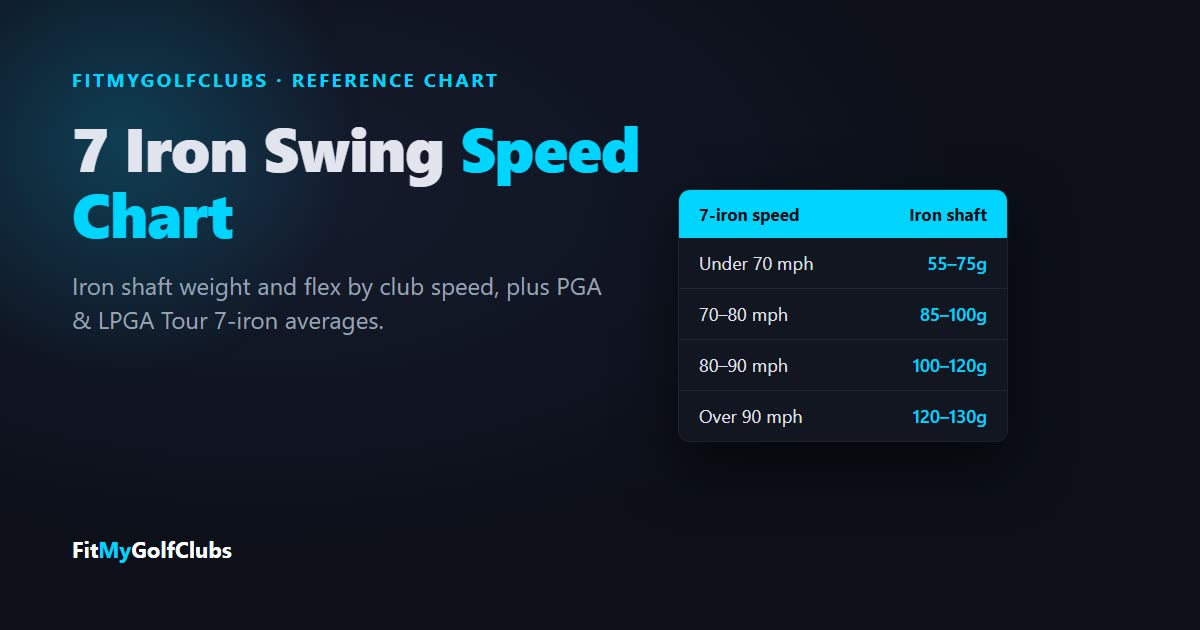
7 Iron Swing Speed Chart: Iron Shaft Weight, Flex & Carry
7 iron swing speed chart: iron shaft weight and flex by club speed, PGA (92 mph) and LPGA (78 mph) Tour averages, and 7-iron carry by speed.
Golf Club Fitting
October 8, 2026
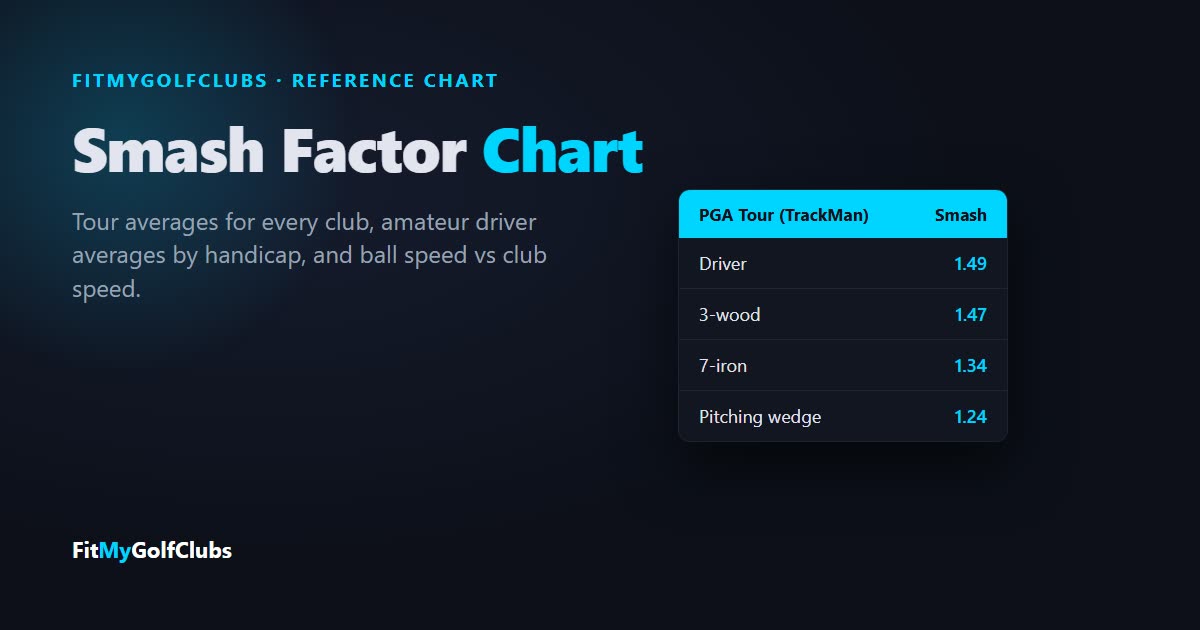
Smash Factor Chart: Tour Averages by Club + Ball Speed
Smash factor chart by club from TrackMan PGA and LPGA Tour averages, amateur driver averages by handicap, and a club speed to ball speed table.


© 2026 FitMyGolfClubs. All rights reserved. | Patent Pending
Contact: sean@fitmygolfclubs.com