

Golf Club Fitting
December 7, 2025
The golf industry wants you to buy new clubs every year. Here's when you actually need to replace them—and when you're wasting money.
---
The Short Answer
Replace your driver every 3-5 years, irons every 5-10 years, and wedges every 2-3 years (depending on play frequency). But these timelines only matter if you play regularly. The real triggers for replacement are performance decline, physical wear, swing changes, and technology gaps—not calendar age.
Most recreational golfers replace clubs too often based on marketing hype. Some replace too rarely and play with equipment that's genuinely hurting their game. Here's how to know which category you're in.
---
Replacement Timelines by Club Type
Drivers: 3-5 Years
Drivers see the most technological improvement and take the most abuse. The face flexes thousands of times, and the materials fatigue.
Replace when:
- Face shows visible wear, dents, or cracks
- You've gained or lost significant swing speed (10+ mph)
- Technology is 5+ years behind current offerings
- The club no longer feels "hot" at impact
Don't replace just because:
- A new model came out
- You hit one bad round
- Your buddy got a new one
Fairway Woods & Hybrids: 5-7 Years
Similar to drivers, but typically see less wear due to fewer swings per round.
Replace when:
- Face wear is visible
- You've struggled with consistency for multiple seasons
- Your set has gaps that hybrids could fill better than long irons
Irons: 5-10 Years
Quality irons last a long time. The limiting factor is usually groove wear on scoring clubs (8-iron through wedges) rather than the mid and long irons.
Replace when:
- Grooves on 8, 9, PW are visibly worn
- You've changed swing speed significantly
- Lie angles have bent from use and weren't corrected
- Technology gap exceeds 10 years
Don't replace just because:
- They look dated
- Game improvement irons exist
- You want forgiveness (consider hybrids instead)
Wedges: 2-3 Years
Wedges wear fastest because groove performance is critical for spin. A wedge with worn grooves is genuinely costing you strokes.
Replace when:
- Grooves feel smooth to the fingernail test
- Spin on pitch shots has noticeably decreased
- You've played 65-75 rounds with them
- Face shows heavy wear patterns
This is the one club category where regular replacement genuinely matters for performance.
Putters: Almost Never
Putters don't wear out in any meaningful way. The only reasons to replace:
- Your stroke has changed and the putter doesn't fit
- You've switched green speeds dramatically
- The grip is worn (just regrip for $10)
Before buying new clubs, check if your current clubs are actually too old or if they just need minor adjustments. Timelines are general. Run any individual club through our free Single-Club Fit Grader for a fit-based answer specific to your swing.
---
The 4 Real Triggers for Replacement
Forget the calendar. These are the actual reasons to replace equipment:
1. Measurable Performance Decline
If you're hitting the same shots with the same swing and getting worse results, equipment could be the cause.
How to check:
- Track driving distance over a season—has it dropped 10+ yards?
- Notice whether wedge shots are releasing more than they used to
- Pay attention to mishit dispersion—are good swings producing worse results?
The trap: One bad round isn't data. You need a pattern over multiple rounds to blame equipment.
2. Physical Wear You Can See and Feel
Some wear is cosmetic. Some actually affects performance.
Performance-affecting wear:
- Worn grooves (wedges, short irons)
- Face damage (drivers, fairway woods)
- Bent shafts or loose heads
- Worn-through grips
Cosmetic only (doesn't matter):
- Scratches on crown or sole
- Paint chips
- Skymarks on driver crown
- Bag chatter marks
3. Your Swing Has Changed
This is the most overlooked reason. Your clubs were fit (or chosen) for the swing you had—not the swing you have now.
Common changes that require equipment updates:
- Swing speed increase/decrease of 10+ mph
- Major swing overhaul with instructor
- Physical changes (injury recovery, aging, fitness gains)
- Significant handicap improvement (10+ strokes)
The problem: Most golfers don't refit after lessons. They build a new swing and force it to work with old equipment.
4. Technology Gap Exceeds 5-7 Years
Real improvements happen—just not every year like manufacturers claim.
Meaningful tech changes in the last decade:
- Driver forgiveness (higher MOI, better off-center performance)
- Iron CG placement (easier launch, more consistent distance)
- Adjustable hosels (fine-tune without buying new clubs)
- Shaft technology (lighter, more consistent)
What hasn't changed much:
- Wedge performance (grooves are regulated—old wedges with fresh grooves perform like new)
- Putter effectiveness (it's all about fit and feel)
- Ball speed limits (USGA restricts this)
---
When NOT to Replace Your Clubs
The golf industry spends millions convincing you that new clubs = better scores. Here's the reality check:
You Don't Need New Clubs If:
You play fewer than 20 rounds per year. Your clubs aren't wearing out. That 7-year-old driver has barely been used.
Your swing is inconsistent. New clubs don't fix swing problems. A $500 driver slices just as well as your old one.
You haven't been fit. Buying new off-the-rack clubs to replace old off-the-rack clubs is a lateral move. Neither set fits you.
The issue is setup, not equipment. Wrong ball position, bad alignment, or poor fundamentals cause most problems—not club age.
You're chasing distance. Modern clubs aren't 30 yards longer. Maybe 5-10 yards over a decade of improvements—and only if the new specs fit you better.
The Marketing Trap
Every January, manufacturers release "the longest driver ever." Every year, golfers upgrade. Handicaps stay the same.
Why? Because the average golfer's limitation isn't their equipment. It's their swing, short game, or course management. A new driver doesn't fix a steep angle of attack or an open clubface.
---
The Smart Approach: Analyze Before You Buy
Before spending $500-2,000 on new equipment, answer these questions:
1. What specifically is wrong with my current clubs? (Not "they're old"—what's the actual problem?)
2. Is the problem wear, fit, or technology? Each has a different solution.
3. Would adjustments fix it? Regripping, reshafting, or bending lie angles costs a fraction of replacement.
4. Do I have data? Guessing isn't good enough for a major purchase.
This is where FitMyGolfClubs helps. Our AI analyzes your entire bag and identifies exactly what's working and what's not. You might discover that your irons are fine but your shaft flex is wrong—a $200 reshaft instead of a $1,200 iron set.
Or you might confirm that yes, your 12-year-old driver is genuinely holding you back, and here's exactly what specs to look for in a replacement.
The point: Make decisions based on data, not marketing or guesswork.
Replacing clubs doesn't have to break the bank. See the free and low-cost options in our golf club fitting cost guide to upgrade smarter.
---
A Practical Replacement Schedule
If you play 30-50 rounds per year and want a simple framework:
Driver: Check every 3 years, replace every 3-5 years
Fairways/Hybrids: Check every 3 years, replace every 5-7 years
Irons (long): Check every 5 years, replace every 7-10 years
Irons (short): Check every 3 years, replace every 5-7 years
Wedges: Check yearly, replace every 2-3 years
Putter: Check never, replace when fit changes
Grips: Check yearly, replace every 1-2 years
Adjust based on your play frequency. If you play 100 rounds a year, cut these timelines in half. If you play 15 rounds a year, double them.
---
The Bottom Line
Your clubs probably don't need replacing as often as you think—except for wedges, which probably need replacing sooner than you think.
The smart golfer:
- Monitors performance data over time
- Checks equipment wear annually
- Refits after swing changes
- Ignores new model hype
- Makes decisions based on analysis, not marketing
---
Frequently asked questions
How often should you replace golf clubs?
For a 30–50-round-a-year player: wedges every 2–3 years, drivers every 3–5, fairway woods and hybrids every 5–7, irons every 5–10, and putters almost never. Play 100 rounds a year, cut those timelines in half; play 15 rounds a year, double them.
When is the best time of year to buy golf clubs?
Late fall through winter, and again just after the January–February new-model releases, when the prior year’s models drop 20–40%. Since meaningful technology gains take about 5 years to accumulate, last year’s model at a discount is usually the best value in golf.
How do you know when to change your golf clubs?
Four real triggers: measurable performance decline over multiple rounds (not one bad day), wear you can see and feel (smooth wedge grooves, driver face damage, worn grips), a swing speed change of 10+ mph or a major rebuild, and a technology gap over 5–7 years. Calendar age alone isn’t a reason.
Should you replace all your golf clubs at once?
Rarely. Clubs wear at different rates — wedges need replacing every 2–3 years while irons last 5–10 and putters basically forever. Replace by wear and by impact on your scoring, not as a set. The main exception: a full refit after a major swing change.
Do new golf clubs really make a difference?
Less than the marketing says: roughly 5–10 yards of driver gain over a decade of technology — not 30 — and only if the new specs fit you. The exceptions are worn wedges, where fresh grooves genuinely restore spin, and any club whose specs no longer match your swing.
Is it worth replacing 10-year-old irons?
Check three things: the grooves on your scoring irons (8-iron through wedge), whether your swing speed has changed since you bought them, and the technology gap — at 10+ years, easier launch and more consistent distance are real gains. If the grooves are fine and they still fit, keep them.
Find Out What You Actually Need
FitMyGolfClubs gives you a complete equipment analysis—what's performing well, what's holding you back, and what changes would actually help your game.
No sales pitch. No pressure to buy. Just honest data about your clubs.
Not sure what to replace first? FitMyGolfClubs prioritizes your upgrade path based on which clubs are hurting your game most.
On a computer? You can also grade your bag in your browser — no app to install.
Related reading
- Do Golf Clubs Wear Out? When to Replace Your Equipment — Wear timelines for every club, and how to tell.
- Golf Driver Fitting: Is It Worth It? — What a driver fitting costs and who it helps.
- How Do I Know If My Golf Clubs Fit Me? — 7 warning signs your gear does not match your swing.
- AI Golf Equipment Analysis — How AI analyzes your bag without a launch monitor.
Related Articles
Golf Club Fitting
October 8, 2026
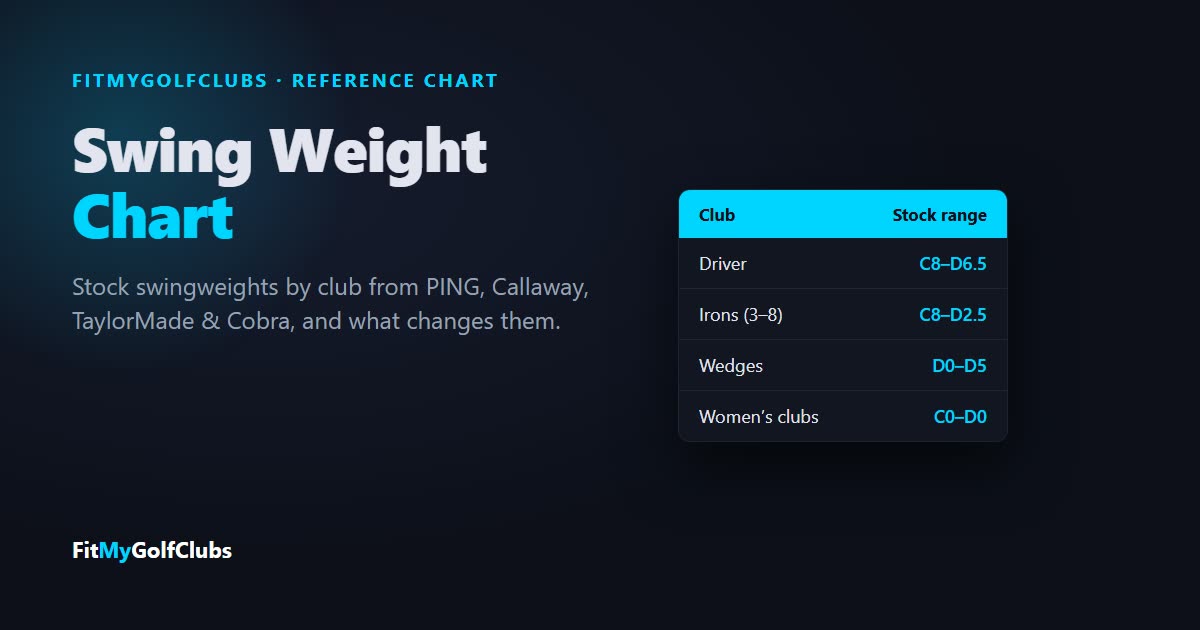
Swing Weight Chart: Standard Swingweights by Club and Brand
Swing weight chart: the A0–G9 scale, stock swingweights for drivers, irons and wedges from PING, Callaway, TaylorMade and Cobra, and what changes them.
Golf Club Fitting
October 8, 2026
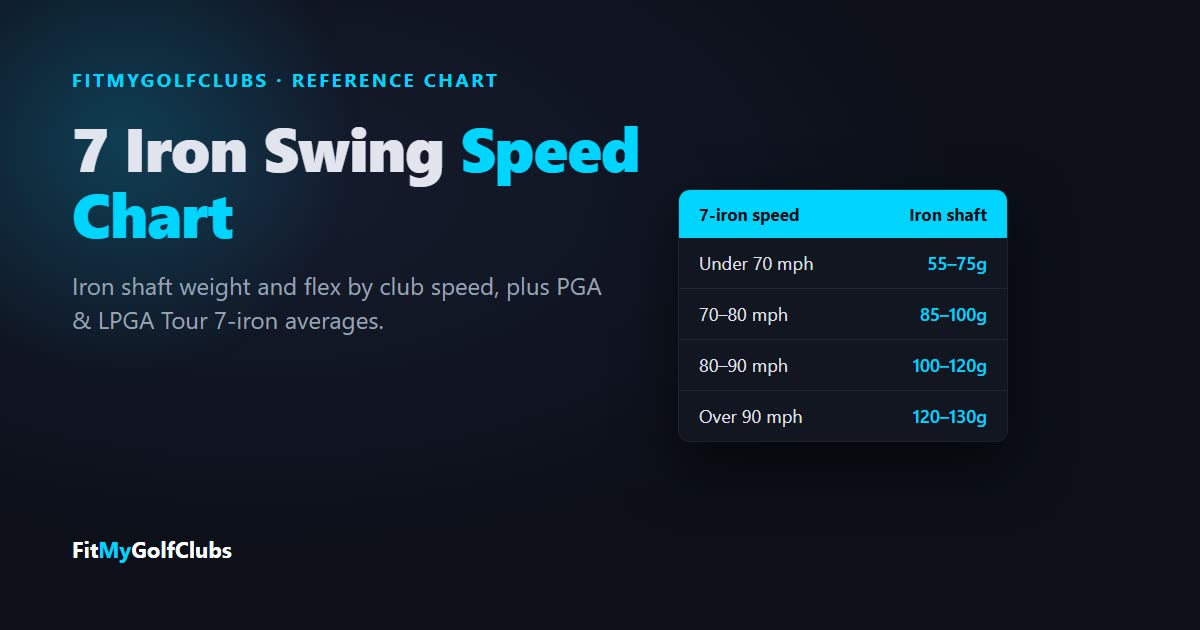
7 Iron Swing Speed Chart: Iron Shaft Weight, Flex & Carry
7 iron swing speed chart: iron shaft weight and flex by club speed, PGA (92 mph) and LPGA (78 mph) Tour averages, and 7-iron carry by speed.
Golf Club Fitting
October 8, 2026
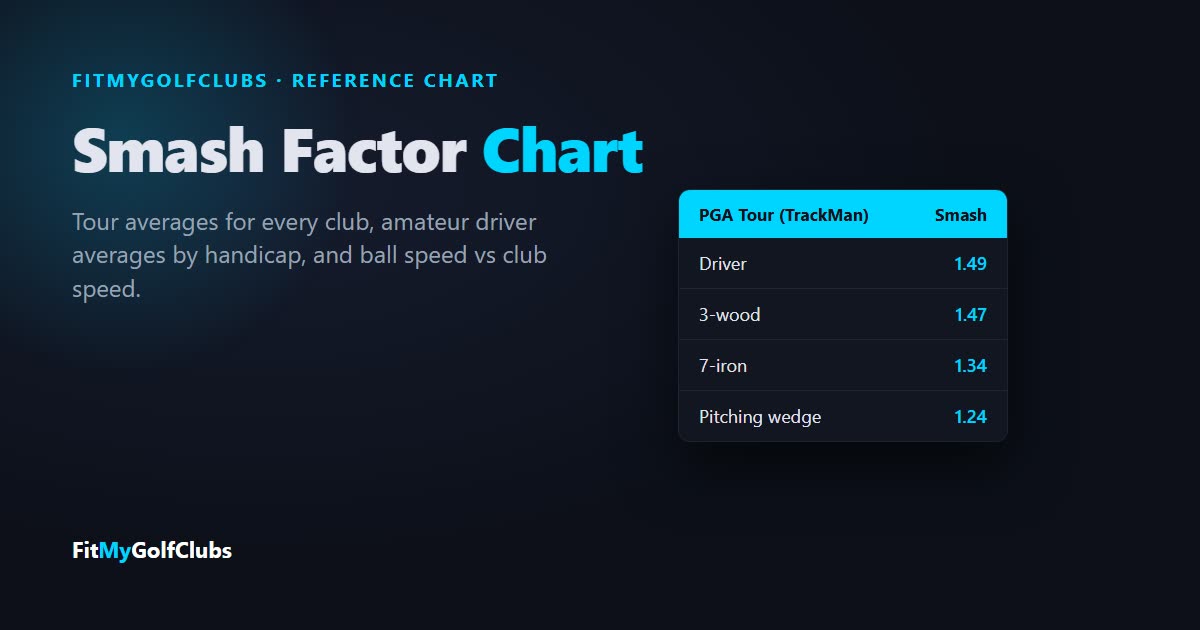
Smash Factor Chart: Tour Averages by Club + Ball Speed
Smash factor chart by club from TrackMan PGA and LPGA Tour averages, amateur driver averages by handicap, and a club speed to ball speed table.


© 2026 FitMyGolfClubs. All rights reserved. | Patent Pending
Contact: sean@fitmygolfclubs.com