

Golf Club Fitting
December 13, 2025
Do Golf Clubs Wear Out? When to Replace Your Equipment
Golf clubs aren't cheap, so it's natural to wonder how long they'll last. Do golf clubs actually wear out, or is that just marketing from equipment companies trying to sell you new gear every year?
The honest answer: yes, golf clubs do wear out—but probably slower than you think. Different clubs wear at different rates, and some parts degrade faster than others. Understanding what actually wears and when helps you make smart decisions about repairs, replacements, and upgrades.
This guide breaks down the real lifespan of every club in your bag and shows you how to know when it's actually time for new equipment.
Do Golf Clubs Actually Wear Out?
Golf clubs are designed to hit a ball at high speed thousands of times. That repeated impact takes a toll, but the timeline varies dramatically by club type and how often you play.
What Degrades Over Time
Clubface: The hitting surface experiences micro-damage with every shot. Driver faces lose their spring effect over time. Iron and wedge faces lose groove sharpness.
Grooves: The channels cut into iron and wedge faces wear down from contact with the ball and turf. Worn grooves produce less spin, especially on short game shots.
Shafts: Graphite shafts can develop micro-fractures from repeated stress. Steel shafts are more durable but can weaken at stress points near the hosel.
Grips: The rubber or synthetic material breaks down from hand oils, sweat, UV exposure, and general use. Grips wear out faster than any other club component.
The rate of wear depends on how often you play, your swing speed, what surfaces you hit from, and how you store and maintain your equipment.
For a deeper dive into aging equipment, check out our guide on whether your golf clubs are too old.
How Long Do Different Clubs Last?
Each club type has a different expected lifespan based on design, materials, and how it's used.
Drivers: 3-5 Years
Modern drivers use thin, hot faces designed to maximize ball speed. That thin face gradually loses its pop over time and repeated impacts.
For a golfer who plays 30-40 rounds per year and hits a large bucket at the range weekly, expect meaningful performance degradation after 3-5 years. High swing speed players may see faster wear.
That said, a driver doesn't suddenly stop working. The decline is gradual—you might lose 2-3 yards per year without noticing until the cumulative loss becomes significant.
Fairway Woods: 5-7 Years
Fairway woods experience less abuse than drivers since you hit them less frequently. The faces are also slightly thicker. Expect 5-7 years of solid performance with moderate use.
Hybrids: 5-7 Years
Similar to fairway woods, hybrids see less frequent use than irons and hold up well over time. Five to seven years is a reasonable expectation.
Irons: 5-10 Years
Iron longevity depends heavily on what you hit off of. Irons used primarily on grass and good turf last longer than irons beaten into mats at the driving range.
The grooves are the main wear point. Once grooves become visibly rounded or shallow, spin rates drop and stopping power decreases. For a regular golfer, this takes 5-10 years.
Cast irons (most game-improvement models) tend to be slightly softer and may show wear faster than forged irons, though the difference is minimal for most players.
Wedges: 2-3 Years
Wedges wear out fastest because they're used for high-spin shots from sand, rough, and tight lies. The grooves do the most work of any club in your bag.
Tour players replace wedges every 50-75 rounds. For amateurs playing once a week, that translates to roughly 2-3 years before groove performance noticeably drops.
If you play a lot of short game shots or practice chipping frequently, your wedges may need replacement sooner.
Putters: 10+ Years
Putters experience the least stress of any club. The impact force is minimal, and there's no turf interaction wearing down the face.
A quality putter can last decades with proper care. The face insert on modern putters may degrade slightly over many years, but functional putter lifespan far exceeds other clubs.
For a complete guide on replacement timing for each club, see our article on when you should replace your golf clubs.
Signs Your Clubs Are Worn Out
Sometimes wear is obvious. Other times it's subtle. Here's how to identify clubs that have reached the end of their useful life.
Visual Groove Wear
Run your fingernail across the grooves on your irons and wedges. Fresh grooves have sharp edges that catch your nail. Worn grooves feel smooth and rounded.
Look at the grooves under good lighting. If they appear shallow, shiny at the edges, or visibly flattened, they're no longer performing optimally.
Distance Loss
If you're hitting clubs shorter than you used to without any swing changes, equipment wear could be the cause. This is most noticeable with drivers where face degradation reduces ball speed.
Track your distances with a launch monitor or GPS over time. A gradual decline that can't be explained by swing changes suggests equipment wear.
Inconsistent Spin
Worn wedge grooves produce inconsistent spin—sometimes the ball checks, sometimes it rolls out. If your short game distance control has become unpredictable, groove wear is a likely culprit.
This is especially noticeable on partial wedge shots and pitches where spin control matters most.
Visible Damage
Obvious signs like cracked hosels, dented faces, loose clubheads, or bent shafts indicate clubs that need immediate replacement or repair. These issues affect both performance and safety.
Feel Changes
Clubs that suddenly feel dead, harsh, or different at impact may have internal damage not visible externally. Graphite shafts can develop micro-cracks that change flex characteristics.
If a club feels "off" and you can't identify why, have it inspected by a club repair professional.
For more indicators that your equipment may not be performing, our guide on how to know if your golf clubs fit you covers warning signs to watch for.
What Wears Out First
Still not sure if a club is worn out or just not fitting you right? Our free Single-Club Fit Grader separates wear from fit mismatch — launch data in, grade out. Not everything on your clubs wears at the same rate. Here's the typical order of what needs attention first.
Grips: Every 1-2 Years
Grips wear out long before any other component. They should be replaced every 40-60 rounds, or roughly once per year for regular golfers.
Signs of worn grips include a hard, slick, or shiny surface, loss of tackiness, visible wear spots, and cracks or peeling.
Fresh grips improve feel and control immediately. This is the most cost-effective equipment maintenance you can do.
Wedge Grooves: Every 2-3 Years
As discussed above, wedge grooves wear fastest among clubheads. Monitor your wedges closely and budget for more frequent replacement than other clubs.
Driver Face: Every 3-5 Years
The driver face loses spring effect gradually. You won't notice it round to round, but comparing a new driver to your 5-year-old gamer often reveals significant ball speed differences.
Iron Grooves: Every 5-10 Years
Iron grooves last longer than wedge grooves because irons hit more full shots and fewer high-spin pitches and chips. Still, they do wear down eventually.
Shafts: 10+ Years
Quality shafts last a long time if not abused. Steel shafts are nearly indestructible under normal use. Graphite shafts can develop issues but typically last a decade or more.
How to Extend Club Life
Proper maintenance significantly extends how long your clubs perform well.
Clean After Every Round
Dirt, sand, and grass in the grooves accelerates wear and reduces spin immediately. Use a brush and water to clean faces after each round. A groove cleaning tool removes stubborn debris.
Dry Before Storage
Moisture promotes rust on steel components and can degrade grips. Wipe clubs dry before putting them away, especially after wet rounds.
Use Headcovers
Woods and hybrids benefit from headcovers that prevent bag chatter—the damage caused by clubs banging together during transport. This protects faces, crowns, and finishes.
Store Properly
Avoid extreme temperatures. Don't leave clubs in a hot car trunk for extended periods. Store in a climate-controlled space when possible.
Graphite shafts are particularly sensitive to heat, which can weaken the epoxy holding the clubhead.
Regrip Regularly
Fresh grips prevent you from squeezing too hard, which puts unnecessary stress on shafts and your swing. Keep grips in good condition and your clubs will last longer.
For more on assessing and maintaining your equipment, see our guide on how to fit your golf clubs at home.
When to Replace vs. Repair
Not every worn club needs replacement. Sometimes repair is the smarter choice.
Replace When
The clubface or grooves are worn beyond function. The shaft is cracked or damaged. Technology has advanced significantly since you bought the club. Repair costs approach replacement cost.
Repair When
Grips need replacement (always repair, not replace). The shaft is in good condition but the grip or head needs work. Minor cosmetic damage doesn't affect performance. The club is a specialty item or has sentimental value.
A club repair shop can assess whether your clubs are worth repairing or ready for retirement.
The Bottom Line
Golf clubs do wear out, but the timeline is longer than equipment marketing suggests. Wedges last 2-3 years, drivers 3-5 years, irons 5-10 years, and putters can last decades.
Grips wear out fastest and should be replaced annually. Wedge grooves go next. Driver faces gradually lose pop. Iron grooves eventually wear down.
Proper cleaning, storage, and maintenance extends club life significantly. Pay attention to distance changes, spin inconsistency, and visual groove wear to catch equipment issues before they hurt your game.
Wondering if your current clubs still have life left?
FitMyGolfClubs analyzes your equipment and identifies clubs that may be past their prime. Download the app and find out which clubs are still performing and which ones are holding you back.
Frequently asked questions
Do golf clubs actually wear out?
Yes, but slower than marketing suggests. Grooves, clubfaces, shafts, and grips all degrade with use, but different clubs wear at very different rates — wedges fastest, putters almost never.
How long do golf clubs last?
For a regular player: wedges 2-3 years, drivers 3-5 years, fairway woods and hybrids 5-7 years, irons 5-10 years, and putters 10+ years. Grips wear fastest and should be replaced every 1-2 years.
How can I tell if my clubs are worn out?
Run a fingernail across the grooves — worn grooves feel smooth and rounded instead of sharp. Also watch for gradual distance loss with the driver, inconsistent wedge spin, and any club that suddenly feels dead at impact.
What wears out first on a golf club?
Grips, by far — every 1-2 years or 40-60 rounds. Wedge grooves go next (2-3 years), then the driver face (3-5 years), then iron grooves (5-10 years). Quality shafts last a decade or more.
On a computer? You can also grade your bag in your browser — no app to install.
Related Articles

Golf Club Fitting
October 8, 2026
Swing Weight Chart: Standard Swingweights by Club and Brand
Swing weight chart: the A0–G9 scale, stock swingweights for drivers, irons and wedges from PING, Callaway, TaylorMade and Cobra, and what changes them.
Golf Club Fitting
October 8, 2026
7 Iron Swing Speed Chart: Iron Shaft Weight, Flex & Carry
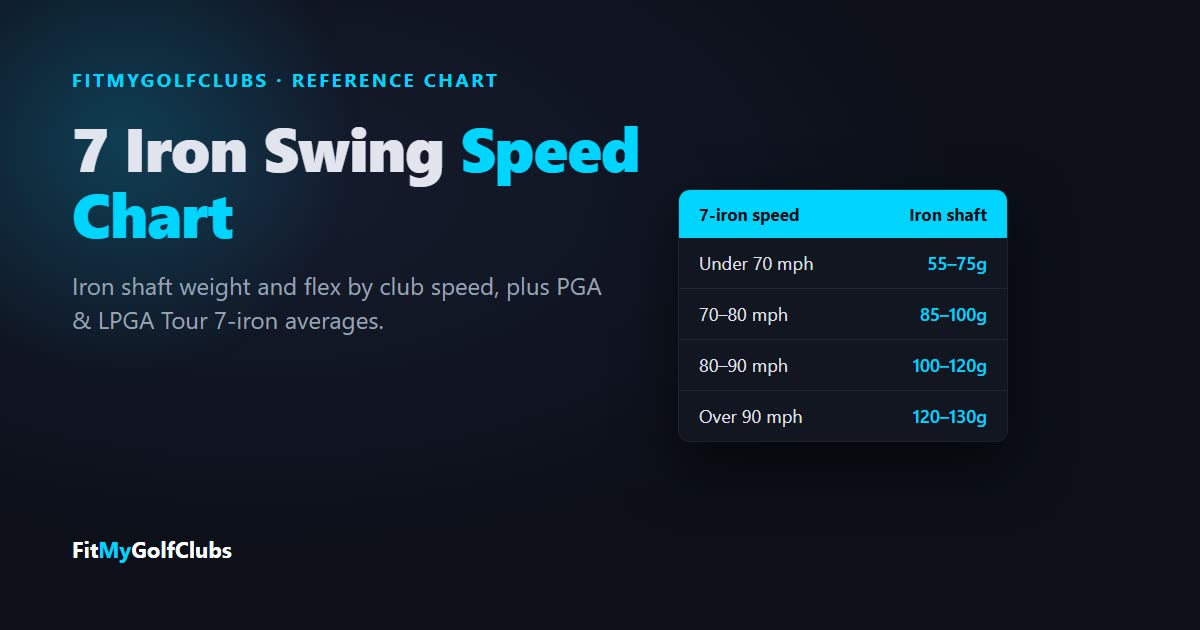
7 iron swing speed chart: iron shaft weight and flex by club speed, PGA (92 mph) and LPGA (78 mph) Tour averages, and 7-iron carry by speed.

Golf Club Fitting
October 8, 2026
Smash Factor Chart: Tour Averages by Club + Ball Speed
Smash factor chart by club from TrackMan PGA and LPGA Tour averages, amateur driver averages by handicap, and a club speed to ball speed table.


© 2026 FitMyGolfClubs. All rights reserved. | Patent Pending
Contact: sean@fitmygolfclubs.com