
Golf Club Fitting
December 13, 2025
How Much Does Golf Club Fitting Cost? (2026 Price Guide)
Golf club fitting prices range from completely free to over $450, depending on where you go and what type of fitting you need. The good news? You don't have to spend top dollar to get properly fitted clubs.
This guide breaks down exactly what you'll pay at every major fitting provider, what's included at each price point, and how to decide which option makes sense for your game and budget.
Golf Club Fitting Cost by Provider
Fitting prices vary dramatically based on who does the fitting and how comprehensive the session is.
Premium National Fitting Chains
The premium national chains are the top-of-the-line option, offering the most extensive fitting experience with the highest price tag.
- Full bag fitting: $350–$450
- Driver fitting: $150–$175
- Iron fitting: $150–$175
- Wedge fitting: $125–$150
- Putter fitting: $100–$125
These fitters use Tour-level equipment and test you across multiple brand options. The fitting fee is separate from equipment cost—you'll pay for the fitting regardless of whether you buy.
Golf Galaxy / Dick's Sporting Goods
Golf Galaxy offers a middle-ground approach with reasonable prices and solid technology.
- Full bag fitting: $149
- Club-specific fitting: $49–$99
- Free basic fitting with purchase
Their fitters use TrackMan or similar launch monitors. The fitting fee is often waived or credited toward purchase if you buy clubs the same day. Pro tip: go on a weekday morning when the store is slow — you'll get a longer, less rushed session for the same price.
GolfTec
GolfTec combines swing analysis with club fitting, which can be valuable if you're also working on your technique.
- Club fitting: $125–$175
- Fitting + lesson package: $200+
GolfTec's approach integrates fitting with instruction, so you'll get feedback on both your swing and your equipment. If you're weighing the instruction side of that bundle, our golf lesson cost guide breaks down 2026 lesson pricing the same way.
PGA Tour Superstore
PGA Tour Superstore provides free fittings with purchase and affordable standalone options.
- Fitting with purchase: Free
- Standalone fitting: $50–$100
They use quality launch monitors and carry most major brands. It's a solid budget-friendly option if you're planning to buy.
Local Club Pros and Independent Fitters
Your local course pro or independent fitter typically charges less than national chains.
- Full fitting: $75–$150
- Single club fitting: $25–$75
Quality varies significantly. Ask about their equipment, training, and which brands they can fit you into before booking. Money-saving angles that work: teaching pros who include equipment checks in lesson packages, builders who credit the fitting fee toward a purchase, off-peak winter or weekday rates, and single-club fittings (driver-only or irons-only) instead of the full bag.
Manufacturer Fitting Events
Titleist, Callaway, TaylorMade, and other manufacturers host free fitting days at courses and ranges.
- Cost: Free
- Limitation: Only that brand's equipment
These events offer legitimate fittings with quality launch monitors. The catch is you're only seeing one brand's options, so you won't know if a competitor's club might work better. Two tips that make demo days work harder: check the manufacturer's site for schedules and book a slot ahead (walk-ups often wait 30–60 minutes), and leave with the exact head-and-shaft combo that tested best — in writing — so the session produces a spec sheet, not just a fun hour of range balls.
What Affects Golf Fitting Prices?
Several factors determine what you'll actually pay for a fitting.
Type of Fitting
A driver-only fitting costs less than a full bag fitting. If you only need one or two clubs dialed in, you can save by fitting just those clubs. But if your whole bag needs attention, a full fitting is more cost-effective than fitting clubs individually. And if the shaft is your main concern — flex or weight — a dedicated golf shaft fitting covers the two specs that matter most, for less than a full-bag session.
Fitting Technology
Premium fitters use expensive launch monitors like TrackMan, Foresight GCQuad, or Trackman. These machines cost $15,000–$25,000 and provide highly accurate data. Basic fitters might use more affordable monitors that still give useful information but with less precision.
For a deeper understanding of how launch monitors work and what data matters most, check out our guide on how to test golf clubs with launch monitors.
Fitter Experience
A master fitter with 20 years of experience and Tour-level credentials commands higher prices than someone who completed a weekend certification course. You're paying for expertise, not just access to equipment.
Club Options Available
Some fitters only carry certain brands due to dealer agreements. Others stock everything from Titleist to Mizuno to PXG. More options typically means higher overhead, which gets passed to you.
Is Expensive Fitting Worth It?
The $350 fitting isn't automatically better than the $100 fitting. What matters is whether the fitter has the skills and equipment to identify your needs and match you with the right clubs.
When Premium Fitting Makes Sense
Consider a high-end fitting if you play competitively or have a single-digit handicap, you're buying a full set and want maximum optimization, you have an unusual swing or physical characteristics (very fast or slow swing speed, significantly taller or shorter than average), or you want access to exotic shaft and head combinations. A $300 fitting that helps you choose the right $500 driver is money well spent; a $300 fitting to optimize a $200 used iron set probably isn't.
When Budget Fitting Works Fine
A more affordable fitting is usually sufficient if you're a mid-to-high handicapper still developing your swing, you're only fitting one or two clubs, you already know roughly what specs work for you, or you're comparing a few specific club models.
If you're unsure whether any fitting is right for you, our guide on whether you should get fitted for golf clubs can help you decide.
Free and Low-Cost Fitting Alternatives
You don't have to pay hundreds of dollars to improve your equipment fit.
Demo Days
Manufacturer demo days are free and include launch monitor data. You'll hit multiple club configurations and get real numbers on what works. The limitation is brand exclusivity—you're only seeing that manufacturer's options.
Buy-and-Try Programs
Some retailers let you test clubs on the course for 30–90 days and return them if they don't work. This real-world testing can be more valuable than a 30-minute indoor session.
DIY Fitting
With some knowledge, you can assess your own equipment needs. Basic fitting concepts like lie angle, shaft flex, and grip size can be evaluated at home or at the range. You can even run the core of a shaft fitting yourself online — free calculators convert your swing speed into a flex band and weight range in minutes, and our swing speed chart shows the flex for every club.
For a complete walkthrough of fitting your own clubs, see our guide on how to fit your golf clubs at home.
AI-Powered Analysis
Technology now enables detailed equipment analysis through your smartphone. Apps can identify your clubs, analyze your setup, and flag potential fitting issues without an in-person appointment.
The Smart Starting Point
If you're optimizing for dollars, the sequence that works: start with a free AI bag analysis to find your actual problem areas, use that to decide whether you need new clubs at all, then take those specific questions into a free big-box or demo-day fitting — and save the premium fitting for a major purchase or a persistent problem the cheaper options couldn't crack. That order costs almost nothing and means you never walk into a sales conversation blind.
How to Get the Most Value From Your Fitting
Regardless of what you pay, these tips help you maximize your fitting investment.
Come Prepared
Bring your current clubs so the fitter can see what you're playing and measure your existing specs. Know your typical ball flight, miss patterns, and what you want to improve.
Be Honest About Your Game
Fitters need accurate information about your handicap, how often you play, and your goals. Ego-driven answers lead to poorly fitted clubs.
Ask Questions
Understand why the fitter recommends specific specs. A good fitter explains their reasoning and helps you learn, not just tells you what to buy.
Don't Feel Pressured to Buy
A fitting identifies your optimal specs. You can use that information to shop around, buy used clubs with the right specs, or wait for sales. The fitting data is valuable whether or not you purchase that day.
Signs You Need a Fitting (Or Re-Fitting)
Not sure if your current clubs fit? Watch for these warning signs that suggest your equipment may be working against you. Our article on how to know if your golf clubs fit you covers seven specific indicators.
Also consider that clubs don't last forever. If you're playing older equipment, it may be time for an upgrade. Learn the signs in our guide to identifying when golf clubs are too old.
The Bottom Line on Fitting Costs
Golf club fitting costs anywhere from $0 to $450+, but price doesn't always equal value. A skilled fitter with decent equipment can optimize your clubs for $100, while an expensive fitting with a disengaged fitter wastes money at any price.
Match your fitting investment to your commitment level. Casual golfers can benefit from free or low-cost options. Serious players who practice regularly and play frequently will see returns from more comprehensive fittings. Fitting is also only half of the improvement budget — if lessons are on your list too, here's what golf lessons cost in 2026.
The best fitting is one that actually improves your equipment—regardless of what it costs.
🎯 Want the full picture?
See our guide to free golf club fitting tools — check your flex, weight and length, then grade your whole bag free, no launch monitor. See the free tools →
Frequently asked questions
How much does a golf club fitting cost?
Anywhere from free to $450+. Premium national chains charge $350–$450 for a full bag fitting; Golf Galaxy runs $149; local pros and independent fitters charge $75–$150. Manufacturer demo days, fittings included with purchase at big-box stores, and static fittings are free.
How much does a driver fitting cost?
$150–$175 at premium fitting chains, $50–$100 at Golf Galaxy or PGA Tour Superstore (often waived or credited if you buy), and $50–$100 with a local pro. Manufacturer demo days will fit your driver for free, limited to that brand’s heads and shafts.
What is the cheapest way to get fitted for golf clubs?
Start with the free options: manufacturer demo days, a fitting included with purchase at big-box retailers, a static fitting (length, lie, and grip size from body measurements), or an AI bag analysis from your phone. Pay for a fitting only where the free options couldn’t answer.
Is the fitting fee waived if you buy clubs?
Often at retail — Golf Galaxy, PGA Tour Superstore, and many local builders credit some or all of the fitting fee toward a same-day purchase. Premium fitting chains charge the fitting fee separately whether or not you buy. Ask about the policy before booking.
Is an expensive golf fitting worth it?
Only when the stakes justify it. A $300–$450 fitting makes sense for competitive players, full-set purchases, or unusual swings that need exotic head-and-shaft combinations. For a mid-to-high handicapper fitting one or two clubs, a $75–$150 session — or a free one — captures most of the benefit.
How long does a golf club fitting take?
A single-club fitting (driver or irons) typically runs 45–60 minutes. Full bag fittings at premium chains run 2.5–3.5 hours. A static fitting takes about 15 minutes.
Want to know if your current clubs fit before paying for a fitting?
FitMyGolfClubs analyzes your equipment through your smartphone and identifies potential fitting issues—no appointment needed. Download the app and see what your clubs reveal about your setup.
On a computer? You can also grade your bag in your browser — no app to install.
Related reading
- The Golf Club Fitting App That Grades Your Whole Bag — grade every club you own across 8 fitting factors, free, on your phone.
- How AI Golf Club Fitting Works — the free, at-home alternative to a paid fitting.
- Eldrick vs FitMyGolfClubs — two AI fitting tools, side by side.
- What Five Club Fittings Taught Me — what you actually pay for, from five real fittings.
Related Articles
Golf Club Fitting
October 8, 2026
Swing Weight Chart: Standard Swingweights by Club and Brand
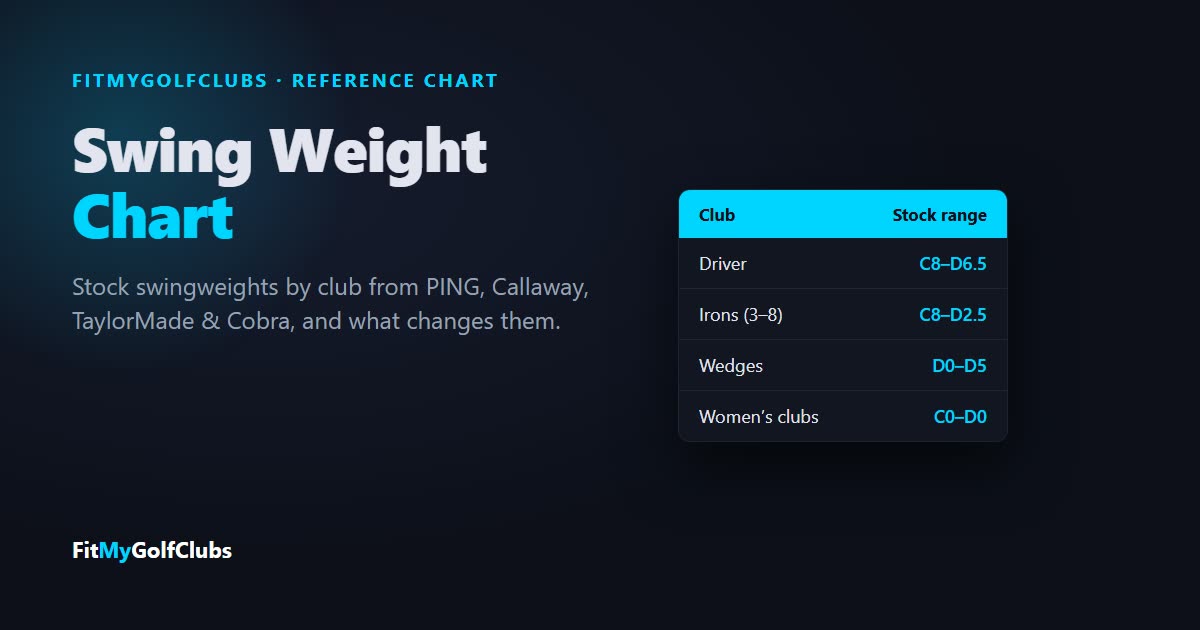
Swing weight chart: the A0–G9 scale, stock swingweights for drivers, irons and wedges from PING, Callaway, TaylorMade and Cobra, and what changes them.
Golf Club Fitting
October 8, 2026
7 Iron Swing Speed Chart: Iron Shaft Weight, Flex & Carry
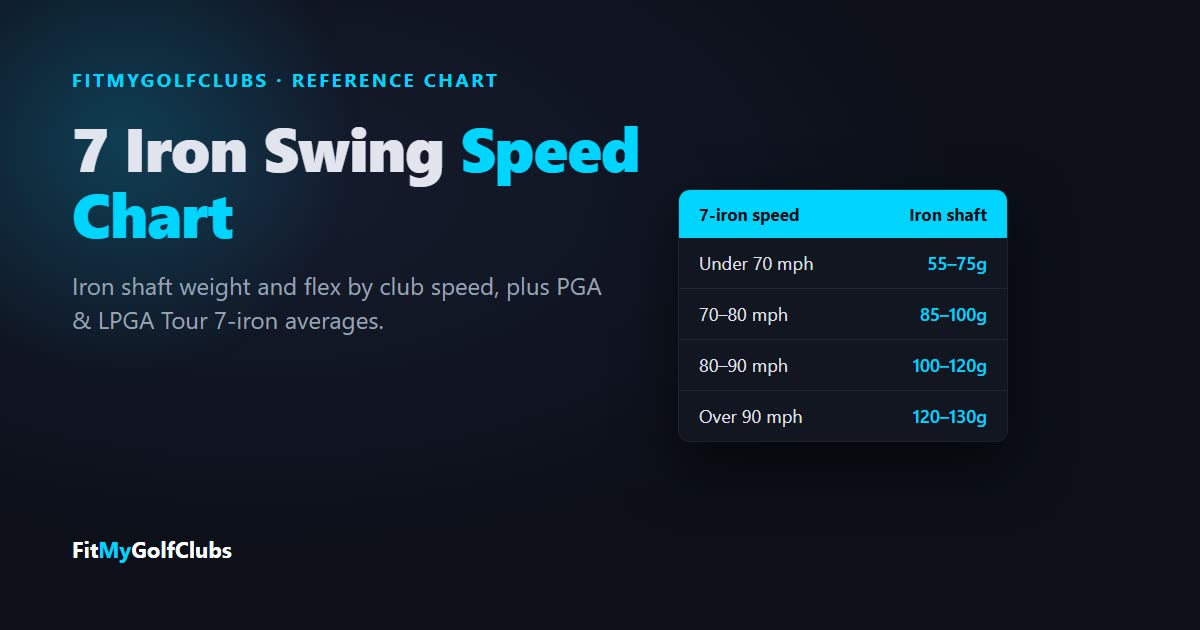
7 iron swing speed chart: iron shaft weight and flex by club speed, PGA (92 mph) and LPGA (78 mph) Tour averages, and 7-iron carry by speed.
Golf Club Fitting
October 8, 2026
Smash Factor Chart: Tour Averages by Club + Ball Speed
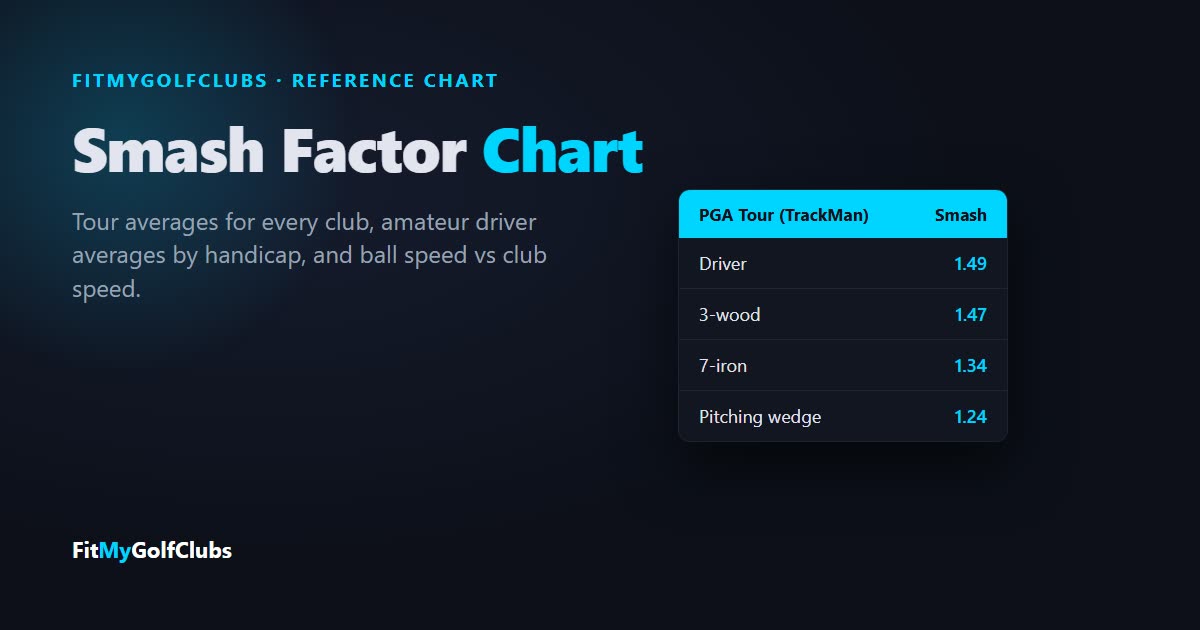
Smash factor chart by club from TrackMan PGA and LPGA Tour averages, amateur driver averages by handicap, and a club speed to ball speed table.


© 2026 FitMyGolfClubs. All rights reserved. | Patent Pending
Contact: sean@fitmygolfclubs.com