
Golf Club Fitting
December 13, 2025
Golf Driver Fitting: Is It Worth It? What to Expect
The driver is the most commonly fitted club in golf, and for good reason. No other club in your bag offers the same potential for improvement—or the same potential for disaster when the specs are wrong.
A properly fitted driver can add distance, tighten dispersion, and eliminate that two-way miss that kills your confidence on the tee. But driver fittings aren't free, and not every golfer benefits equally from the process.
This guide walks you through exactly what happens during a driver fitting, what it costs, and how to decide whether the investment makes sense for your game.
What Happens During a Driver Fitting
A professional driver fitting typically runs 45-60 minutes and follows a structured process designed to optimize every variable that affects your tee shots.
Baseline Assessment
You'll start by hitting your current driver while the fitter captures data on a launch monitor. This establishes your baseline numbers—ball speed, launch angle, spin rate, carry distance, and dispersion pattern. These metrics become the benchmark for measuring improvement.
If you don't have a current driver or haven't hit one recently, the fitter will have you warm up with a standard demo club to establish baseline swing characteristics.
Head Testing
Driver heads vary in forgiveness, adjustability, center of gravity placement, and face technology. You'll typically test 3-5 different heads from various manufacturers to find which design produces the best combination of distance and accuracy for your swing.
The fitter watches for how each head affects your launch conditions and shot shape. A higher-spinning player might need a low-spin head, while someone who struggles to get the ball airborne might benefit from a higher-launching design.
Shaft Testing
This is where most of the fitting time goes. The shaft influences launch, spin, feel, and consistency more than most golfers realize. You'll test multiple shaft options varying in flex (regular, stiff, x-stiff), weight (lighter shafts can increase speed, heavier shafts can improve control), bend profile (where the shaft flexes most), and torque (resistance to twisting).
The fitter narrows options based on your swing speed, tempo, and ball flight tendencies. For a deeper understanding of how swing speed connects to shaft selection, see our swing speed to shaft flex chart.
Loft and Length Optimization
Most drivers offer adjustable loft, and the right setting depends on your attack angle and swing speed. Higher loft typically helps slower swingers maximize carry, while lower loft can reduce spin for faster players.
Length also gets evaluated. Standard driver length is 45-46 inches, but some golfers gain accuracy with a shorter shaft while sacrificing minimal distance.
Launch Monitor Validation
Throughout the fitting, a launch monitor captures every shot. Fitters use this data to compare options objectively rather than relying on feel alone. Understanding how to read launch monitor data helps you participate more actively in the fitting conversation.
How Much Does Driver Fitting Cost?
Driver fitting prices vary significantly depending on where you go.
Fitting Price Ranges
Premium national fitting chains: $150–$175 for driver fitting
Golf Galaxy / PGA Superstore: $50–$100 (often waived with purchase)
GolfTec: $125–$150
Local club pros: $50–$100
Manufacturer demo days: Free
When Fitting Fees Are Waived
Many retailers credit your fitting fee toward equipment purchase. If you're planning to buy a new driver anyway, this effectively makes the fitting free. Ask about this policy before booking.
For a complete breakdown of fitting costs across all club types and providers, our golf club fitting cost guide covers everything you need to know.
Is Driver Fitting Worth It?
The honest answer depends on your skill level, how often you play, and what you're currently gaming.
The Case for Driver Fitting
Studies and fitting data consistently show that properly fitted drivers outperform off-the-rack options for most golfers. Distance gains of 10-25 yards are common when switching from a poorly matched driver. You'll also see accuracy improvement through tighter dispersion from optimized spin and launch. And there's a real confidence boost from knowing your driver is dialed in—it changes your mental approach on the tee.
If you're playing a driver that's more than 5 years old, wasn't fitted to begin with, or consistently produces a miss you can't fix with swing changes, fitting delivers real value.
Who Benefits Most
Golfers who see the biggest gains from driver fitting typically share these characteristics: swing speeds above 85 mph (more variables to optimize), consistent ball-striking (fitting can't fix contact issues), playing 20+ rounds per year (more opportunities to benefit), and currently using mismatched equipment.
Who Should Wait
Driver fitting isn't always the right move. You might hold off if your swing is still developing significantly (lessons first), you're a true beginner without consistent contact, or your current driver was fitted in the last 2-3 years and still performs well.
For help deciding whether any fitting makes sense for your situation, our guide on whether you should get fitted for golf clubs walks through the full decision framework.
What Driver Specs Get Adjusted
A complete driver fitting optimizes multiple variables simultaneously. Here's what gets dialed in:
Loft
Factory loft options typically range from 8° to 12°. Lower loft reduces spin but requires more swing speed to launch properly. Higher loft increases launch and spin, helping slower swingers maximize carry distance.
Most adjustable drivers allow 1-2° of loft change from the stated setting, giving fitters flexibility to fine-tune after selecting the base head. Every setting on the big brands is decoded in our Titleist, Callaway, TaylorMade, Cobra, PXG and PING settings charts.
Shaft Flex and Weight
Shaft flex must match your swing speed and tempo. Too stiff loses distance; too soft loses control. Shaft weight affects swing speed and consistency—lighter isn't always better.
Many golfers discover during fitting that they've been playing the wrong flex for years. That "stiff" shaft you bought because it sounded better might be costing you 15 yards.
Shaft Profile
Beyond flex, shafts differ in where they bend most (tip, mid, or butt section). A tip-stiff shaft launches lower and spins less. A tip-soft shaft does the opposite. The right profile matches your delivery and desired ball flight.
Length
Standard driver length has crept up over the years, but longer isn't always better. Some golfers find that a half-inch shorter driver significantly improves contact consistency with minimal distance loss.
Face Angle and Lie
Some drivers allow face angle adjustment from open to closed. This can help reduce slice or hook tendencies at address, though it doesn't fix swing path issues.
If you slice your driver but hit irons straight, the issue might be equipment-related. Our breakdown of why you slice your driver but not your irons explains the equipment factors involved.
DIY Alternatives to Professional Driver Fitting
Full professional fitting isn't the only path to a better driver setup. Here are ways to improve your driver match without the full fitting cost:
Manufacturer Demo Days
Golf brands host free demo days at courses and ranges where you can test current models with adjustable settings. While not as thorough as a paid fitting, you get launch monitor data and guidance from brand reps at no cost.
Simulator Sessions
Many indoor golf facilities have launch monitors that display your data. Book a bay, bring demo drivers from the pro shop, and run your own comparison tests. You won't have a fitter's expertise, but you'll have objective numbers.
Retailer Demo Programs
Some retailers let you test drivers on the course for a day or weekend. Real-world testing reveals things that indoor hitting bays can't—how the club performs under pressure, on uneven lies, and in varying conditions.
DIY Fitting Methods
Basic fitting principles can be applied at home with some knowledge and patience. Our guide to fitting your golf clubs at home covers the fundamentals you can assess yourself.
Budget-Friendly Options
If full fitting isn't in your budget, several alternatives exist between free and premium. Our golf club fitting cost guide covers the free and low-cost options that actually work.
Making the Decision
Driver fitting is worth it for golfers who play regularly, have reasonably consistent swings, and are gaming equipment that wasn't optimized for their specs. The investment typically pays for itself in improved performance and enjoyment.
If you're not ready for a full fitting, at minimum get your swing speed measured and compare it against your current shaft flex. That single data point reveals whether you're in the right ballpark or way off.
The driver represents 14 shots per round on most courses—more than any other club. Getting it right matters.
Frequently asked questions
How much does a driver fitting cost?
$150–$175 at premium national fitting chains, $125–$150 at GolfTec, and $50–$100 at Golf Galaxy, PGA Tour Superstore, or a local club pro. Manufacturer demo days are free. Many retailers credit the fee toward a purchase, making the fitting effectively free if you were buying anyway.
What is included in a driver fitting?
A 45–60 minute session on a launch monitor: baseline numbers with your current driver, testing 3–5 heads across manufacturers, extensive shaft testing (flex, weight, bend profile, torque), then loft and length optimization. You leave with a validated head-and-shaft spec whether or not you buy that day.
How much distance can a driver fitting add?
Golfers switching from a poorly matched driver commonly gain 10–25 yards. If your current driver is already close to your specs, gains are smaller — the fitting’s value shifts to tighter dispersion and more fairways instead of raw distance.
Can a driver fitting reduce dispersion?
Yes — dispersion is where fitting often helps most. Optimized spin and launch shrink how far offline your mishits travel, the right shaft profile stabilizes a two-way miss, and some golfers tighten dispersion noticeably with a half-inch shorter shaft at minimal distance cost.
Is a driver fitting worth it?
Worth it if you swing above 85 mph, make reasonably consistent contact, play 20+ rounds a year, or your driver is 5+ years old or was never fitted. Wait if you’re a beginner without consistent contact or in the middle of a swing rebuild — a fitting captures the swing you have today.
Should I get fitted for a driver before or after lessons?
If your contact is inconsistent or you’re actively rebuilding your swing, lessons first — fitting can’t fix contact, and your optimal specs will change. If your swing is stable and the miss persists anyway, fit first: some misses are equipment-induced and no lesson will remove them.
Want to know if your current driver fits your game?
FitMyGolfClubs analyzes your driver specs against your swing profile and identifies optimization opportunities—no fitting appointment needed. Download the app and see what your equipment reveals.
On a computer? You can also grade your bag in your browser — no app to install.
Related Articles
Golf Club Fitting
October 8, 2026
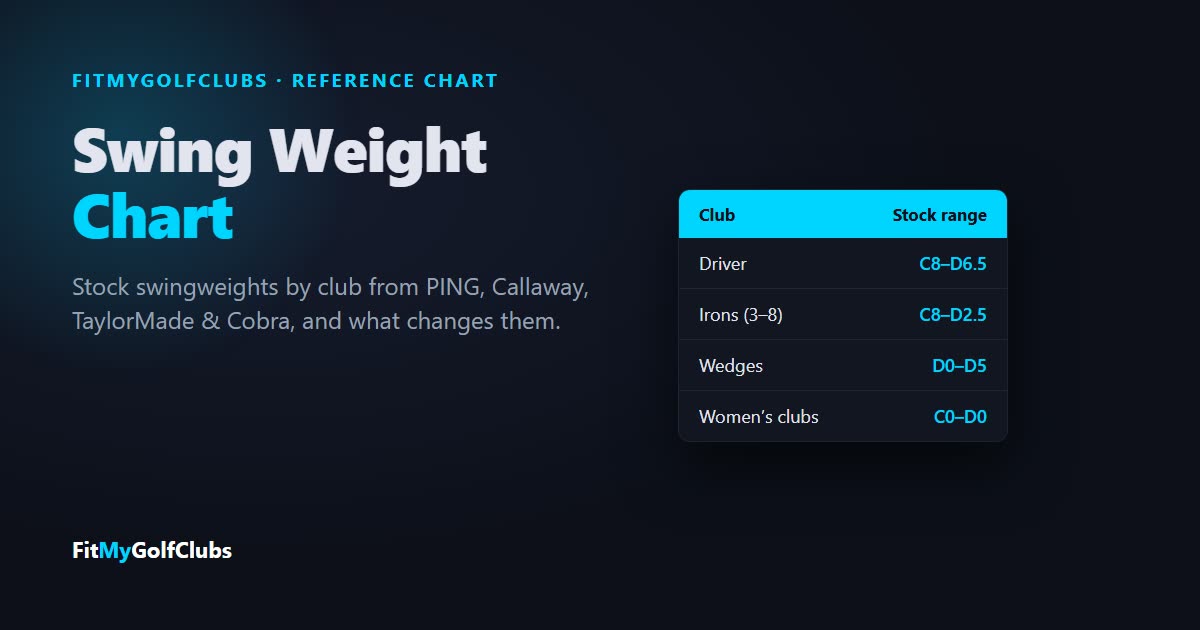
Swing Weight Chart: Standard Swingweights by Club and Brand
Swing weight chart: the A0–G9 scale, stock swingweights for drivers, irons and wedges from PING, Callaway, TaylorMade and Cobra, and what changes them.
Golf Club Fitting
October 8, 2026
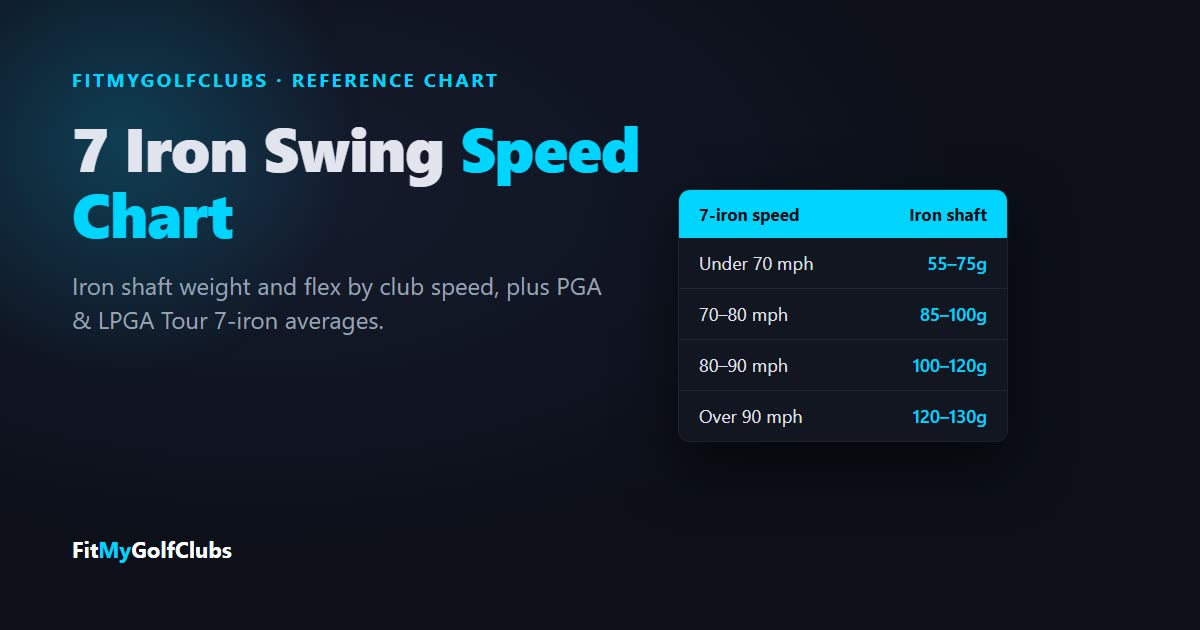
7 Iron Swing Speed Chart: Iron Shaft Weight, Flex & Carry
7 iron swing speed chart: iron shaft weight and flex by club speed, PGA (92 mph) and LPGA (78 mph) Tour averages, and 7-iron carry by speed.
Golf Club Fitting
October 8, 2026
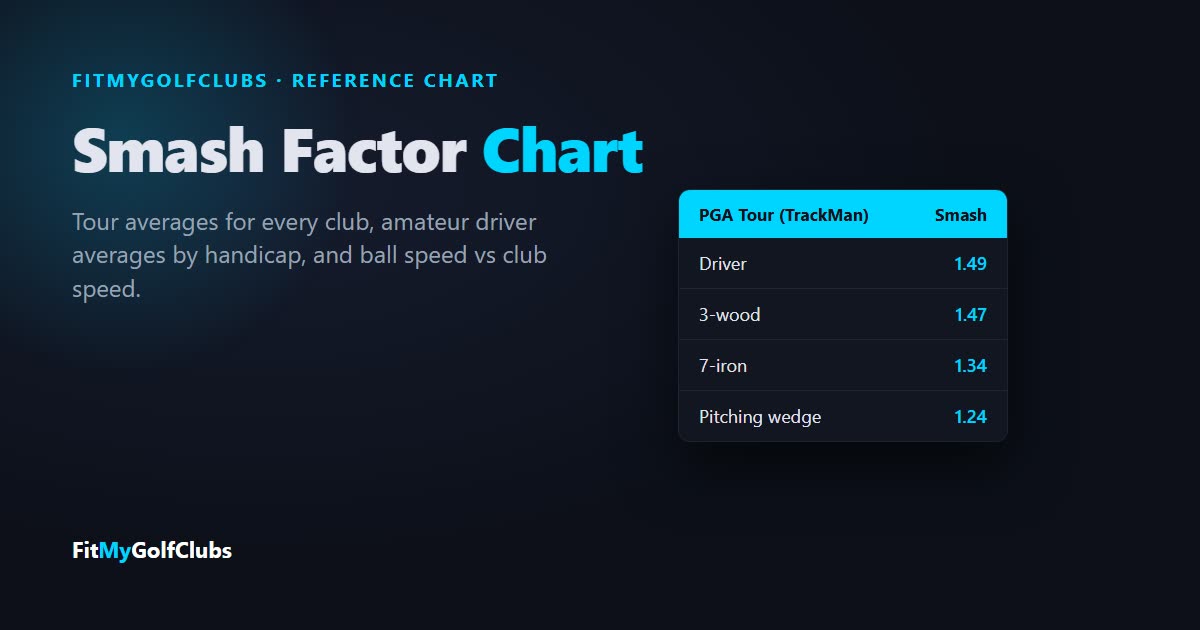
Smash Factor Chart: Tour Averages by Club + Ball Speed
Smash factor chart by club from TrackMan PGA and LPGA Tour averages, amateur driver averages by handicap, and a club speed to ball speed table.


© 2026 FitMyGolfClubs. All rights reserved. | Patent Pending
Contact: sean@fitmygolfclubs.com