

Golf Club Fitting
December 13, 2025
Stiff vs Regular Flex: How to Know Which You Need
Stiff or regular? It's the most common shaft flex decision golfers face, and getting it wrong quietly sabotages your game every time you swing.
Play a shaft that's too stiff and you'll lose distance, fight a fade, and wonder why your shots feel dead off the face. Play one that's too soft and you'll struggle with control, see higher spin than you want, and deal with inconsistent shot shapes.
The difference between stiff and regular flex isn't about skill level or ego—it's about matching the shaft to your swing speed and tempo. This guide shows you exactly how to figure out which one belongs in your bag.
Stiff vs regular flex — the short answer: if your driver swing speed is 95 mph or faster, play a stiff (S) shaft; under 95 mph, play regular (R). Swing speed is the deciding factor, and tempo breaks the tie in the 93–97 mph overlap zone — an aggressive transition leans stiff, a smooth tempo leans regular. Because most amateurs swing 80–95 mph, regular flex fits more golfers than the "stiff" label suggests.
Not sure what your swing speed is, or want a recommendation beyond "stiff vs regular"? Use our free Swing Speed → Shaft Flex Calculator — enter your speed and get a personalized flex band with AI context on tempo and miss pattern.
Stiff vs Regular Flex — The Key Differences
Shaft flex describes how much the shaft bends during your swing. A stiffer shaft resists bending more; a softer shaft bends more easily. This bending directly affects how the club delivers energy to the ball.
How Each Flex Behaves
During your downswing, the shaft loads (bends backward) and then releases (straightens and kicks forward) through impact. The timing of this load-and-release cycle determines launch angle, spin rate, and shot direction.
Stiff flex requires more force to load properly, releases later in the downswing, produces lower launch with less spin, and feels more boardy and less responsive.
Regular flex loads more easily with less force, releases earlier in the downswing, produces higher launch with more spin, and feels whippier and more responsive.
The Performance Trade-Off
Stiff shafts offer more control for players who generate enough speed to load them. Regular shafts maximize energy transfer for players who don't swing as fast.
The key word is "enough." A stiff shaft in the hands of a slower swinger doesn't provide extra control—it just fails to load properly, costing distance and producing weak fades.
For a complete breakdown of flex categories beyond just stiff and regular, see our swing speed to shaft flex chart.
Swing Speed Guidelines for Stiff vs Regular
Swing speed is the primary factor in choosing between stiff and regular flex. Here are the generally accepted ranges:
These ranges come straight from our full swing speed chart, which covers every flex from ladies through X-stiff for both drivers and irons.
Driver Swing Speed
Regular flex: 75–95 mph
Stiff flex: 95–110 mph
If your driver swing speed falls between 93-97 mph, you're in the overlap zone where either flex could work. Other factors like tempo become the tiebreaker.
Iron Swing Speed
Your 7-iron runs at about 80% of your driver speed (TrackMan tour data). If you swing your driver at 95 mph, your 7-iron is probably around 76 mph.
Most golfers use consistent flex throughout their irons, but the long irons (3-5) experience more flex loading than short irons due to longer shafts and faster swing speeds.
How to Find Your Swing Speed
You can measure swing speed at any golf retailer with a launch monitor, indoor simulator, or driving range with tracking technology. Even one session gives you the data you need.
If you can't access a launch monitor, estimate from your driver carry distance. A 180-yard carry suggests approximately 80 mph (regular). A 200-yard carry suggests approximately 90 mph (regular). A 220-yard carry suggests approximately 100 mph (stiff). A 240-yard carry suggests approximately 108 mph (stiff).
For more on measuring and understanding your swing speed, check out how to know what flex golf shaft you need.
Signs You're Playing the Wrong Flex
Your ball flight reveals a lot about whether your current flex matches your swing.
Signs Your Shaft Is Too Stiff
When the shaft doesn't load properly, you lose the energy transfer that creates distance and solid contact. Common symptoms include consistently low ball flight because the shaft isn't releasing and kicking the clubhead through impact. You'll also see shots that fade or push right because the clubface can't square in time. There's loss of distance because energy isn't transferring efficiently. Shots feel dead at impact—harsh rather than solid, like hitting into a board. And you'll have difficulty getting long irons airborne since the lower-lofted clubs suffer most from insufficient shaft loading.
Signs Your Shaft Is Too Soft
When the shaft loads too much or releases too early, control becomes the problem. Watch for shots that hook or draw too much because the shaft releases early, closing the face before impact. You'll see higher than normal ball flight from excessive shaft kick adding dynamic loft. There's inconsistent distance control because the timing of shaft release varies, creating unpredictable results. Ballooning shots happen when high spin and high launch combine to produce shots that climb and fall short. And you'll notice a whippy, unstable feel where the shaft feels out of control during the swing.
The Slice Connection
One of the most common equipment mismatches is a stiff shaft in the hands of a golfer who slices. The slice worsens because the stiff shaft won't release in time to square the face.
If you slice your driver but hit irons reasonably straight, shaft flex might be a major contributor. Our article on why you slice your driver but not your irons breaks down the equipment factors behind this common problem.
When to Choose Stiff
Choose stiff flex when the data supports it—not because it sounds better on the first tee.
Speed Qualifies You
If your driver swing speed consistently measures 95 mph or above, stiff flex is your starting point. Below that threshold, stiff shafts rarely outperform regular for most golfers.
Tour average driver swing speed is around 115 mph. The average male amateur is closer to 93 mph. Most recreational golfers overestimate their speed and play shafts that are too stiff as a result.
Tempo Matters Too
Beyond speed, your swing tempo influences the right choice. An aggressive, quick-tempo swing loads the shaft harder than a smooth, slow-tempo swing at the same speed.
If you have an aggressive move with a hard transition from backswing to downswing, you may benefit from stiff even at the lower end of the speed range (93-95 mph).
Control Priority
Some faster swingers choose stiff flex to prioritize control over maximum distance. If you're already long enough and want to tighten dispersion, a slightly stiffer shaft can help—but only if you have the speed to load it properly.
When to Choose Regular
Most amateur golfers should lean toward regular flex. Here's why:
Speed Reality Check
According to swing speed studies, the majority of amateur male golfers swing between 80-95 mph with the driver. That range favors regular flex for most players.
If you haven't measured your swing speed on a launch monitor, assume you're probably closer to regular than stiff. Ego-based flex selection is one of the most common equipment mistakes in golf.
Smooth Tempo Benefits
If you have a smooth, rhythmic swing with a gradual transition, regular flex helps maximize distance. The shaft has time to load fully, and the softer tip promotes better release and higher launch.
Distance Priority
For golfers seeking maximum distance over maximum control, regular flex often wins. The easier loading and earlier release typically produce a few extra yards compared to a stiff shaft of the same weight and profile.
The Senior/Regular Question
If you're debating between senior and regular flex, the same principles apply. Senior flex (sometimes called "A" flex) suits driver speeds below 75 mph. If you're 75-85 mph, regular is likely your best fit.
How to Test Before Buying
Don't guess on flex. Test with real data before committing.
Launch Monitor Testing
The most reliable way to compare stiff vs regular is hitting both on a launch monitor. You'll see objective data on launch, spin, carry distance, and dispersion—not just feel.
Most golf retailers offer this testing. If cost is a concern, our guide on golf club fitting costs explains where to get tested affordably.
Demo Day Comparisons
Manufacturer demo days let you test the same club in different flexes with launch monitor feedback. This head-to-head comparison reveals which flex produces better numbers for your swing.
DIY Assessment
You can do basic flex testing yourself if you have access to the same club in both flexes. Hit 10 shots with each and compare: Which produced longer average carry? Which had tighter dispersion? Which felt more solid?
The flex that wins on data (not just feel) is your answer. For more self-fitting techniques, see how to fit your golf clubs at home.
Stiff vs Regular Flex in Your Fairway Woods and Hybrids
Match your fairway wood and hybrid flex to your driver, then go one step softer only if you struggle to launch them. A 3-wood swings a few mph slower than your driver and hybrids slower still, but manufacturers build the flex within a model line to feel consistent from driver through hybrid — so if your driver is stiff, your 3-wood and hybrids are usually stiff too, and keeping them matched protects your tempo across the top of the bag.
The exception is launch. If you hit your driver fine but balloon, lose distance, or leave your 3-wood low and weak, a regular-flex fairway wood can help you load the shaft and get the ball airborne. Hybrids sit between woods and irons, so many golfers feel a stiff hybrid play firmer than a stiff iron at the same speed — if your hybrids feel harsh or come out low, regular is worth testing. When in doubt, keep the whole top of your bag on one flex and let a swing speed to shaft flex chart confirm the starting point.
Stiff vs Regular Flex for Beginners
Most beginners should play regular flex. Until your swing is repeatable, a softer shaft helps you launch the ball higher and square the face more easily, and new golfers usually swing the driver under 95 mph — squarely in the regular-flex range. Choosing stiff too early is one of the most common equipment mistakes new golfers make: a stiff shaft you can't load produces low, weak shots and a fade or slice that feels like a swing fault but is really an equipment one.
Because a developing swing is inconsistent, the flex-to-speed match matters less than forgiveness — err soft. If your driver speed is under 80 mph, look at senior (A) flex rather than regular. Don't over-optimize while you're still learning; get into the right ballpark, then retest once your swing stabilizes. Not sure of your number? Our free shaft flex calculator turns your swing speed into a flex in seconds, and a free bag grade checks flex across every club so a mismatched driver or hybrid doesn't slip through.
The Bottom Line
Stiff vs regular flex comes down to swing speed and tempo. If you swing your driver 95+ mph with an aggressive tempo, stiff makes sense. If you're under 95 mph or have a smooth tempo, regular likely serves you better.
Most amateurs play shafts that are too stiff because "stiff" sounds better than "regular." That ego costs real distance and accuracy.
Get your swing speed measured, test both flexes with objective data, and play whatever produces the best results. The shaft that matches your swing beats the shaft that sounds impressive every time.
Not sure which flex you're currently playing?
FitMyGolfClubs analyzes your equipment and identifies flex mismatches across your entire bag. Download the app and find out if your shafts are working with your swing or against it.
Frequently asked questions
Should I play stiff or regular flex?
Use the 95 mph rule: if your driver swing speed is consistently 95 mph or above, start with stiff; below that, regular is usually the better fit. Tempo is the tie-breaker in the 93-97 mph overlap zone — an aggressive transition leans stiff, a smooth tempo leans regular.
What happens if my shaft is too stiff?
A too-stiff shaft does not load properly, so you lose distance, see lower ball flight, and tend to fade or push right because the face cannot square in time. Shots often feel dead or boardy at impact.
What happens if my shaft is too soft?
A too-soft shaft over-loads and releases early, producing higher, ballooning ball flight, hooks or draws, and inconsistent distance control. The club can feel whippy and unstable through the swing.
Do most amateur golfers play the wrong flex?
Many do — they play shafts that are too stiff because stiff sounds better than regular. The majority of amateur men swing 80-95 mph, which favors regular for most players.
On a computer? You can also grade your bag in your browser — no app to install.
For flex, length, lie and every brand shaft chart in one place, see our golf club fitting chart.
Still not sure which flex you need? Let the FitMyGolfClubs app grade your bag and show you where flex — and seven other factors — are helping or hurting. Free to start.
Related Articles
Golf Club Fitting
October 8, 2026
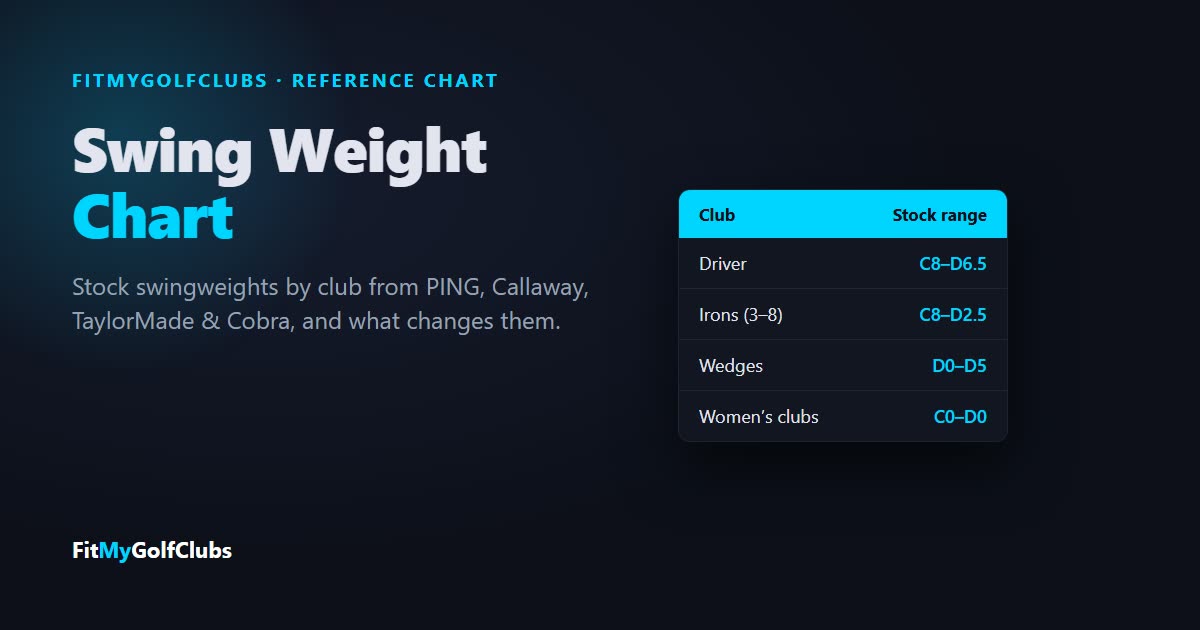
Swing Weight Chart: Standard Swingweights by Club and Brand
Swing weight chart: the A0–G9 scale, stock swingweights for drivers, irons and wedges from PING, Callaway, TaylorMade and Cobra, and what changes them.
Golf Club Fitting
October 8, 2026
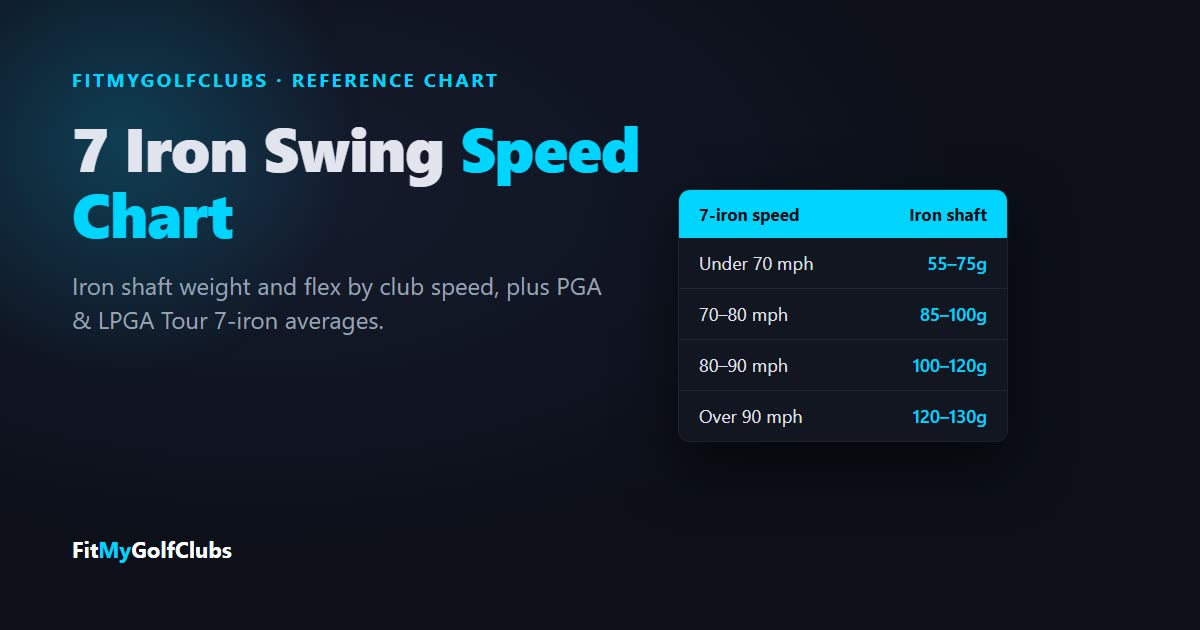
7 Iron Swing Speed Chart: Iron Shaft Weight, Flex & Carry
7 iron swing speed chart: iron shaft weight and flex by club speed, PGA (92 mph) and LPGA (78 mph) Tour averages, and 7-iron carry by speed.
Golf Club Fitting
October 8, 2026
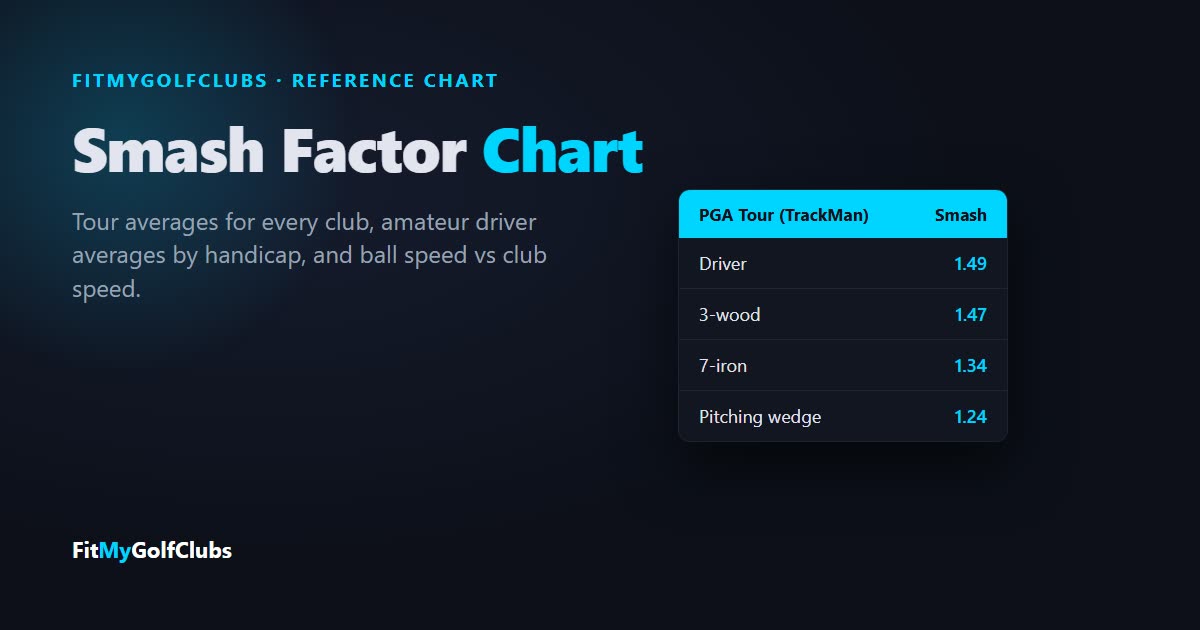
Smash Factor Chart: Tour Averages by Club + Ball Speed
Smash factor chart by club from TrackMan PGA and LPGA Tour averages, amateur driver averages by handicap, and a club speed to ball speed table.


© 2026 FitMyGolfClubs. All rights reserved. | Patent Pending
Contact: sean@fitmygolfclubs.com