

For Golf Pros
August 15, 2026
Indoor golf is having its moment — and everyone who's paid $60 an hour for a peak-time bay has done the napkin math on opening their own place. The napkin math is usually wrong in both directions: first-timers underestimate the buildout by half and overestimate year-one utilization by double.
This guide gives you the real 2026 numbers — what a simulator business costs to open, what a bay actually earns, the utilization rates operators really hit — plus a calculator to run your own scenario, and the revenue streams that separate the venues that clear 25% margins from the ones that close in 18 months.
Golf simulator business — the quick answer: expect $150,000–$500,000 to open, with a typical 4-bay venue running $200,000–$300,000 (commercial-grade equipment is $25,000–$70,000 per bay, and the buildout — walls, HVAC, electrical, flooring — adds $40,000–$75,000 per bay on top). Bays rent for $40–$70/hour in most US markets. Year-one utilization averages about 33%; the venues that get profitable push toward 60% and add lesson, fitting, league, and membership revenue on top of bay rentals.
🏌️ Planning a sim business — or already running bays?
The winners sell more than bay time. FitMyGolfClubs Pro lets you add equipment analysis and lesson revenue without hiring a master fitter. See how →
What It Costs to Start a Golf Simulator Business
Startup cost is driven by three decisions: how many bays, what technology tier, and how much construction your space needs. Here's the 2026 picture:
The pattern in that table matters more than any single number: construction usually costs more than the simulators. A great deal on launch monitors doesn't save a project that picked a space needing $300k of buildout.
What a Golf Simulator Bay Actually Earns
US venues charge $40–$70 per bay-hour in most markets, with peak evening and weekend slots commonly hitting $60–$80. But the rate matters less than the number nobody puts on the brochure: utilization. A bay only earns when someone's in it.
*Assumes 12 bookable hours/day. A single bay at 60% utilization and ~$50/hr generates roughly $4,000–$5,500/month in simulator revenue alone by more conservative session-length math — either way, the utilization tiers are the story.
Sim Bay Revenue Calculator
FREE — NO SIGNUPBays × rate × utilization — see your monthly and annual bay revenue.
Assumes 12 bookable hours/day. Year-one venues average ~33% utilization; 60% is the profitability target.
Are Golf Simulator Businesses Profitable?
Margins in indoor golf typically run 15–35%. The venues consistently above 25% share three habits: dynamic pricing (peak vs off-peak instead of one flat rate), a membership base that turns lumpy walk-in revenue into recurring revenue, and no-show rates kept under 5% with card-on-file booking.
The failure pattern is just as consistent: sign a lease on rate-card fantasy math (60% utilization from day one at peak pricing), run out of working capital during the 6–12 months it actually takes to build a customer base, and close before the leagues and memberships that would have saved the business ever mature. Plan your break-even at 30–35% utilization — if the business only works at 60%, it doesn't work yet.
The Revenue Streams Beyond Bay Rentals
Bay time is the anchor, but it's capped — you can't rent more hours than exist. The venues that win layer revenue on the same square footage:
The third and fourth rows are where most operators leave money on the table — not because they lack the launch monitor, but because they think fitting revenue requires a master fitter on staff. It doesn't anymore. AI equipment analysis lets any operator (or the teaching pro renting your bay) grade a customer's entire bag across professional fitting factors, hand them a report, and turn "your 7-iron gapping is broken" into a lesson booking, a fitting session, or a pro-shop sale. Fitting proposals and lesson scheduling run from the same system.
Turn bay time into fitting revenue.
FitMyGolfClubs for coaches, fitters, and sim operators: grade any customer's bag across 8 professional fit factors — no master fitter on staff, no extra hardware — then schedule the lesson and send the proposal from one place.
The Bottom Line
A golf simulator business in 2026 costs $150,000–$500,000 to open ($200,000–$300,000 for a typical 4-bay), earns $40–$70 per bay-hour, and lives or dies on utilization — plan around 33% in year one, build toward 60%, and break even below 35% or don't sign the lease. The rate card won't save you; the membership base, the league nights, and the lesson-and-fitting revenue running on hours you already own are what push margins from surviving to 25%+. Buy the simulators for the golf; build the business on everything else.
Frequently asked questions
How much does it cost to start a golf simulator business?
Between $150,000 and $500,000 in 2026, with a typical 4-bay venue in second-generation retail space running $200,000–$300,000. Commercial-grade simulator equipment is $25,000–$70,000 per bay, and the buildout — walls, electrical, HVAC, flooring, ADA compliance — adds $40,000–$75,000 per bay, usually exceeding the equipment cost itself.
How much money does a golf simulator business make?
US venues charge $40–$70 per bay-hour (peak slots $60–$80). A single bay at 60% utilization and roughly $50/hour generates about $4,000–$5,500 per month in rental revenue; at 40% utilization and premium rates, $87,000–$146,000 per year. Add-on revenue from lessons, fittings, leagues, and memberships typically layers another 20–30% on top.
Are golf simulator businesses profitable?
Margins typically run 15–35%. Venues consistently above 25% do three things: dynamic peak/off-peak pricing, a membership base for recurring revenue, and no-show rates under 5%. The common failure is planning around 60% utilization from day one — year-one venues average about 33%.
What utilization rate should I expect?
Around 33% of bookable hours in year one, with realistic ranges of 20–50% depending on market and marketing. Sixty percent is the target that memberships and leagues exist to reach. Underwrite your break-even at 30–35% — if the numbers only work at 60%, the plan isn't ready.
How can a simulator venue make money beyond bay rentals?
Memberships, league nights, lessons ($60–$150/hour on top of bay fees), equipment analysis and fitting services ($100–$200 per session), and food and beverage. Fitting revenue no longer requires a master fitter — AI equipment analysis can grade a customer's full bag from the data and photos you already collect, feeding lessons, fittings, and pro-shop sales.
Related reading
- Golf Lesson Scheduling Software — Run lessons, leagues, and events from one calendar.
- How Much Do Golf Lessons Cost? 2026 Prices (+ What Pros Charge) — Price your lesson add-on right, from published rate cards.
- How Much Does a Golf Club Fitting Cost? — What fitting services sell for at every tier.
- How to Test Golf Clubs With Launch Monitors — Get more out of the hardware you're buying anyway.
Opening a venue — or just love the data? Grade a bag free with FitMyGolfClubs — 8 professional fit factors, no launch monitor required.
Related Articles
Golf Club Fitting
October 8, 2026
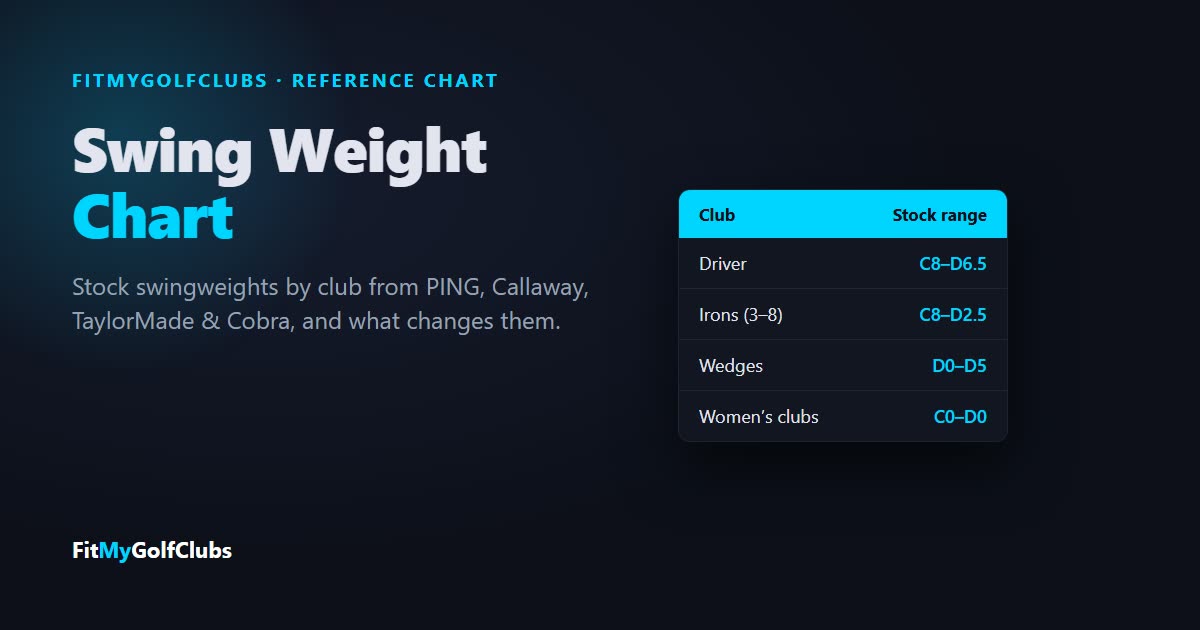
Swing Weight Chart: Standard Swingweights by Club and Brand
Swing weight chart: the A0–G9 scale, stock swingweights for drivers, irons and wedges from PING, Callaway, TaylorMade and Cobra, and what changes them.
Golf Club Fitting
October 8, 2026
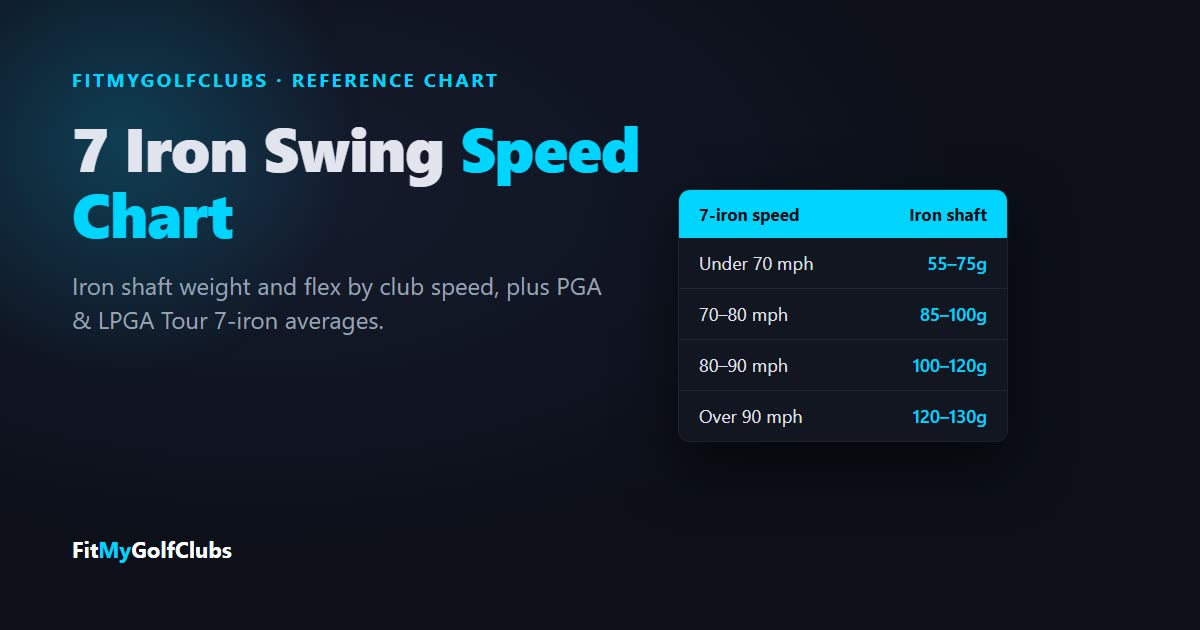
7 Iron Swing Speed Chart: Iron Shaft Weight, Flex & Carry
7 iron swing speed chart: iron shaft weight and flex by club speed, PGA (92 mph) and LPGA (78 mph) Tour averages, and 7-iron carry by speed.
Golf Club Fitting
October 8, 2026
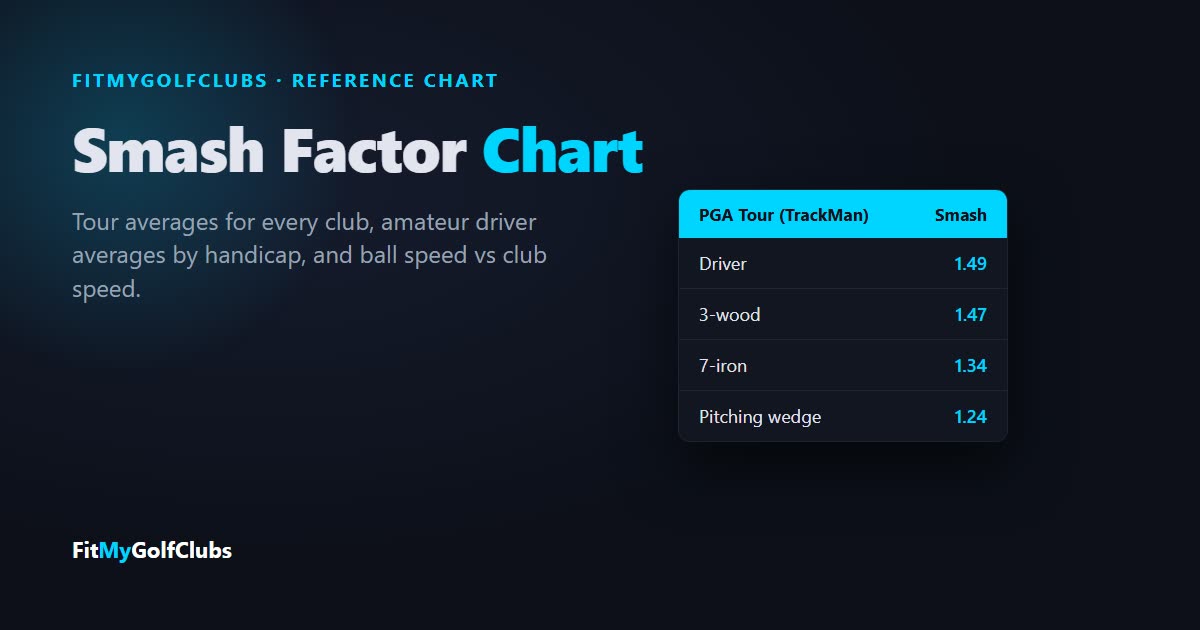
Smash Factor Chart: Tour Averages by Club + Ball Speed
Smash factor chart by club from TrackMan PGA and LPGA Tour averages, amateur driver averages by handicap, and a club speed to ball speed table.


© 2026 FitMyGolfClubs. All rights reserved. | Patent Pending
Contact: sean@fitmygolfclubs.com