

Golf Club Fitting
August 26, 2026
A golf ball fitting matches the ball to your swing speed first, then your priority around the greens, then your budget — in that order. The free fitting tool below does it in about 30 seconds: answer three quick quiz questions and get a specific ball you can buy, plus an alternate. Unlike the single-brand selector tools from Titleist, Bridgestone, or Callaway, this fitter compares balls across seven brands — including value urethane, multi-dozen, and recycled options they’ll never show you. Below the tool is the full golf ball fitting chart and the breakdown by swing speed, priority, and budget.
⚡ Don't know your swing speed?
It's the number that picks your ball, your shaft flex, and your yardages. Get it in one step with our free Swing Speed Calculator. Find my speed →
How to Choose a Golf Ball (The Four Factors, in Order)
A ball fitting is simpler than club fitting — four variables, in priority order:
1. Compression / swing speed. Compression is how much the ball deforms at impact. Firmer, high-compression balls need real clubhead speed to compress; softer, low-compression balls compress easily at moderate speeds and fly straighter. Match it to your driver speed first. (Full ratings in the golf ball compression chart.)
2. Priority — spin, distance, feel, or straightness. This decides the model within your compression band. Want maximum greenside bite? A urethane-cover tour ball. Want the ball to hold its line? A low-spin distance ball.
3. Feel. Soft vs. firm off the face and around the greens. Largely preference — and a legitimate reason to pick a ball, especially on putts.
4. Budget. A $58 urethane tour ball, a ~$40 value urethane with most of the spin, a $25 soft two-piece, or the same tour ball recycled for ~$30. The right ball is the cheapest one that does what you need.
Golf Ball Fitting Chart: Best Ball by Swing Speed
Your driver swing speed sets the compression range. Find your band in the fitting chart:
These bands are guidance, not law — plenty of 100+ mph players game a soft ball for feel. If you're between bands, let greenside spin and driver flight break the tie. Not sure of your number? The golf swing speed chart shows how to measure or estimate it, or work back from your driver carry with the distance chart.
Best golf ball for slow swing speeds (under 85 mph)
Common for seniors, many women, and newer golfers — and the easiest fit: a low-compression ball launches easier, spins less off the driver (straighter), and feels better at moderate ball speeds. Start with the Callaway Supersoft or Srixon Soft Feel; if the ultra-soft feel is too dead on putts, step up to the Titleist Tour Soft. Losing a few per round? Recycled Titleist TruFeels run about $12.50 a dozen.
Best golf ball for 85 mph swing speed
Right at the border: soft two-piece balls (Supersoft, Tour Soft) still work beautifully, but you're fast enough for a soft urethane like the Bridgestone Tour B RX or Srixon Q-Star Tour if you want real greenside spin. Pick by short game: bump-and-run player → soft two-piece; spin-the-wedges player → soft urethane.
Best golf ball for 90 mph swing speed
The most common amateur speed, and the broadest choice. For spin and control the Bridgestone Tour B RX, TaylorMade Tour Response, and Srixon Q-Star Tour are built precisely for this speed — tour-cover spin without needing 100+ mph. For feel and straightness, the Titleist Tour Soft or Callaway ERC Soft. You don't need a firm Pro V1x at 90 — you'd be paying for compression you can't use.
Best golf ball for 95 mph swing speed
Now the full tour category opens up: the Titleist Pro V1, TaylorMade TP5, and Srixon Z-Star compress properly and reward you with maximum greenside control. Not ready to pay tour price? The Tour Response or Q-Star Tour keep most of the spin at two-thirds the cost.
Best golf ball for 100+ mph swing speed
Fast swings should go firm: the Titleist Pro V1x, TaylorMade TP5x, and Srixon Z-Star XV hold ball speed better, resist ballooning, and deliver the spin strong players can actually use. Fighting too much spin off the driver? The Pro V1x Left Dash is the low-spin tour answer.
What Golf Ball Should I Use? Match It to What You Want
Greenside spin & control — a urethane-cover ball. Fast swings: Pro V1/Pro V1x, TP5/TP5x, Z-Star/Z-Star XV. Moderate swings (under ~100): Bridgestone Tour B RX, TaylorMade Tour Response, or Srixon Q-Star Tour give you tour-cover spin without tour-level speed.
Distance — a firm, low-spin two-piece: Titleist Velocity, TaylorMade Distance+, Callaway Warbird. Low driver spin = straighter and longer for most amateurs.
Soft feel — low compression: Callaway Supersoft, Srixon Soft Feel, Titleist TruFeel, Wilson Duo Soft (the softest widely-played ball).
Straighter flight / anti-slice — low-spin models fight sidespin: Titleist AVX, Bridgestone e12 Contact, Callaway ERC Soft (with Triple Track alignment).
Best Golf Ball by Budget
Premium (~$45–58/dozen). Tour urethane — Pro V1/x, TP5/x, Z-Star/XV, Chrome Soft. Maximum greenside spin and the tour feel, if you swing fast enough to use it.
Value (~$25–43). This is where most amateurs should look. Value urethane (Tour B RX, Tour Response, Q-Star Tour) delivers most of the greenside spin at two-thirds the price; soft two-piece balls (Supersoft, Soft Feel) give feel and straightness for less.
Best price (~$10–25/dozen). Multi-dozen and recycled: Wilson SmartCore and Bridgestone e6 in double-dozen boxes work out to $10–20 a dozen, and recycled tour balls — like graded Titleist TruFeels at ~$12.50/dozen — let you play a name-brand ball for the price of a range bucket. If you lose a few a round, this is the smart tier.
🎯 The ball is one variable. Your 14 clubs are the other.
A ball change is worth a few yards — clubs that actually fit your swing are worth far more. Grade My Bag checks all 14 clubs across 6 fit factors, free. Grade my bag free →
Does the Golf Ball Really Matter?
Yes — but less than the marketing suggests, and mostly for feel and greenside spin rather than raw distance. Modern robot testing shows slower swingers don't lose meaningful distance playing a firm tour ball; the "you can't compress it" story is largely a myth. What the ball genuinely changes: feel (biggest real difference, especially on putts), driver spin and flight (softer two-piece = straighter but less greenside bite), and cold-weather playability. Pick on feel and spin keyed to your speed — and remember the ball is the cheapest variable in your setup. If you're chasing consistency, your shafts and gapping move the needle more, which is what a free bag grade or a shaft fitting is for.
Frequently asked questions
Is an online golf ball fitting accurate?
For picking a short-list, yes. Ball fit comes down to four measurable factors — compression vs. swing speed, spin priority, feel, and budget — and an online fitting tool weighs them the same way a fitter starts in person. A launch-monitor ball fitting adds precision on spin numbers, but for choosing between a soft two-piece and a urethane tour ball, the quiz above gets you to the right shelf.
What golf ball should I play for my swing speed?
Under 85 mph driver speed: low compression (Supersoft, Soft Feel, Tour Soft). 85–100 mph: a soft urethane like the Tour B RX, Tour Response, or Q-Star Tour for spin, or a soft two-piece for feel and straightness. 100+ mph: a firm tour ball (Pro V1x, TP5x, Z-Star XV). Use the tool above to get a specific pick for your exact speed, priority, and budget.
What is the best golf ball for a 90 mph swing speed?
At 90 mph you're in the broadest band. If you want greenside spin, a soft urethane ball like the Bridgestone Tour B RX, TaylorMade Tour Response, or Srixon Q-Star Tour is ideal — tour-cover control without needing 100+ mph. If you want feel and straightness, a Titleist Tour Soft or Callaway Supersoft. You don't need a firm Pro V1x at this speed.
Do I need an expensive tour ball?
Only if you value the greenside spin a urethane cover provides and swing fast enough to use it. Many amateurs score just as well with a soft, low-compression ball that flies straighter and costs half as much. And a value urethane (Tour Response, Q-Star Tour, Tour B RX) gives most of the tour spin at a lower price.
What is the best cheap golf ball?
For lowest cost per ball, multi-dozen and recycled options win: Wilson SmartCore or Bridgestone e6 in double-dozen boxes ($10–20/dozen), or recycled tour balls like graded Titleist TruFeels (~$12.50/dozen) if you want a name-brand ball on a budget.
How do I measure my swing speed for a ball fitting?
Most ranges have a launch monitor that shows clubhead speed, or use an at-home radar. No number? Estimate from driver carry: roughly, carry in yards ÷ 2.4 = swing speed in mph (a 230-yard carry ≈ 96 mph). Our swing speed calculator does it in one step.
Related reading
- Golf Club Fitting Chart — Length and lie by height, flex by swing speed, and every chart we publish in one place.
- Golf Ball Comparison Chart: 65 Balls Across 19 Brands — every ball's features, compression, and price side by side, from tour urethane to bulk value.
- Golf Ball Compression Chart — every popular ball's compression rating and the range for your speed.
- Golf Swing Speed Chart — the number that picks your ball also picks your shaft.
- Golf Club Distance Chart — how far each club should go at your speed and skill.
- Golf Shaft Fitting — the equipment change worth more than any ball switch.
Ball sorted. Now check the clubs.
FitMyGolfClubs grades all 14 clubs across 6 professional fit factors — flex, weight, length, lie, and more. No fitting appointment, no launch monitor required.
On a computer? You can also grade your bag in your browser — no app to install.
Related Articles
Golf Club Fitting
October 8, 2026
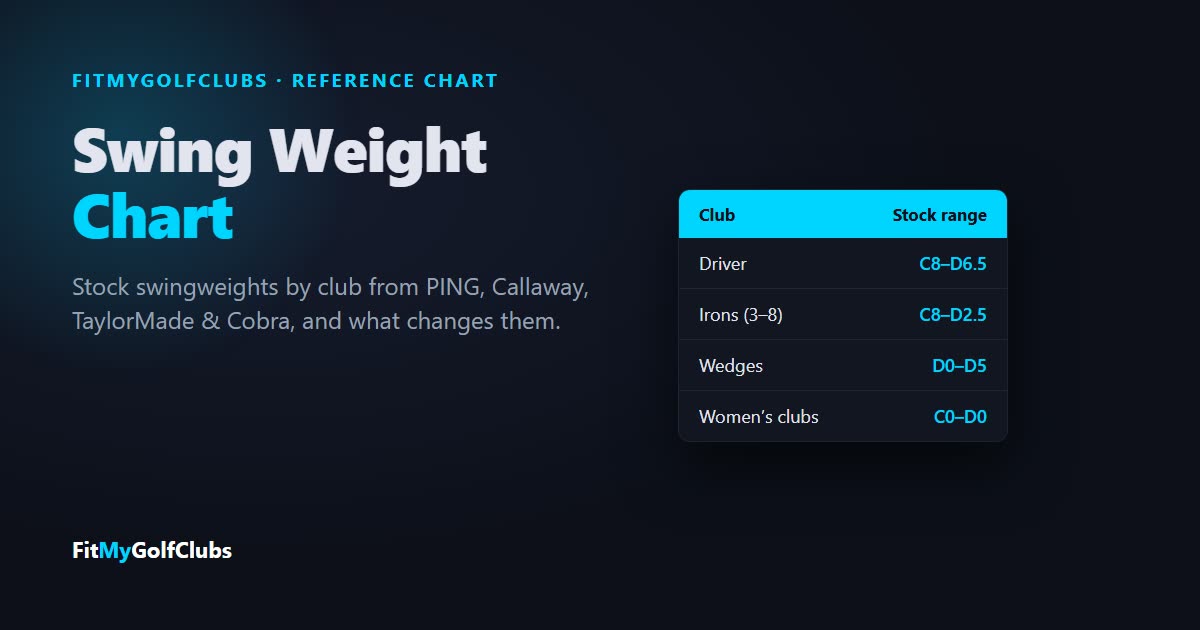
Swing Weight Chart: Standard Swingweights by Club and Brand
Swing weight chart: the A0–G9 scale, stock swingweights for drivers, irons and wedges from PING, Callaway, TaylorMade and Cobra, and what changes them.
Golf Club Fitting
October 8, 2026
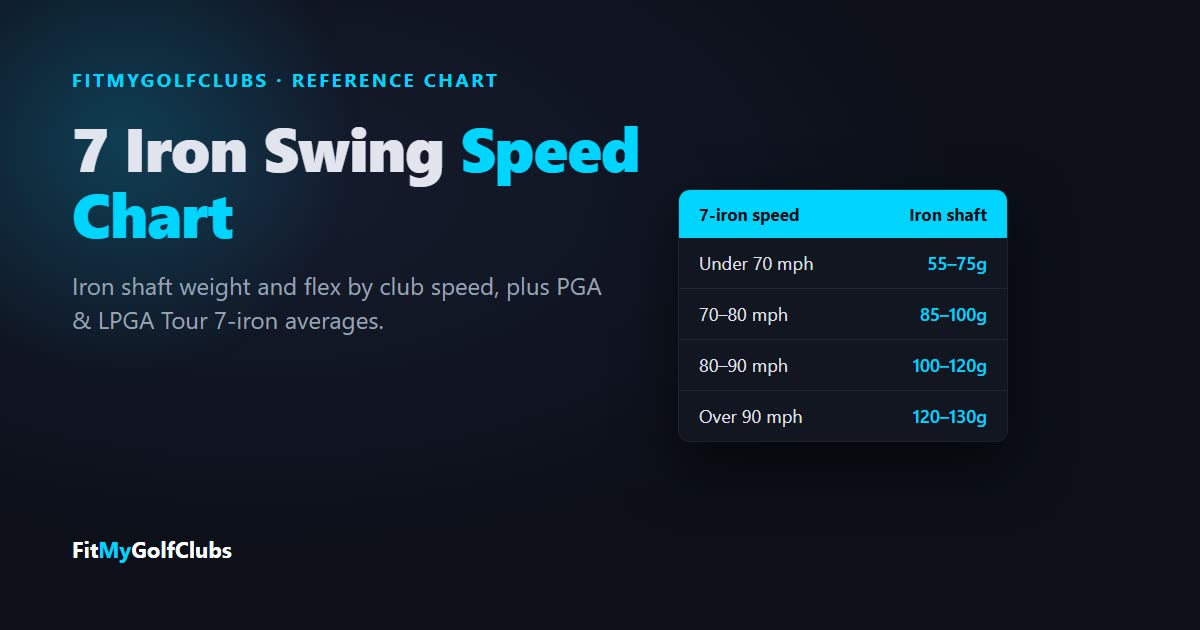
7 Iron Swing Speed Chart: Iron Shaft Weight, Flex & Carry
7 iron swing speed chart: iron shaft weight and flex by club speed, PGA (92 mph) and LPGA (78 mph) Tour averages, and 7-iron carry by speed.
Golf Club Fitting
October 8, 2026
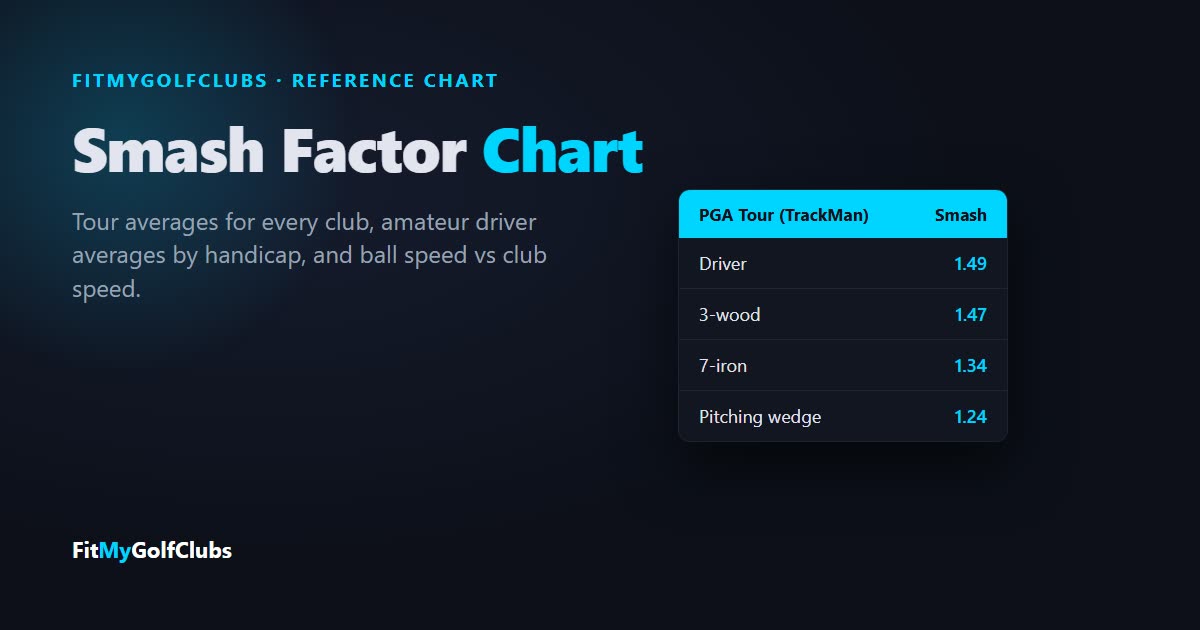
Smash Factor Chart: Tour Averages by Club + Ball Speed
Smash factor chart by club from TrackMan PGA and LPGA Tour averages, amateur driver averages by handicap, and a club speed to ball speed table.


© 2026 FitMyGolfClubs. All rights reserved. | Patent Pending
Contact: sean@fitmygolfclubs.com