

August 21, 2026
MAINE — Updated September 26, 2026 — FitMyGolfClubs, a free app that grades a golfer’s entire bag across eight professional fitting factors, has updated its bag-grading study with more than 230 real amateur bags. Aging equipment is the most common weak spot overall, the weakest factor in 37% of bags. Among the fitting specs a golfer can actually change, loft gapping — uneven distance gaps between clubs — leads by a wide margin: it is the weakest fit factor in 42% of bags, ahead of lie angle at 26%.
“I went through five club fittings and got five different answers, so I built the tool I wished existed,” said Sean Morrissey, founder of FitMyGolfClubs. “What surprised me in the data is how ordinary the biggest problems are. Two in five golfers’ weakest fitting spec is loft gapping — clubs that overlap or leave a hole in the set — and it’s something anyone can check in a few minutes, free, without a launch monitor.”
The most common fitting weakness, ranked
FitMyGolfClubs grades every bag on eight factors and flags the single lowest-scoring one as each golfer’s biggest weakness. Here is how often each factor came out on the bottom, first across all eight factors, then with club age set aside so only the fitting specs compete:
Why loft gapping leads the fitting specs
Loft gapping is the distance spacing between your clubs. When it’s off, two clubs fly the same distance (a wasted slot) or a hole opens up in the set — the dreaded “in-between” yardage. It rarely feels like a problem, which is exactly why it tops the list: golfers notice a slice, but almost nobody notices that their pitching wedge and gap wedge are only 8 yards apart. Modern “strong” lofts make it worse, because a new 7-iron can overlap an old 6-iron.
For reference on what each club should carry, see the golf club distance chart, and the swing speed chart for how clubhead speed sets those numbers.
The biggest weak spot overall: aging equipment
For more than one in three golfers (37%), aging equipment was the weakest link — not a fitting spec at all, just worn grooves, tired shafts, and dated technology. It’s the cheapest problem to diagnose and often the most rewarding to fix.
The sleeper: lie angle
Lie angle is the weakest factor in about one in five bags (19%), and the weakest fitting spec in 26%. A lie that is a degree or two off starts a well-struck iron left or right of the target, and most players blame their swing for it.
Shaft flex is rarely the problem
Flex gets most of the attention in fitting conversations, but in our data it is rarely what holds a bag back. Only 2% of bags score below a C on flex consistency, and flex is the weakest factor in just 5%. If you are choosing between a new shaft and fixing your gapping, fix the gapping first.
What changed since the August first look
Our first look on August 21 covered more than 150 bags and put loft gapping at 48% and club age at 24%. With a larger sample, and counting each golfer’s latest grade once, club age has moved to the top overall. Loft gapping remains the most common weakness among the fitting specs.
How the app works
FitMyGolfClubs is free and grades all 14 clubs across eight fitting factors — loft gapping, lie, length, shaft flex, weight, torque, kickpoint, and club age — in about three minutes, with no launch monitor required. It is available on the App Store, on Google Play, and in any web browser, and returns each golfer’s weakest factor plus the specific clubs causing it.
About FitMyGolfClubs
FitMyGolfClubs is a free golf club-fitting app that grades a player’s entire bag against professional fitting standards and shows exactly which clubs to adjust. Founded by golfer Sean Morrissey after five inconsistent in-person fittings, it makes fitting-grade analysis available to any golfer in minutes — no launch monitor, no appointment. Learn more at fitmygolfclubs.com.
Methodology
Based on more than 230 real amateur golf bags graded on FitMyGolfClubs through September 26, 2026, counting each golfer’s most recent grade once. Test and internal accounts are excluded. Figures are anonymized aggregates and contain no personal data. Each bag is scored across eight fitting factors: club age, loft gapping, lie angle, length, shaft weight progression, shaft flex, shaft torque, and kickpoint. For this analysis we counted the single lowest-scoring factor per bag, then repeated the count with club age set aside for the fitting-spec column. Percentages are rounded and may not sum to exactly 100%.
Frequently asked questions
What is the most common club-fitting mistake?
Across more than 230 real amateur bags we graded, aging equipment was the most common weak spot overall (37% of bags). Among the fitting specs a golfer can change, loft gapping — uneven distance gaps between clubs — was the weakest in 42% of bags, followed by lie angle at 26%.
What is loft gapping?
It’s the spacing of carry distances across your set. Good gapping means each club goes a consistent 10–15 yards farther than the next; bad gapping means overlaps (two clubs, one distance) or holes (a yardage you can’t cover).
How do I know if my bag has a gapping problem?
Compare your clubs’ carry distances. If neighbors are within a few yards of each other, or there’s a 25–30 yard jump anywhere, you have a gapping issue. Grading your bag flags it automatically.
Is shaft flex the most common fitting problem?
No. Flex gets the most attention in fitting conversations, but across more than 230 graded amateur bags only 2% scored below a C on flex consistency, and flex was the weakest factor in just 5% of bags. Loft gapping and lie angle hold far more bags back.
Is FitMyGolfClubs free?
Yes. It grades all 14 clubs across 8 fitting factors in about 3 minutes, with no launch monitor required — free on the App Store, on Google Play, and in any web browser.
Want the charts behind these fitting factors? See our golf club fitting chart.
Related Articles
Golf Club Fitting
October 8, 2026
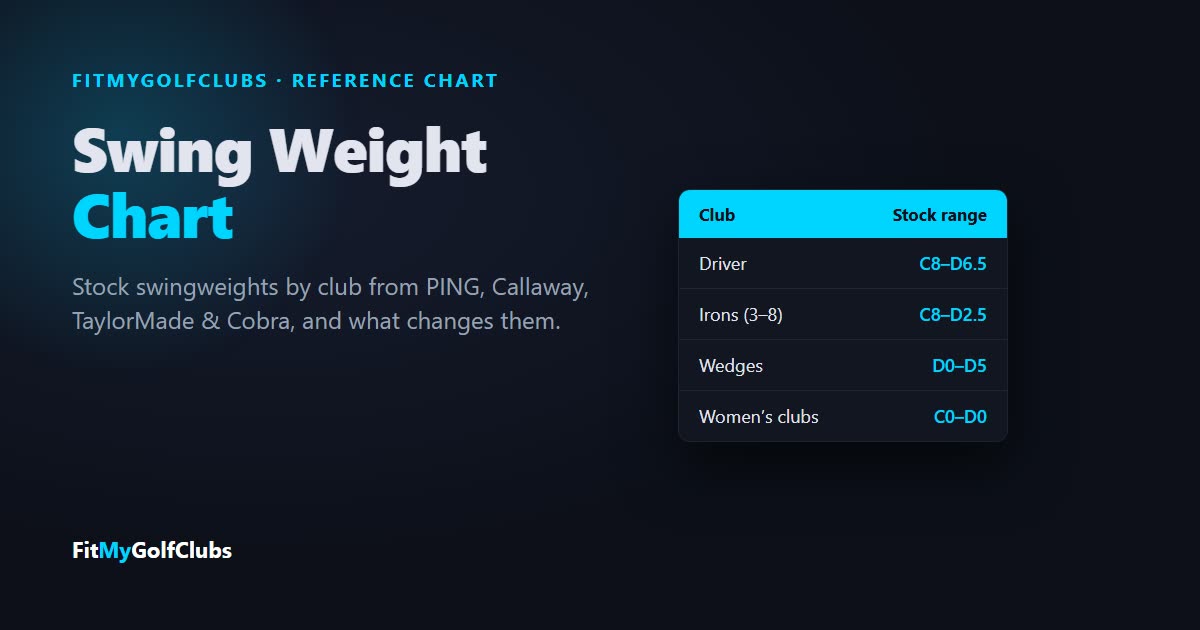
Swing Weight Chart: Standard Swingweights by Club and Brand
Swing weight chart: the A0–G9 scale, stock swingweights for drivers, irons and wedges from PING, Callaway, TaylorMade and Cobra, and what changes them.
Golf Club Fitting
October 8, 2026
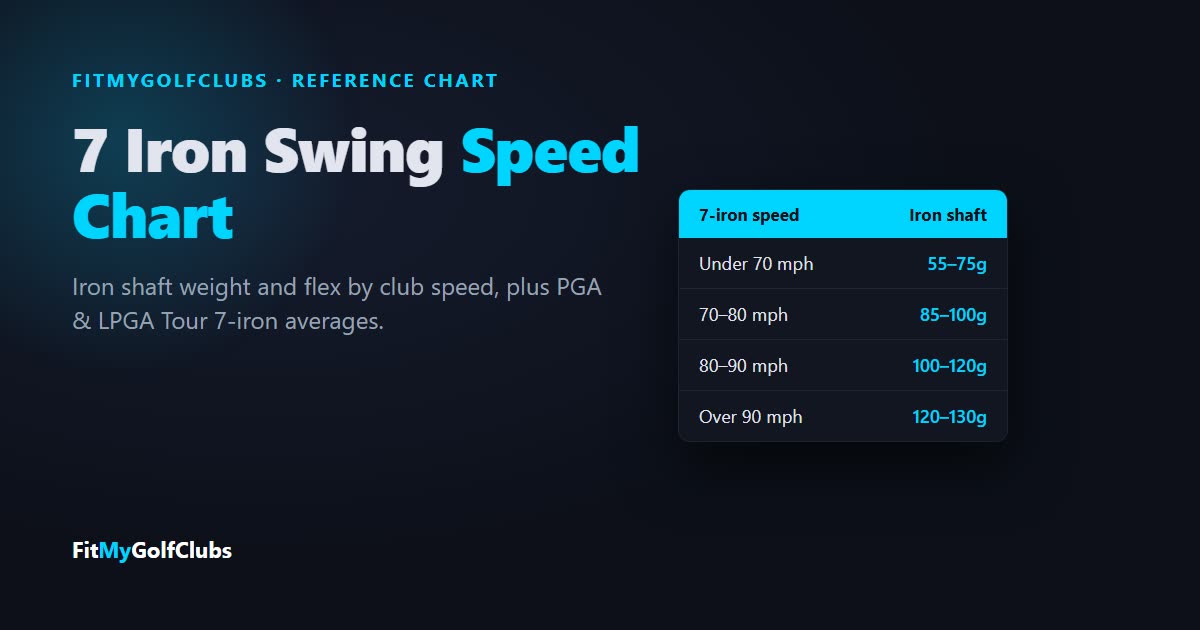
7 Iron Swing Speed Chart: Iron Shaft Weight, Flex & Carry
7 iron swing speed chart: iron shaft weight and flex by club speed, PGA (92 mph) and LPGA (78 mph) Tour averages, and 7-iron carry by speed.
Golf Club Fitting
October 8, 2026
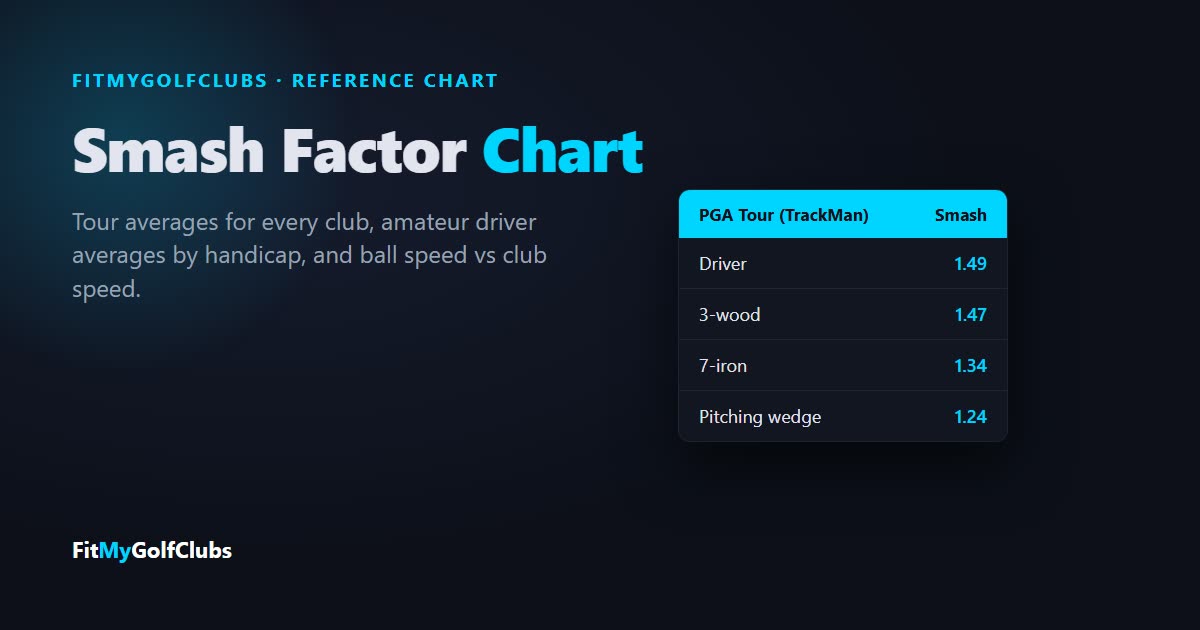
Smash Factor Chart: Tour Averages by Club + Ball Speed
Smash factor chart by club from TrackMan PGA and LPGA Tour averages, amateur driver averages by handicap, and a club speed to ball speed table.


© 2026 FitMyGolfClubs. All rights reserved. | Patent Pending
Contact: sean@fitmygolfclubs.com