
Golf Club Fitting
August 16, 2026
Project X retired the HZRDUS line in 2025 after five generations and replaced it with Titan. If you're shopping a 2026 driver, the shaft in the sleeve — or on the fitting cart — is now a Titan Black, and the chart below decodes every weight and flex it comes in, what the numbers mean, and how it maps to the HZRDUS you might be replacing.
Project X Titan Black Chart: Every Weight and Flex
Titan launched with one model — Titan Black, the low-launch, low-spin profile that succeeds HZRDUS Black. Three weight classes, four flex numbers:
| Weight class | 5.5 (firm Regular) | 6.0 (Stiff) | 6.5 (X-Stiff) | TX (Tour X) |
|---|---|---|---|---|
| Titan Black 60 (~60g) | ✔ | ✔ | ✔ | ✔ |
| Titan Black 70 (~70g) | ✔ | ✔ | ✔ | ✔ |
| Titan Black 80 (~80g) | — | ✔ | ✔ | ✔ |
The 80-gram class drops the 5.5 — if you need a firm-regular flex, you're choosing between the 60 and 70. Profile across the line: low launch, low spin, built for players who deliver speed and want the ball flight brought down.
What the Titan Numbers Mean (5.5, 6.0, 6.5, TX)
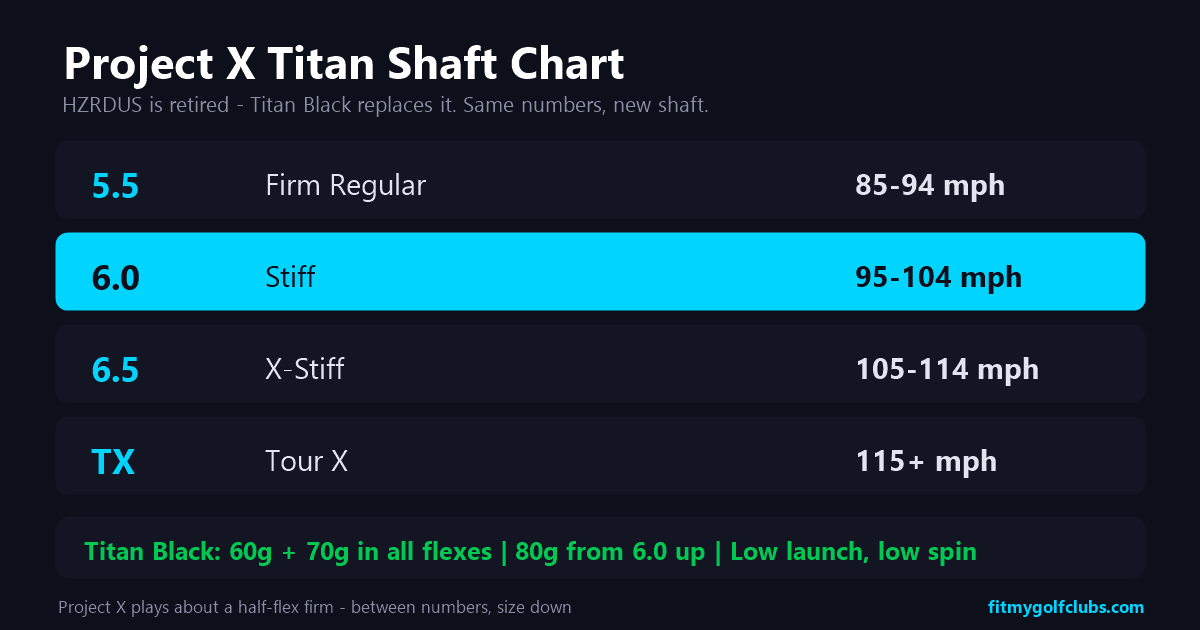
Titan keeps Project X's numeric flex system, so if you knew your HZRDUS number, you know your Titan number. Mapped to swing speed:
- 5.5 — firm, tempo decides · driver swing speed roughly 90–100 mph
- 6.0 — Stiff · roughly 95–110 mph
- 6.5 — X-Stiff · roughly over 110 mph
- TX — Tour X · 115+ mph
The standing Project X caveat applies: the line plays about a half-flex firmer than other brands' letters. A golfer who plays a comfortable Stiff in another brand often fits a Titan 5.5, not a 6.0. If you're between numbers, size down. Don't know your swing speed? Our free swing speed to flex calculator gets you a starting number in under a minute, and our swing speed chart covers every speed band in detail.
Titan vs HZRDUS: What Actually Changed
Project X calls Titan a reinvention rather than a sixth HZRDUS generation, and the construction backs that up:
- Synex Technology — a multi-axial carbon fiber matrix designed to resist ovalizing (the shaft deforming out-of-round under load), which is where energy leaks on aggressive swings.
- A new EI bend profile — a more elastic handle section that progressively firms through the mid and tip. HZRDUS was famous for its stout, boardy handle; Titan keeps the tip stability but gives the hands more feel.
- Same fitting language — weights and flex numbers carry straight over, so a HZRDUS Black 60 6.0 player tests a Titan Black 60 6.0 first.
One thing Titan does NOT yet replace: the rest of the HZRDUS family. There's no Titan successor for the mid-launch HZRDUS Silver or the higher-launch HZRDUS Red CB as of this writing — if that's your fit, existing HZRDUS stock is still the answer, and our HZRDUS shaft chart still decodes every model of it.
Stock Titan vs Aftermarket: Not the Same Shaft
Like HZRDUS before it, Titan Black ships two ways: the aftermarket version sold as a component, and stock versions that come installed on retail drivers. They look nearly identical. They don't play identical — reviewers testing the stock version on 2026 retail drivers found it noticeably softer than the aftermarket shaft in the same stamped flex. That's not a scandal; it's how OEM stock programs work. But it means two things: don't judge the aftermarket Titan by the stock one, and if a fitter hands you "the same shaft you have," confirm whether it's the stock or aftermarket version before comparing numbers.
Picking Your Titan: The Two-Question Shortcut
Question 1 — What's your driver swing speed? That sets the flex number from the chart above. Measured beats guessed: a launch monitor session, or our free online shaft fitting walkthrough.
Question 2 — What weight do you handle? The 60 suits players chasing speed or with smoother tempo; the 70 is the control pick for most stronger swingers; the 80 is for aggressive transitions that overpower lighter shafts. If your current driver shaft weight works, stay in that class — our shaft weight guide explains why weight matters more than most golfers think.
And remember the profile: Titan Black is a low-launch, low-spin shaft. If you already hit it low or struggle to carry the ball, this isn't your shaft — no flex number fixes a profile mismatch.
Frequently asked questions
What replaced the Project X HZRDUS shaft?
The Project X Titan line. After five HZRDUS generations, Project X retired the franchise in 2025 and launched Titan Black as its successor — a low-launch, low-spin wood shaft built on a new multi-axial carbon construction (Synex) with a more elastic handle than HZRDUS.
What do the Titan flex numbers mean?
Same system as every Project X shaft: 5.5 is a firm flex between Regular and Stiff (driver speeds roughly 90–100 mph), 6.0 is Stiff (95–104), 6.5 is X-Stiff (105–114), and TX is Tour X (115+). Project X plays about a half-flex firmer than other brands — between numbers, size down.
What weights does Titan Black come in?
Three classes: 60 and 70 grams in all four flexes (5.5, 6.0, 6.5, TX), and 80 grams in 6.0, 6.5, and TX only. There is no 80-gram 5.5.
What is the difference between Titan Black and HZRDUS Black?
The fitting numbers carry over, but the shaft is new: Titan uses Synex multi-axial carbon to resist ovalizing under load and a redesigned bend profile with a more elastic handle that firms progressively toward the tip. HZRDUS Black's famously boardy handle is gone; the low-launch, low-spin tip stability stays.
Is the stock Titan shaft the same as the aftermarket version?
No. They look nearly identical, but stock versions installed on retail drivers test softer than the aftermarket component in the same stamped flex. Before comparing numbers or buying based on a range session, confirm which version you actually hit.
What swing speed do I need for Titan Black 6.0?
Roughly 95–110 mph of driver swing speed. Faster than ~110 mph, test the 6.5; slower than ~95, the 5.5 — and remember Titan is low-launch/low-spin, so slower-speed players who need carry are usually better served by a different profile entirely.
Related reading
- Golf Club Fitting Chart — Length and lie by height, flex by swing speed, and every chart we publish in one place.
- HZRDUS Shaft Chart: Every Model Decoded — The retired line Titan replaces; still the reference if you play one.
- Project X Shaft Flex by Swing Speed — The full numeric-flex system across irons and woods.
- Swing Speed to Shaft Flex Chart — Every speed band, every brand's letters.
- Golf Shaft Weight Guide — Why the 60/70/80 choice matters as much as the flex.
Playing a Titan — or the HZRDUS it replaced? Grade your bag free with FitMyGolfClubs — 8 professional fit factors including shaft flex and weight match, no launch monitor required.
On a computer? You can also grade your bag in your browser — no app to install.
Related Articles
Golf Club Fitting
October 8, 2026
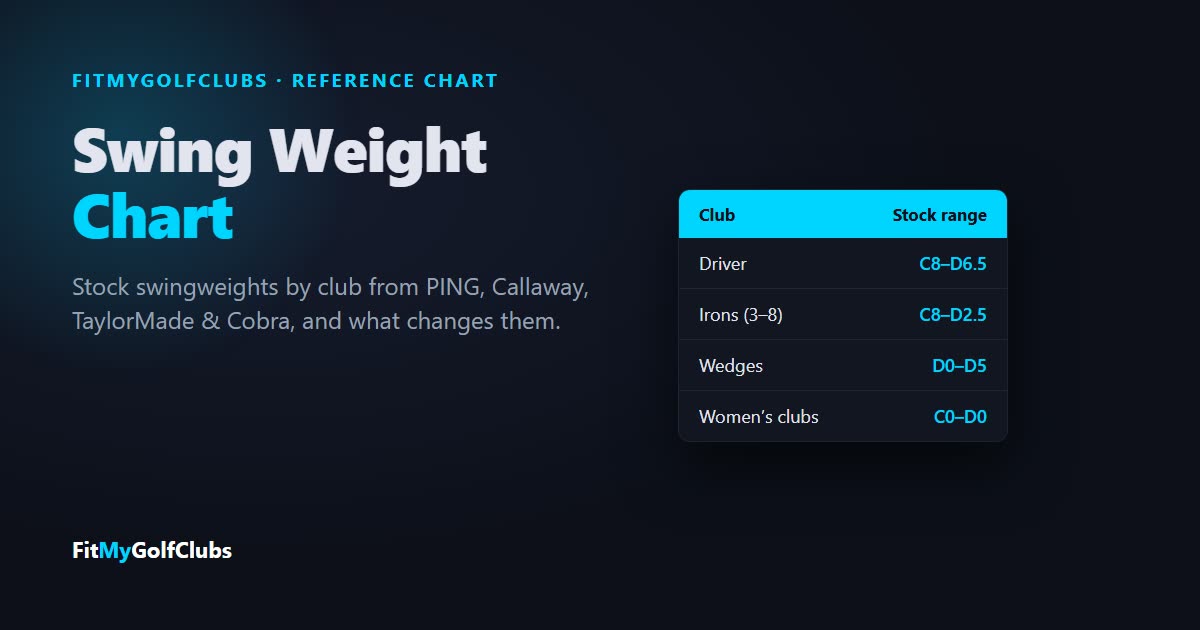
Swing Weight Chart: Standard Swingweights by Club and Brand
Swing weight chart: the A0–G9 scale, stock swingweights for drivers, irons and wedges from PING, Callaway, TaylorMade and Cobra, and what changes them.
Golf Club Fitting
October 8, 2026
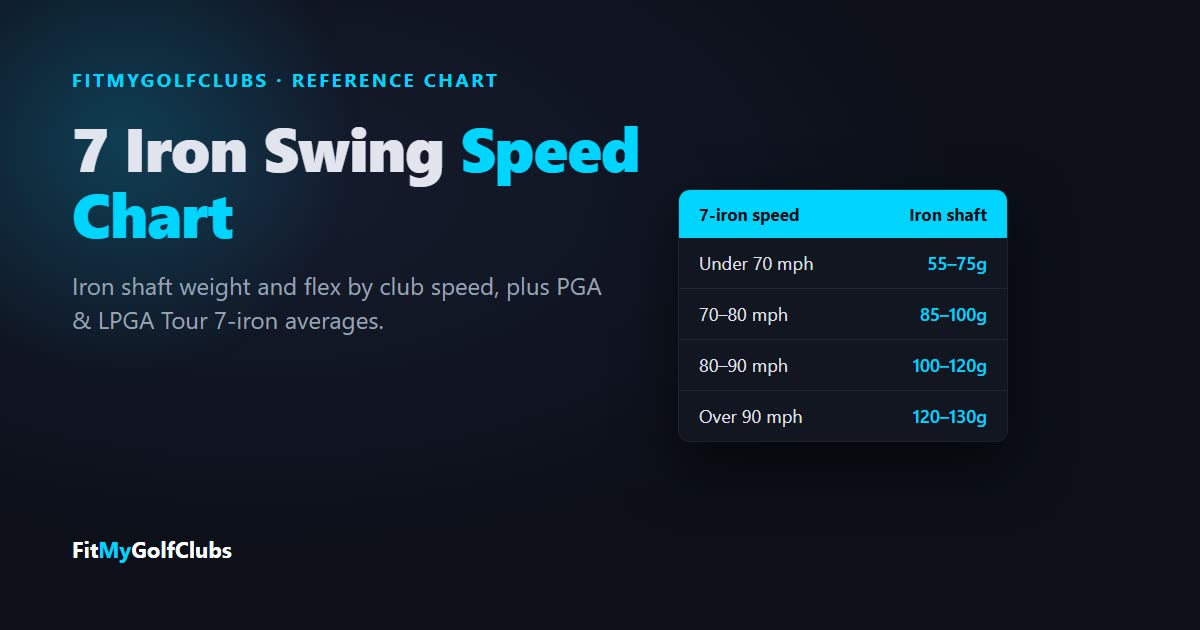
7 Iron Swing Speed Chart: Iron Shaft Weight, Flex & Carry
7 iron swing speed chart: iron shaft weight and flex by club speed, PGA (92 mph) and LPGA (78 mph) Tour averages, and 7-iron carry by speed.
Golf Club Fitting
October 8, 2026
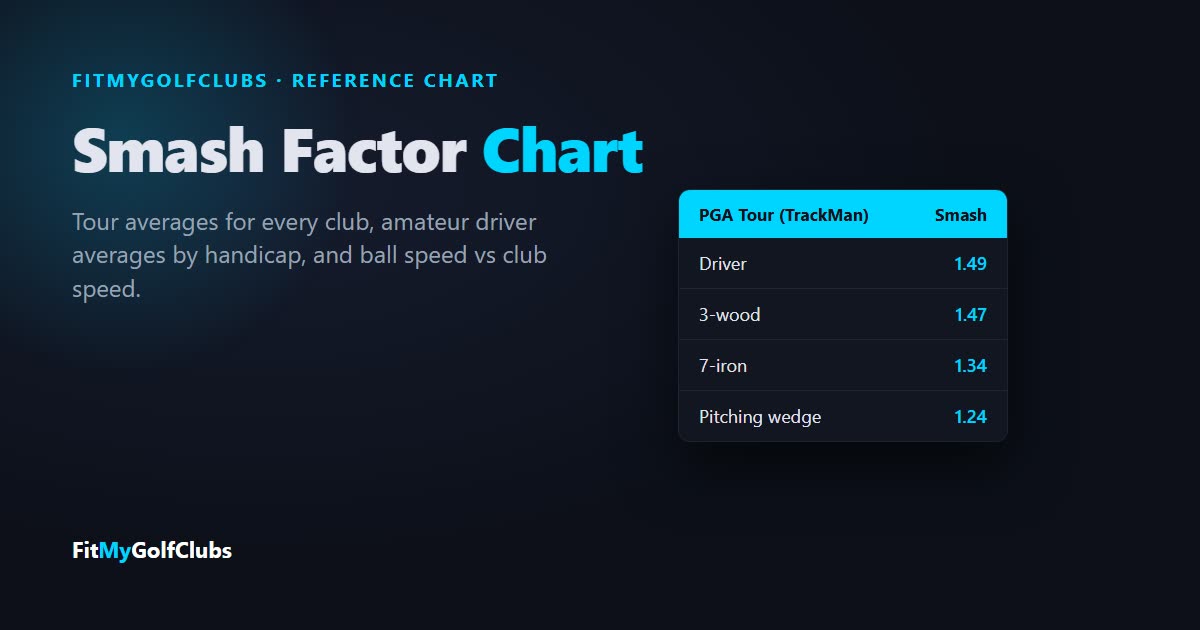
Smash Factor Chart: Tour Averages by Club + Ball Speed
Smash factor chart by club from TrackMan PGA and LPGA Tour averages, amateur driver averages by handicap, and a club speed to ball speed table.


© 2026 FitMyGolfClubs. All rights reserved. | Patent Pending
Contact: sean@fitmygolfclubs.com