
Golf Club Fitting
October 8, 2026
The quick answer: Callaway sells six wedges with a choice of grind: Opus SP (T, C, S, X and W), Opus SP+ (Z, S and X), Opus (T, C, S and W), Opus Platinum (Z and S), JAWS Raw (C, Z, S, X and W) and the Full Toe SP (J and JW).
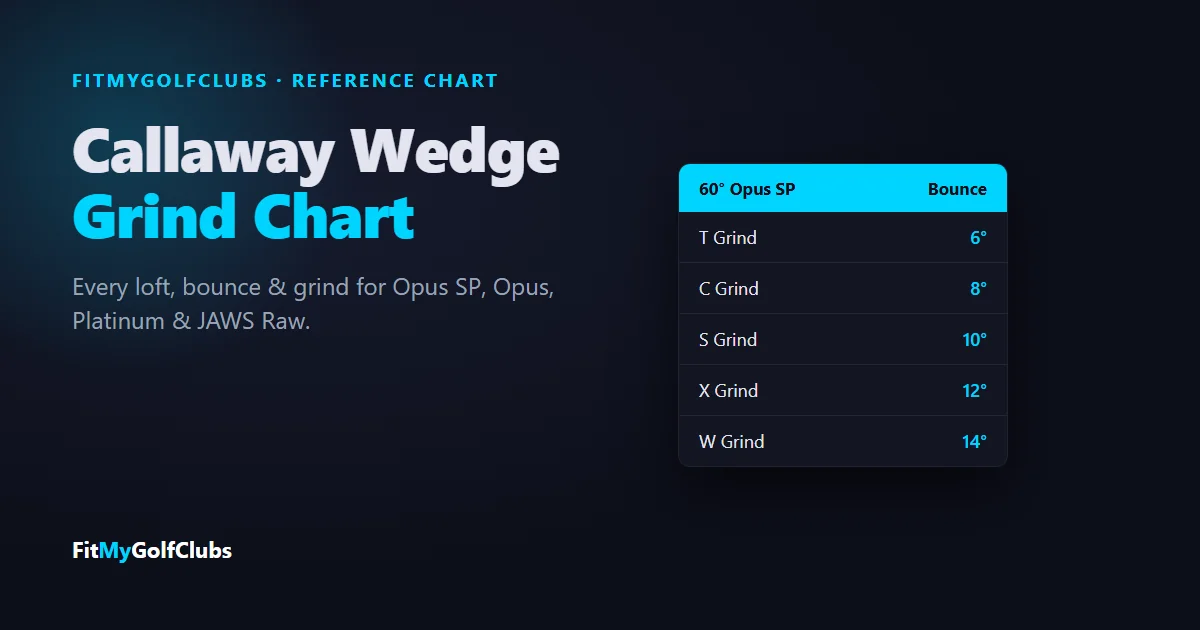
From the least bounce to the most: T (6°) for firm turf and shallow divots, C (8°) and Z (8°–10°) for opening the face, S (10°–12°), Callaway's most common grind, X (12°) for open-face shots with more bounce, and W (12°–14°), the widest sole, for soft turf and deep divots.
A 60° Opus SP comes in all five of its grinds: T 6°, C 8°, S 10°, X 12° and W 14°. The full chart for every model is below.
Callaway Wedge Grind Chart (Every Current Model)
Each cell shows the lofts that grind comes in, with the bounce in brackets, from Callaway's spec table for that wedge. A dash means that model doesn't come in that grind.
The JAWS Raw and Opus SP have the biggest lineups, 24 and 22 loft, bounce and grind options. The Opus SP has the S grind in every loft from 48° to 60° and all five of its grinds in the 58° and 60° lob wedges. The JAWS Raw is the only one that goes to 62° as a stock loft (a 62° Z grind) and the only one without a T. The Full Toe SP is a different head shape, a full-toe blade with grooves across the whole face, and comes only in the J grind (plus the custom-only 62° JW). All of them have a 64° lie.
What Each Callaway Grind Is For
Callaway's own descriptions, from the grind comparison charts on its product pages:
T Grind: Precise Shotmaking
Callaway's player type: “Skilled & Precise Players Who Keep the Leading Edge Low”. From Callaway's wedge guide: “A favorite on Tour, the T-Grind enables precise shotmaking for skilled players who keep the leading edge low. The lower bounce allows golfers to take ultra shallow divots to get up and down from any lie condition.”
C Grind: Maximum Greenside Versatility
Callaway's player type: “Short Game Players Needing Versatility in Shot Making”. From Callaway's wedge guide: “This is a popular grind among our Tour players and elite amateurs who love hitting different types of greenside shots. The leading edge stays low, even when you open the face for all types of greenside shots.”
Z Grind: Forgiving, Low Bounce
Callaway's player type: “Golfers who like to open the face around the green”. From Callaway's wedge guide: “This grind has an aggressive leading edge that acts as a skid plate for better turf interaction. It also reduces digging and is ideal for players who like to open the face around the greens.”
S Grind: A Grind for Every Situation
Callaway's player type: “Fits a Variety of Swing Types; Best for Players Who Prefer Square Faced Shots”. From Callaway's wedge guide: “This is our most versatile and most common option as it is great for a variety of conditions (firm, soft, or normal) as well as different shot types and swings.”
X Grind: Versatility with Bounce
Callaway's player type: “Shotmakers That Want Versatility but with Forgiveness from Added Bounce”. From Callaway's wedge guide: “This grind has a high-bounce sole with more heel and toe relief. The high bounce helps moderate steep angles of attack on medium to soft course conditions.”
W Grind: The Full Sole Grind
Callaway's player type: “Our Widest Sole for Players Who Need the Most Help and Forgiveness”. From Callaway's wedge guide: “This is our widest and most forgiving sole grind. It promotes skidding and reduces digging and is ideal in soft course conditions or players with a deep divot.”
J Grind: Versatile Short Game Performance
Callaway's player type: “Fits a Variety of Swing Types; Best for Players Who Want To Maximize The Variety Of Shot Types Around The Green”. From Callaway's wedge guide: “This is only offered on our full toe wedges to help expose the generous amount of bounce. It’s ideal for players who want more forgiveness out of the bunker and who like to open the face around the green.”
JW Grind: Excellent Bunker Versatility
The JW is a custom-only 62° Full Toe SP with 14° of bounce, for “Short Game Players Needing Versatility in Shot Making, Especially From Bunkers”. In Callaway's words, it “evolves the design with a wider sole and higher bounce to make bunker play more accessible without sacrificing short-game versatility”.
One difference between Callaway's charts: the Opus SP chart rates the S grind for a moderate divot and softer conditions, while the Opus SP+ and Opus Platinum charts rate it for a deep divot, and the wedge guide calls it “great for a variety of conditions (firm, soft, or normal)”. The Opus SP chart also lists the T grind at 62° and 64° with 5° of bounce, lofts that aren't in the stock spec table.
⛳ Picked your grind? Check your wedge lofts next.
Callaway's rule is “4–6 degrees between each club”. Loft gapping is the #1 fitting flaw in the 231 bags we've graded. Our free bag grade checks every loft gap in your bag, wedges included, in about 3 minutes, from your specs alone. Check my wedge gaps free →
Which Callaway Grind Should I Use?
Callaway's wedge guide sums it up: “Bounce should match your swing and course conditions: low bounce (4–8°) for firm turf and shallow swings, mid bounce (8–12°) for average conditions, and high bounce (12°+) for soft turf and steep divots.” The table below matches each grind to the player type, divot and conditions Callaway gives it, and lists every current wedge that has it.
If you're between two grinds, Callaway's guide points to the S: “This is our most versatile and most common option as it is great for a variety of conditions (firm, soft, or normal) as well as different shot types and swings.”
Callaway Wedge Specs by Model
Opus SP (2025) — 48°–60°
Callaway on the X grind's return: “Designed for shotmakers who want added bounce for forgiveness, without giving up versatility, the X Grind is ideal for players who like to open the face around the greens or play in firmer turf conditions. It’s the perfect blend of playability and performance in a wide range of shots and conditions.”
Opus SP+ (2026) — 54°–60°
The SP+ puts 13+ grams of tungsten on the back of the head for, in Callaway's words, “high spin and a flighted launch”, and comes in three grinds: Z, S and X.
Opus (2024) — 48°–60°
Callaway: “With Opus, we have a complete lineup of sole shapes from narrow to wide, available in our popular S grind, forgiving W, versatile C, and Tour-favorite T grind.”
Opus Platinum (2024) — 54°–60°
The Platinum comes in two grinds, Z and S, in the sand and lob lofts only. The Z has 10° of bounce at 54° and 56° and 8° at 58° and 60°.
JAWS Raw (2022) — 48°–62°
This is the Raw Face Chrome lineup. Callaway's Raw Black Plasma spec table leaves out the C grind, the 54° and 56° X and the 62° Z.
Full Toe SP (2026) — 54°–62°
Callaway: the J grind has lower effective bounce with aggressive heel relief and added camber, allowing it to open easily while maintaining stability on fuller shots.
CB12 (2025)
The CB12 is Callaway's cavity-back wedge and has no grind options. In Callaway's words: “The Tri-Sole design adds versatility to a forgiving wide sole, making it easier to handle a variety of shots without sacrificing playability.”
Callaway Women's Wedges
The women's Opus SP comes in 52°, 56°, 60°, an inch shorter than the men's, with these grinds:
The women's Opus comes in 52°, 56° and 60° in S (10°) and W (12°), and the women's CB12 in 50°, 52°, 54°, 56°, 58° and 60° (the 50° custom only).
What About Mack Daddy and Quantum Max Wedges?
Callaway no longer lists a Mack Daddy wedge on its wedges page; its cavity-back wedge is now the CB12. The Quantum Max and Quantum Max OS wedges are set-matching wedges (PW, AW, GW and SW), and Callaway publishes their loft, lie and offset but no bounce or grind, so they aren't in this chart.
Frequently asked questions
What grind should I get on my Callaway wedges?
Match the grind to your divot and your turf. Shallow divots and firm turf: T (6°) or C (8°). You open the face around the green: C, Z or X. Most swings and square-faced shots: S, Callaway's most common grind. Deep divots and soft turf: W, the widest sole. Callaway's guide: low bounce (4–8°) for firm turf and shallow swings, mid bounce (8–12°) for average conditions, and high bounce (12°+) for soft turf and steep divots.
What is the most forgiving Callaway wedge grind?
The W grind. Callaway calls it "our widest and most forgiving sole grind," for "players who need the most help and forgiveness," with 12° or 14° of bounce. For the most forgiving head, the CB12 cavity-back has a wide Tri-Sole and 12g of perimeter weighting.
What grinds does the Callaway Opus SP come in?
Five: T, C, S, X and W. The S comes in every loft from 48° to 60° with 10° of bounce; the 58° and 60° come in all five grinds. The Opus SP+ comes in Z, S and X.
What is the difference between the Callaway S and W grind?
Bounce and sole width. The S (10° on the Opus SP) is Callaway's "most versatile and most common option" for a variety of swings and conditions. The W (12°–14°) is the widest sole, for soft turf and deep divots.
What is the Callaway C grind?
A low-bounce (8°) grind for opening the face. Callaway calls it "Maximum Greenside Versatility": "The leading edge stays low, even when you open the face for all types of greenside shots." It's on the Opus SP, Opus and JAWS Raw.
What is the Callaway Z grind?
An 8° to 10° grind for players who open the face, on the Opus SP+, Opus Platinum and JAWS Raw. Callaway says it "acts as a skid plate for better turf interaction" and "reduces digging."
What is the Callaway X grind?
A 12° high-bounce grind with "more heel and toe relief," for players who like to open the face but want forgiveness from added bounce. It's on the Opus SP, Opus SP+ and JAWS Raw.
Sources: Callaway's product spec tables and grind comparison charts on the Opus SP, Opus SP+, Opus, Opus Platinum, JAWS Raw, Full Toe SP, CB12 and women's wedge pages, and Callaway's Golf Wedge Buying Guide, checked October 8, 2026.
Related reading
- Golf Club Fitting Chart — Length and lie by height, flex by swing speed, and every chart we publish.
- Vokey Grind Chart — Every Vokey SM11 loft, bounce and grind, and what each grind is for.
- Callaway Driver Settings Chart — All 8 OptiFit settings, loft for every head, plus Quantum and Elyte specs.
- Golf Club Loft & Lie Chart — Standard specs for every club, plus a free way to check your own.
- Wedge Distance Chart — How far each wedge loft should carry.
- Golf Club Distance Chart — How far each club should go, by swing speed.
- Dynamic Gold Shaft Chart — Specs for the Dynamic Gold wedge shafts Callaway lists for the Opus, Opus Platinum and JAWS Raw.
Related Articles
Golf Club Fitting
October 8, 2026
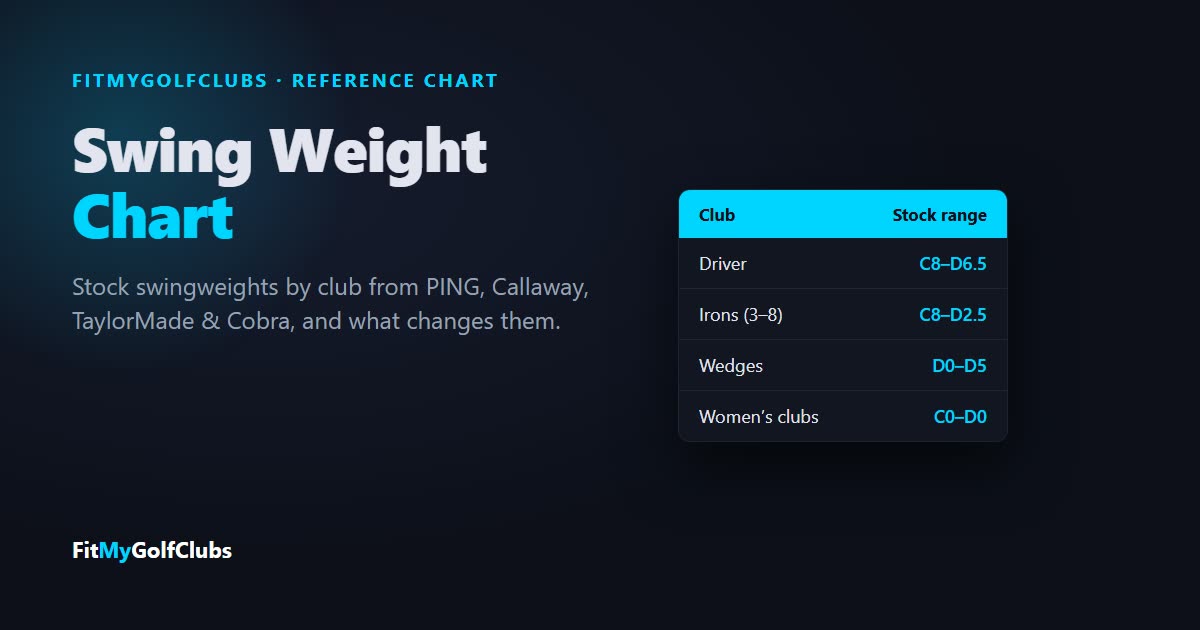
Swing Weight Chart: Standard Swingweights by Club and Brand
Swing weight chart: the A0–G9 scale, stock swingweights for drivers, irons and wedges from PING, Callaway, TaylorMade and Cobra, and what changes them.
Golf Club Fitting
October 8, 2026
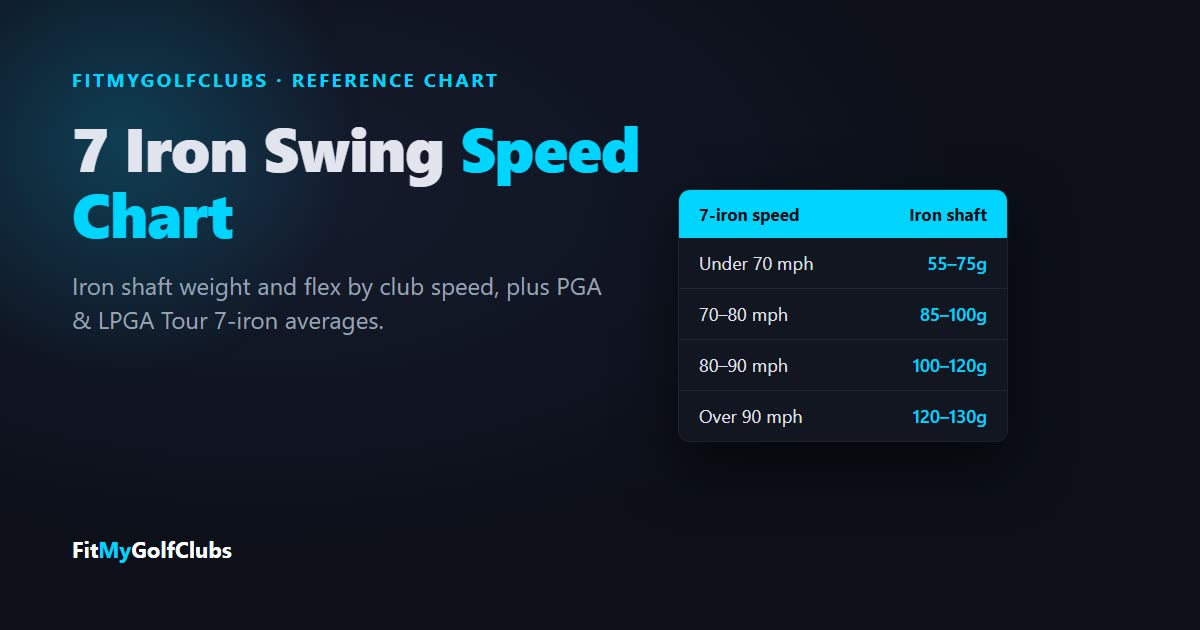
7 Iron Swing Speed Chart: Iron Shaft Weight, Flex & Carry
7 iron swing speed chart: iron shaft weight and flex by club speed, PGA (92 mph) and LPGA (78 mph) Tour averages, and 7-iron carry by speed.
Golf Club Fitting
October 8, 2026
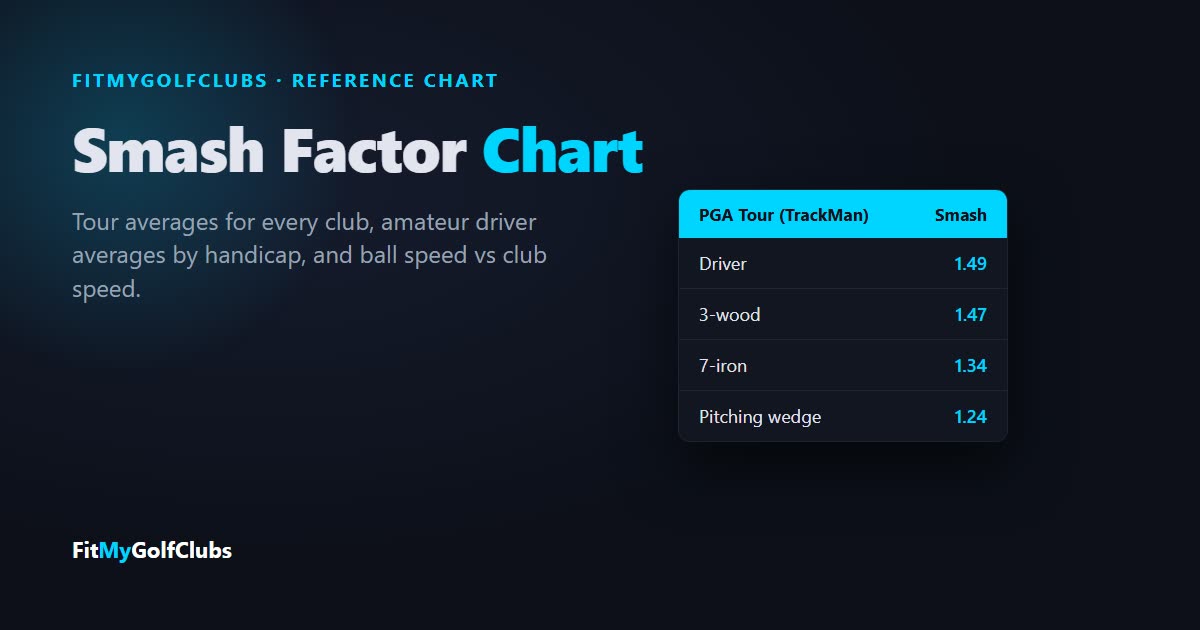
Smash Factor Chart: Tour Averages by Club + Ball Speed
Smash factor chart by club from TrackMan PGA and LPGA Tour averages, amateur driver averages by handicap, and a club speed to ball speed table.


© 2026 FitMyGolfClubs. All rights reserved. | Patent Pending
Contact: sean@fitmygolfclubs.com