
Golf Club Fitting
August 8, 2026
The quick answer: Dynamic Gold's letters are the flex — R is Regular, S is Stiff, X is X-Stiff — and the number (200/300/400) is a weight sort, not a stiffness rating. An S300 weighs about 130 grams and fits roughly 95–110 mph driver speeds; the R300 is 127g, the S400 is 134g, and the X100 is 130g. The full chart, including the lighter DG 105, 120, Mid, and SL lines, is below.
Dynamic Gold is the most-played iron shaft in golf and has been for decades — which means it's also the most mislabeled, misquoted, and misunderstood. This page decodes the naming system, lays out the real weights, and matches each version to a swing speed.
Dynamic Gold Shaft Chart (Standard 130g Line)
Weights are nominal uncut figures for the standard .355" taper-tip line; real-world production varies a couple of grams, which is exactly why True Temper weight-sorts (more on that below). The swing-speed bands match our brand-neutral swing speed chart — Dynamic Gold plays true to its label, unlike some families that run firm.
⚡ Not sure if you're an R, S, or X?
Our free Shaft Flex Calculator turns your swing speed into a flex recommendation in seconds — the AI mode factors in tempo and miss pattern. Get my flex →
What R300, S200, S300, S400, and X100 Actually Mean
Here's the part almost everyone gets wrong: the number is not a stiffness level. The letter is the flex — R, S, or X. The number is True Temper's weight-sort code. Raw Dynamic Gold shafts come off the line with natural gram-to-gram variation, so True Temper sorts them into bands: 200 for the lighter band, 300 for the middle, 400 for the heavier.
So an S200 and an S400 are the same Stiff flex — the S400 just weighs about 7 grams more. That's also why the X100 (~130g) can weigh less than an S400 (~134g) while being stiffer: weight and flex are sorted independently. If you've ever been confused about how an "X" shaft is lighter than an "S" shaft, that's the answer.
Tour Issue versions are the same designs sorted to a much tighter ±0.5g tolerance, so all eight irons in a set match almost perfectly. Same flex, same profile — you're paying for consistency, not extra stiffness.
When you build your bag in the FitMyGolfClubs app, enter the flex exactly as stamped — S300, X100, R300. The app decodes the weight-sort system automatically, so a set of S300 irons with a Stiff-flex driver grades as matched, not mixed.
The Full Dynamic Gold Family
The standard 130g-class shaft is the tour classic, but most golfers today are better served by one of the lighter lines. The number in each line's name is its weight class:
Rule of thumb: pick the weight class first (it should track your tempo and strength), then the flex within it. A 95-mph player forcing a 130g S300 because "that's what tour players use" usually strikes it better in a DG 105 or Mid 115 at the same flex letter — same DG profile, less fatigue, more speed. Our shaft weight guide covers how to pick the class.
⚖️ Which weight class is yours?
Our free Shaft Weight Calculator gives you a personal iron-shaft weight range from your swing speed and tempo. Check my weight range →
Dynamic Gold vs Project X
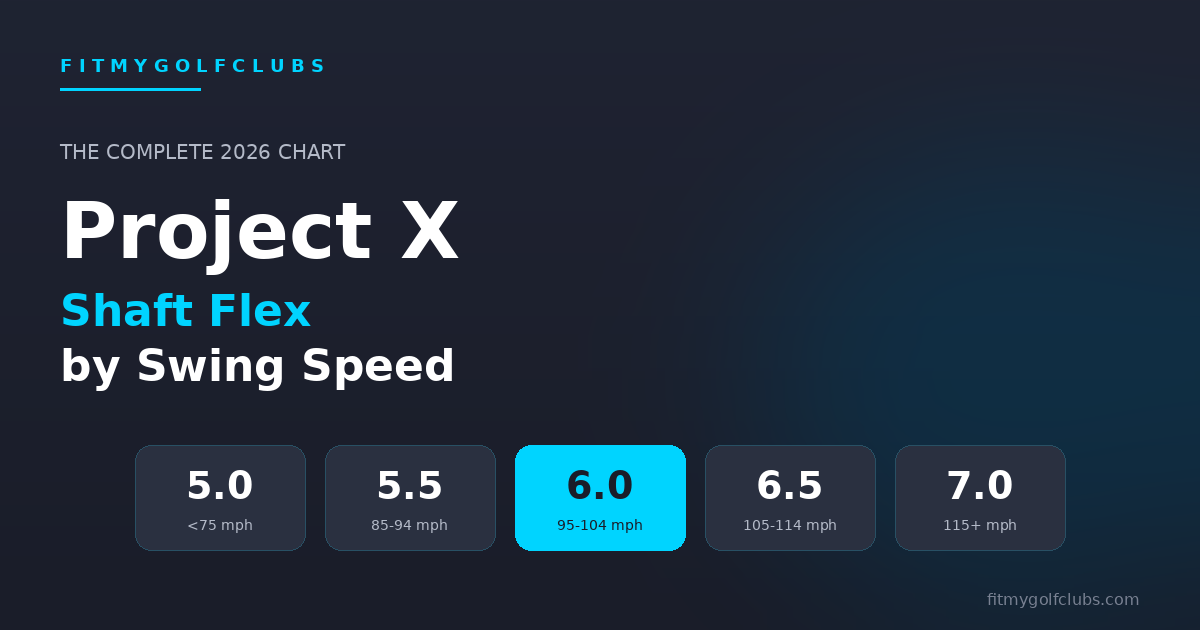
The two dominant tour iron shafts, endlessly compared. The short version: a Dynamic Gold S300 and a Project X 6.0 are roughly comparable in stiffness — both are Stiff-flex tour staples for the 95–105 mph range. The differences that matter in a fitting:
Weight: the S300 is ~130g; the PX 6.0 is ~121g. That 9-gram gap changes tempo and fatigue more than the flex label does.
Feel and flight: Project X has a slightly lower kick point and feels firmer through the transition; Dynamic Gold has the classic smooth steel feel with a high bend point for a flighted-down, penetrating trajectory. Players who load the shaft hard tend to prefer PX's stoutness; rhythm players tend to prefer DG.
Labeling honesty: Dynamic Gold plays true to its letter; Project X plays about a half-flex firm. A comfortable DG S300 player borderline on speed might be a PX 5.5, not a 6.0. Full breakdown in our Project X shaft selector and the Project X weights & specs chart.
Soft-Stepping and Hard-Stepping Dynamic Gold
Because DG has been the fitting-cart standard forever, it's the family where you'll most often hear about stepping. Soft-stepping installs each shaft one iron "long" (the 7-iron shaft goes in the 8-iron), making the set play slightly softer and launch a touch higher — the classic move for a player between R300 and S300. Hard-stepping does the reverse to firm the set up between S300 and X100. Each step is roughly a third to a half of a flex. If your set has been stepped — or bent, or re-shafted — the label on the shaft no longer tells the whole story: log the club's real specs so your fit data stays honest.
🔍 Playing Dynamic Gold right now?
Drop one iron into the Single-Club Fit Grader and get an AI fit grade — flex, weight, and launch scored against your swing. Grade one club →
Which Dynamic Gold Fits Your Swing Speed?
Under 85 mph driver speed: the standard 130g line is working against you. Look at DG SL, DG 105 in R300, or Mid 90/100 — or honestly, a graphite iron shaft.
85–95 mph: R300 in the standard line if you're strong and smooth; DG 105 or Mid 115 in R300/S300 for most players in this band.
95–110 mph: the S200/S300/S400 wheelhouse. Pick weight by tempo — quick transition and strong build wear the 130g class well; smoother players thrive in DG 120 S300.
110+ mph: X100 — or X7 / Tour Issue X100 territory if you're crushing it. At this speed, weight-sort consistency starts mattering, which is the actual argument for Tour Issue.
🏌️ The shaft is one of 8 factors.
A perfect S300 in mis-gapped lofts still costs you strokes. Grade My Bag scores all 14 clubs across the 8 factors pro fitters use — free, from your specs alone. Grade my bag free →
Frequently asked questions
How much does a Dynamic Gold S300 weigh?
About 130 grams uncut in the standard line. The lighter lines keep the same S300 designation at their own weight class: DG 120 S300 ≈ 120g, DG 105 S300 ≈ 105g, DG Mid 115 ≈ 115g, and DG SL S300 ≈ 106g. Always check which line you're holding before quoting the weight.
What's the difference between S200 and S300?
Weight only — about 3 grams. Both are the same Stiff flex; the 200/300/400 numbers are True Temper's weight-sort bands, not stiffness levels. S400 is the same flex again at ~134g.
What swing speed do you need for an S300?
Roughly 95–110 mph with the driver — the standard Stiff band. Below ~95 mph most players launch it too low and lose carry; that's the classic sign to move to R300 or drop a weight class to DG 105/Mid at S flex.
Is X100 stiffer than S400?
Yes — X100 is X-Stiff, S400 is Stiff. The confusion comes from weight: the S400 (~134g) is actually heavier than the X100 (~130g). Flex and weight are sorted independently in the Dynamic Gold system.
What's the difference between Dynamic Gold and Dynamic Gold Tour Issue?
Same shaft, tighter sorting. Tour Issue is weight-sorted to ±0.5g so every iron in the set matches; standard production allows a few grams of variance across a set. It's a consistency upgrade, not a stiffness change.
Is Dynamic Gold too heavy for average golfers?
The standard 130g line usually is — it's built for strong, high-speed swings. That's exactly why the family now spans 90g to 134g: DG Mid, DG 105, DG 120, and DG SL give you the same profile family at weights that fit moderate speeds. Match the weight class to your swing first, then pick the flex.
Related reading
- Golf Club Fitting Chart — Length and lie by height, flex by swing speed, and every chart we publish in one place.
- Golf Swing Speed Chart: Shaft Flex by Club Head Speed — Find your flex band, then come back for the DG version of it.
- Project X Shaft Selector Chart — The other tour staple, decoded the same way.
- Project X Shaft Weights & Specs Chart — Gram-by-gram comparison fodder for the DG-vs-PX debate.
- Golf Shaft Weight Guide — Why the weight class matters more than the flex letter.
- Graphite vs Steel Shafts — Real iron shaft weights and prices, and which to play by swing speed.
- 7 Iron Swing Speed Chart — Iron shaft weight by 7-iron speed, tour 7-iron averages, and 7-iron carry by speed.
Know the shaft. Now check the whole bag. The FitMyGolfClubs app grades all 14 clubs across eight fitting factors — shaft flex and weight included — straight from your specs. Free to start.
Related Articles
Golf Club Fitting
October 8, 2026
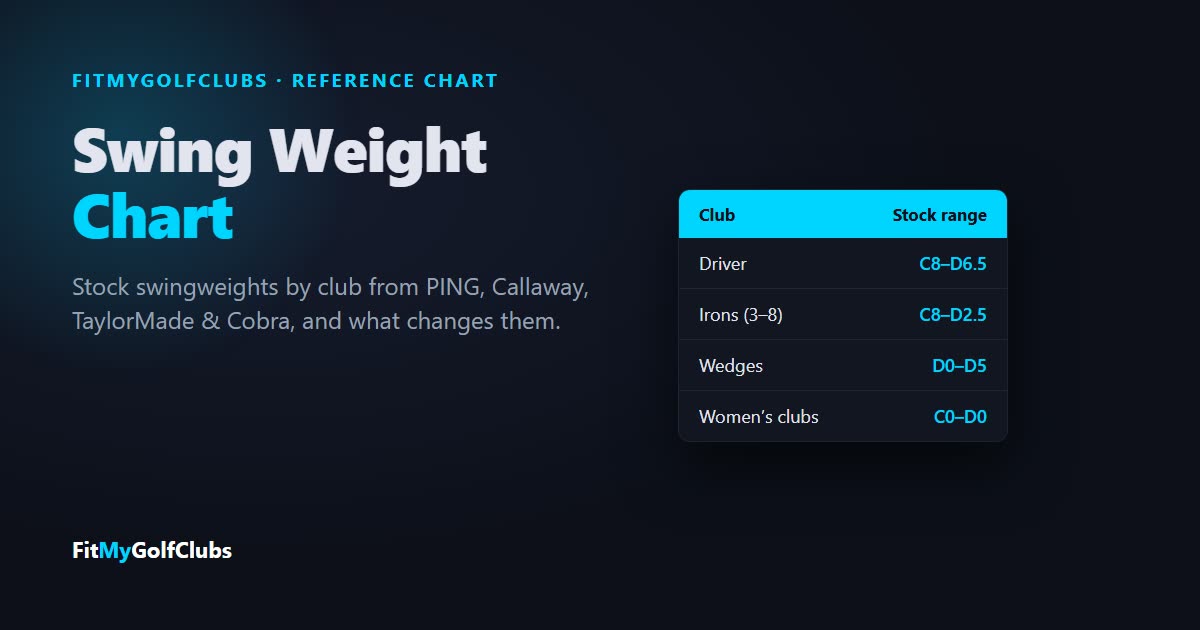
Swing Weight Chart: Standard Swingweights by Club and Brand
Swing weight chart: the A0–G9 scale, stock swingweights for drivers, irons and wedges from PING, Callaway, TaylorMade and Cobra, and what changes them.
Golf Club Fitting
October 8, 2026
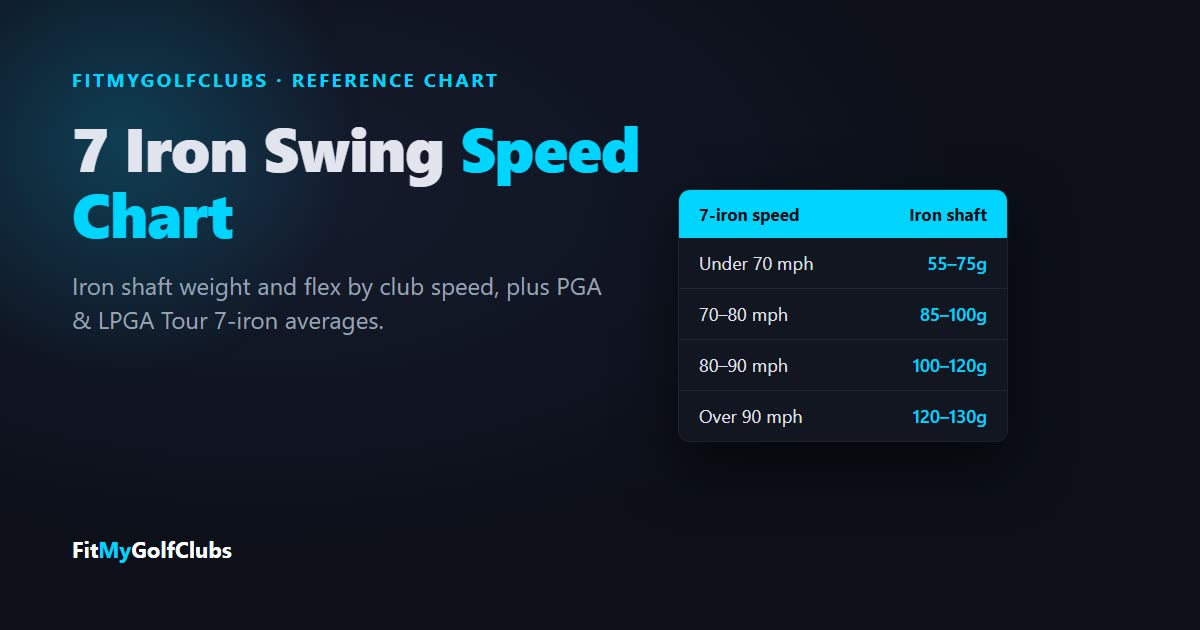
7 Iron Swing Speed Chart: Iron Shaft Weight, Flex & Carry
7 iron swing speed chart: iron shaft weight and flex by club speed, PGA (92 mph) and LPGA (78 mph) Tour averages, and 7-iron carry by speed.
Golf Club Fitting
October 8, 2026
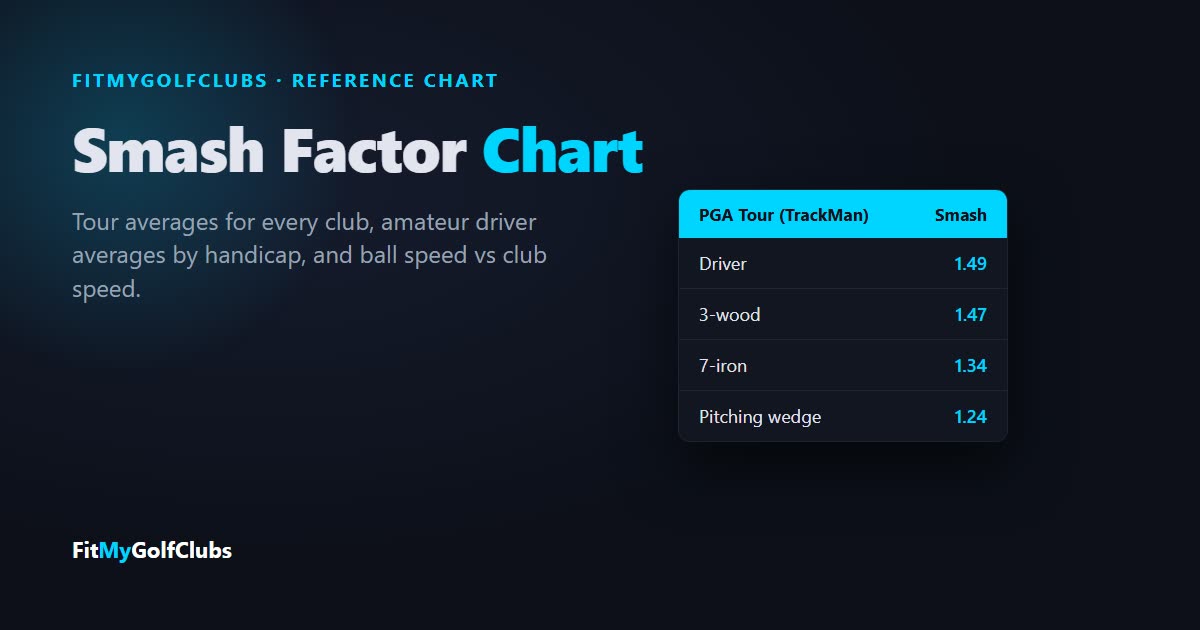
Smash Factor Chart: Tour Averages by Club + Ball Speed
Smash factor chart by club from TrackMan PGA and LPGA Tour averages, amateur driver averages by handicap, and a club speed to ball speed table.


© 2026 FitMyGolfClubs. All rights reserved. | Patent Pending
Contact: sean@fitmygolfclubs.com