
Golf Club Fitting
August 8, 2026
The quick answer: Project X steel iron shafts weigh 113g in 5.0 flex, 118g in 5.5, 121g in 6.0, 125g in 6.5, and 130g in 7.0 (uncut weights). The LZ runs about 3g lighter at 5.0 and 5.5, 1g lighter at 6.0 and the same weight at 6.5; the IO runs 10–13g lighter (13g at 5.5, 11g at 6.0, 10g at 6.5 — it was never made in 5.0); and the LS matches the original at its tour-only flexes. Every model's full spec chart is below.
If you're here because a listing said "Project X 6.0 120g" and another said "110g" — you're not crazy, and neither listing is wrong. Project X is a family of shafts, and the same flex number weighs different amounts in different models. This page lays out every current model's weights and specs so you can tell exactly what you're buying, what's in your bag, or what that used set actually has in it.
Project X Shaft Weight Chart (Original Steel)
The original Project X — the stepless, low-launch, low-spin tour staple descended from the Rifle line — uses this weight progression. Unlike most brands, the weight climbs with the flex: a stiffer Project X is also a heavier Project X.
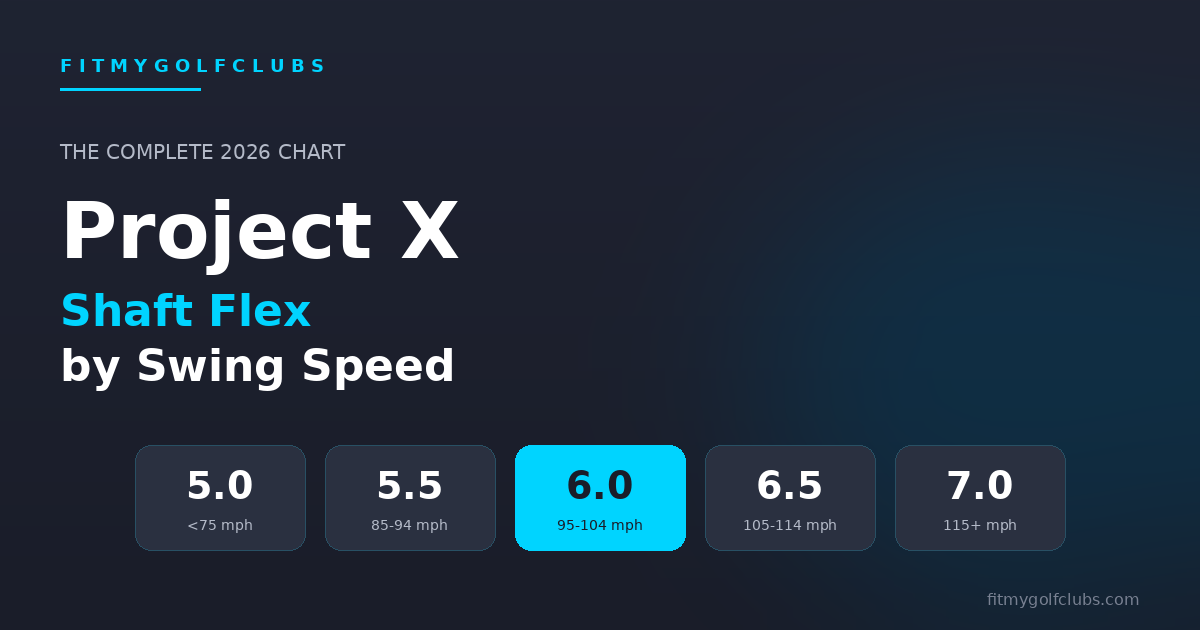
Weights are True Temper's published uncut figures for the .355" taper-tip version; once trimmed and installed, playing weight typically lands 2–3g lighter. Parallel-tip (.370") versions can also vary by a couple of grams. The swing-speed bands match our Project X shaft selector chart — and remember Project X plays firmer than its letter equivalent, so borderline players usually do better a half-flex down.
They're also the specs behind the FitMyGolfClubs app itself: these verified figures power its shaft database, and when you add a club you can enter the flex exactly as printed — "6.0" — and the app decodes it as the Stiff it plays like, for both your bag grade and AI recommendations.
⚖️ Is 120g even the right weight class for you?
Weight fits your tempo the way flex fits your speed. Our free Shaft Weight Calculator gives you a personal iron-shaft weight range in seconds. Check my weight range →
Weight and Specs by Flex
Project X 5.0 Shaft Weight & Specs
The Project X 5.0 weighs 113 grams uncut — the lightest flex in the original steel line. It's the Regular-equivalent flex, suited to driver swing speeds of roughly 75–90 mph. If you've seen "Project X 5.0 115g" in a listing, that's normal rounding/trim variance on the same shaft, not a different model.
Project X 5.5 Shaft Weight & Specs
The Project X 5.5 weighs 118 grams uncut. It sits between Regular and Stiff — True Temper calls it Firm (R+) — and fits roughly 90–100 mph driver speeds, the stretch where tempo decides between it and the 6.0. Because Project X plays firmer than its label, the 5.5 is the sleeper pick for a lot of golfers who assume they need a 6.0.
Project X 6.0 Shaft Weight & Specs
The Project X 6.0 weighs 121 grams uncut (most retailers round to 120g). It's the Stiff-equivalent flex, fitting roughly 95–110 mph driver speeds — and it's the most-played shaft in the family. Seeing "Project X 6.0 110g" somewhere? That's almost certainly the Project X IO 6.0, which really is 110g — a different, lighter, higher-launching model covered below.
Project X 6.5 Shaft Weight & Specs
The Project X 6.5 weighs 125 grams uncut. It's the X-Stiff equivalent for driver speeds over about 110 mph. This flex plays notably boardy for anyone below that band — if you're debating 6.0 vs 6.5, demo both before you commit.
Project X 7.0 Shaft Weight & Specs
The Project X 7.0 weighs 130 grams uncut — the heaviest and stiffest in the line, a Tour-X profile for 115+ mph swings. Outside of tour vans and long-drive bags, very few players genuinely fit into a 7.0.
Project X vs LZ vs IO vs LS: Weight Comparison
Same flex number, different model, different weight. This is the chart that untangles the used-market listings:
All figures are uncut manufacturer weights for the steel iron versions. Launch and feel differ as much as weight does:
Project X LZ (110–125g, mid launch)
The LZ — "Loading Zone" — softens the mid-section of the shaft so it loads and kicks more actively than the original. Same 5g-per-flex weight ladder, about 3–5g lighter at each step, mid launch instead of low. It's the pick for players who find the original Project X harsh or dead at impact but want the same weight class. Flexes run 5.0 through 6.5.
Project X IO (105–115g, higher launch)
The IO is the lightweight of the steel family: 105g at 5.5, 110g at 6.0, 115g at 6.5. Each step up in flex is also geometrically tuned to launch a touch lower, so the set flights consistently. If you like Project X's stability but the 120g class wears you down late in the round — or you need help getting long irons airborne — this is the model. It's also the answer to most "Project X 110g" mystery listings.
Project X LS (120–130g, lowest spin)
The LS is the tour-spec spin killer: 6.0, 6.5, and 7.0 only, at roughly 120/125/130g. It plays even stronger than its number — testers routinely describe an LS 120g playing like a traditional 130g X-flex. For high-speed players who flight the ball too high with everything else. If that's not the problem you have, stay out of it.
🔍 Already playing one of these?
Drop your club and shaft into the Single-Club Fit Grader and get an AI fit grade — weight, flex, and launch all scored against your swing. Grade one club →
What About Torque?
You'll notice torque is missing from the tables — that's because True Temper doesn't publish torque figures for its steel iron shafts, so any site quoting an exact number for a Project X 6.0 is estimating. Steel iron shafts as a category run tight (roughly 1.5–2.5°), and in a 120g steel shaft, torque differences are small enough that weight, flex, and bend profile dominate how the shaft actually plays. If low torque is a specific priority — usually for players fighting a twisting face on mishits — that conversation matters far more in graphite than in steel.
Project X Graphite: Catalyst, Cypher, Denali, HZRDUS
Two of these have their own charts: the Project X Denali shaft chart (Blue, Black, Red and FROST by weight and flex code) and the Project X Cypher shaft chart (the ultralight 40–70g line).
The graphite side of the family names its weight class right on the shaft, which makes this part easy:
Catalyst (irons): comes in 50, 60, 80, and 100 weight classes — the number is the approximate gram weight. The Catalyst 100 is the graphite bridge for steel players; the 50 and 60 are for smoother-tempo and senior swings.
Cypher (woods and irons): the superlight line, built in 40–70g classes for players who gain more from speed than from stability.
Denali and HZRDUS (woods): the low-spin driver/fairway lines, typically 60–70g. HZRDUS uses the same 5.5/6.0/6.5/TX numbering as the irons — our Project X shaft selector breaks down HZRDUS Black and Red flex-by-swing-speed.
Project X 5.5 vs 6.0 (and 6.5 vs 7.0)
5.5 vs 6.0: 3 grams and half a flex apart — but that half-flex is the whole R-to-S jump in a line that already plays firm. If your driver speed is 90–95 mph, the 5.5 is usually the right call; commit to the 6.0 only if you're consistently above 95 mph or you have an aggressive transition that overloads softer shafts.
6.5 vs 7.0: 5 grams and the difference between X and Tour X. The honest filter: if you're not over 115 mph with the driver, the 7.0 isn't a fit — it's a penalty. The 6.5 covers genuine X-flex speeds with a little more feel.
🏌️ The shaft is one of 8 factors.
Weight and flex matter most when the rest of the bag matches too. Grade My Bag scores all 14 clubs across the 8 factors pro fitters use — free, from your specs alone. Grade my bag free →
Frequently asked questions
How much does a Project X 6.0 shaft weigh?
121 grams uncut for the original steel version (usually listed as 120g). The Project X LZ 6.0 is 120g, the IO 6.0 is 110g, and the LS 6.0 is about 120g. If a listing says "Project X 6.0" without a model name and quotes 110g, it's the IO.
What flex is a Project X 5.5 equivalent to?
Firm — True Temper's R+ designation, between a standard Regular and Stiff. Because Project X profiles play firmer than their labels, a 5.5 feels closer to many brands' Stiff than to their Regular, which is why it fits 90–100 mph driver speeds rather than classic R-flex speeds.
Is the Project X 6.0 a stiff shaft?
Yes — 6.0 is the Stiff-equivalent flex, and it plays slightly firmer than most brands' S. It fits driver swing speeds of roughly 95–110 mph; below that band most players lose launch and carry with it.
What is the lightest Project X iron shaft?
In steel, the Project X IO 5.5 at 105 grams. In graphite, the Catalyst 50 class drops all the way to the 50-gram range — a completely different fit conversation, usually for slower-tempo or senior swings.
What happened to the Project X PXi?
The PXi — the lighter Project X variant from the mid-2010s — is discontinued. If you're replacing PXi shafts today, the Project X IO (105–115g) is the closest current equivalent in weight and launch window.
Are Project X weights the same after trimming?
No — the published figures are raw uncut weights. Tip and butt trimming during assembly typically removes 2–3 grams, so a "121g" 6.0 plays at roughly 118–119g in the finished club. Comparisons between models stay valid because every model is quoted the same way.
Related reading
- Golf Club Fitting Chart — Length and lie by height, flex by swing speed, and every chart we publish in one place.
- Project X Shaft Selector Chart: Flex by Swing Speed — Which flex number fits your speed, for every model including HZRDUS.
- Golf Shaft Weight Guide — What shaft weight actually does to strike, tempo, and dispersion.
- Golf Swing Speed Chart: Shaft Flex by Club Head Speed — The brand-neutral version: flex by swing speed for every club.
- Bent, Cut Down, or Reshafted? Log a Club's Real Specs — If your Project X shafts were soft-stepped or trimmed, the label no longer tells the story.
Know the shaft. Now check the whole bag. The FitMyGolfClubs app grades all 14 clubs across eight fitting factors — shaft weight and flex included — straight from your specs. Free to start.
Related Articles
Golf Club Fitting
October 8, 2026
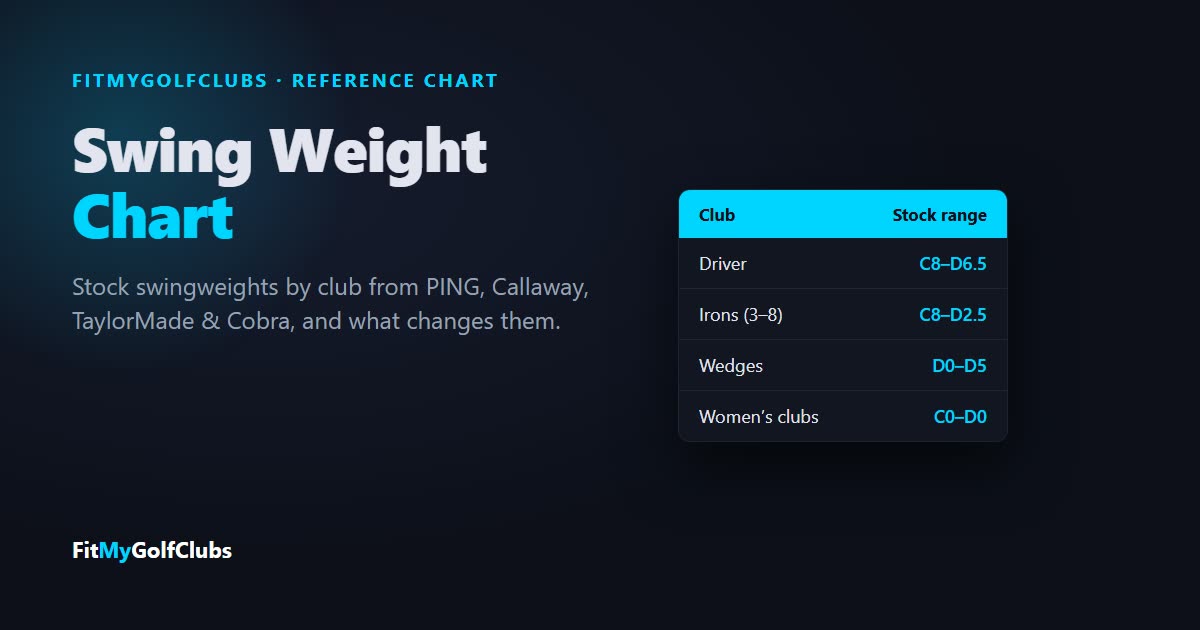
Swing Weight Chart: Standard Swingweights by Club and Brand
Swing weight chart: the A0–G9 scale, stock swingweights for drivers, irons and wedges from PING, Callaway, TaylorMade and Cobra, and what changes them.
Golf Club Fitting
October 8, 2026
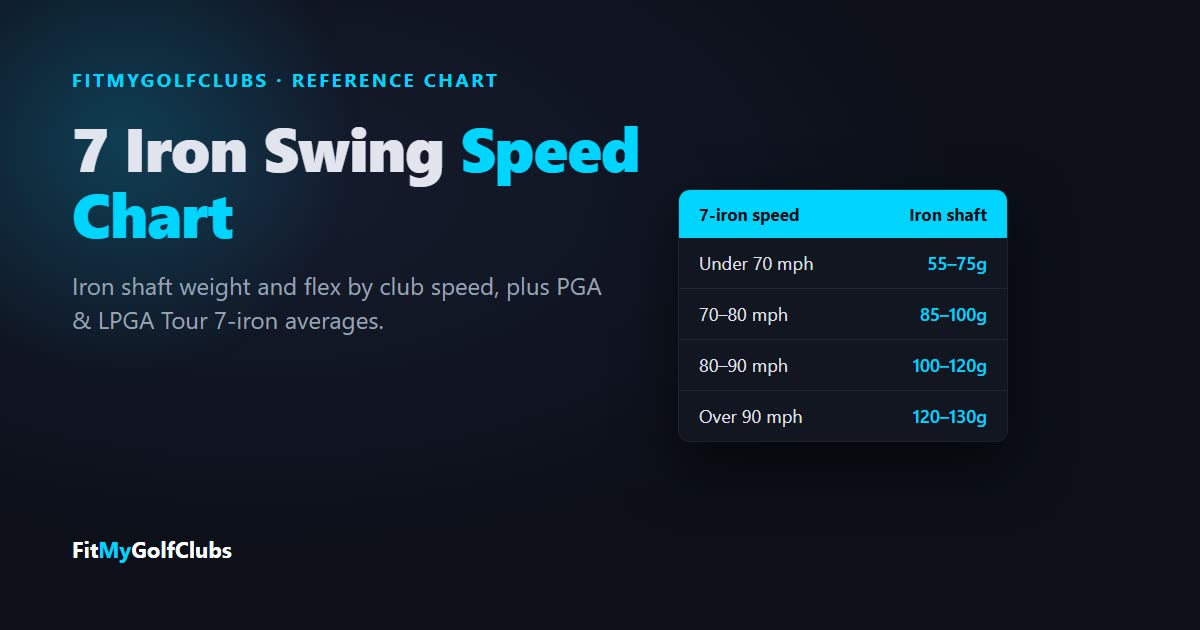
7 Iron Swing Speed Chart: Iron Shaft Weight, Flex & Carry
7 iron swing speed chart: iron shaft weight and flex by club speed, PGA (92 mph) and LPGA (78 mph) Tour averages, and 7-iron carry by speed.
Golf Club Fitting
October 8, 2026
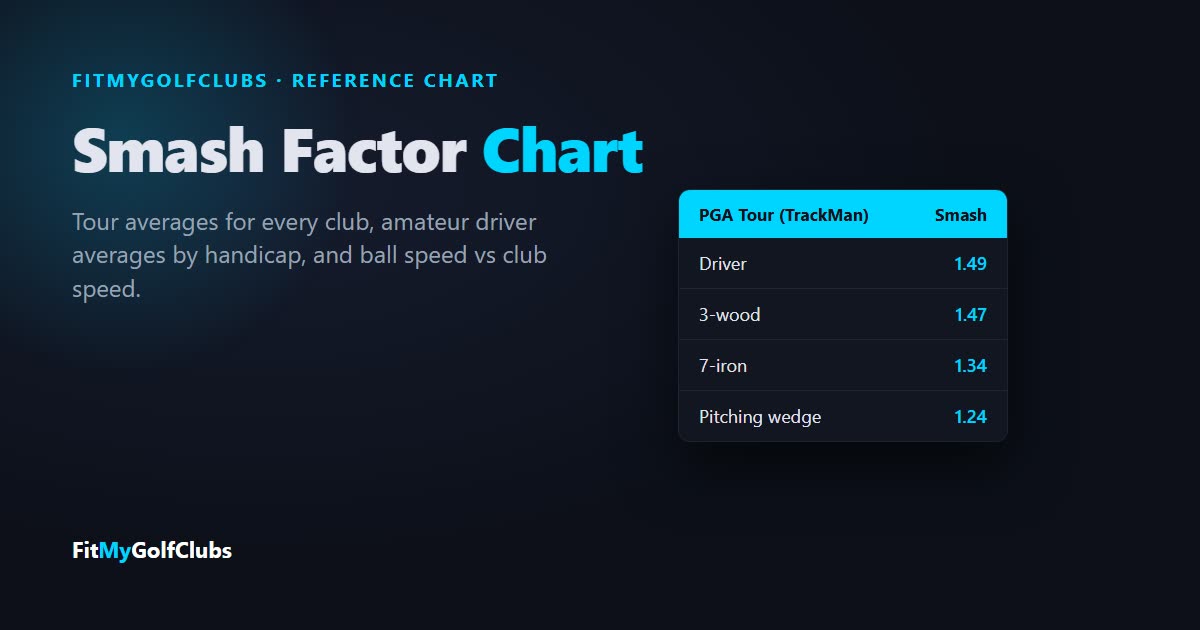
Smash Factor Chart: Tour Averages by Club + Ball Speed
Smash factor chart by club from TrackMan PGA and LPGA Tour averages, amateur driver averages by handicap, and a club speed to ball speed table.


© 2026 FitMyGolfClubs. All rights reserved. | Patent Pending
Contact: sean@fitmygolfclubs.com