

Golf Club Fitting
October 5, 2026
The quick answer: Newton does not label its shafts R, S or X. Each shaft comes in Dots, and each Dot is a driver swing speed band: 1 Dot is under 75 mph, 2 Dot is 75–85, 3 Dot is 85–95, 4 Dot is 95–105, 5 Dot is 105–115 and 6 Dot is 115 mph and up. One Dot is the softest and six is the stiffest. The Motion driver shaft runs 53 to 78 grams across the Dots, the Fast Motion 41 to 65 grams, and the Motion Fairway 55 to 80 grams.
If you think in letters, 1 Dot sits where a senior (A) flex does, 2 and 3 Dot cover the regular (R) range, 4 Dot is stiff, 5 Dot straddles the stiff to extra-stiff line, and 6 Dot is extra stiff. The choice between Motion and Fast Motion is a weight choice: the Motion is about standard weight for each speed, and the Fast Motion is 12 to 16 grams lighter at every Dot.
Every spec on this page comes from the flex guide charts on Newton's own product pages. Where Newton does not publish a figure, such as kick point, launch or tip diameter, this page says so rather than filling the gap.
Newton Motion Driver Shaft Chart
Newton sells the Motion driver shaft assembled, with the adapter for your driver and a grip already fitted, and cuts it to a 45.75 inch playing length unless you ask for something else at checkout. Adapters are listed for Callaway, TaylorMade, Titleist, Mizuno, Tour Edge, Cobra, PXG and Ping. Newton's chart also lists a 6.5 Dot (80g, 3.2°, 285 CPM), but the Motion is sold in 1 to 6 Dot only.
Seen lighter Motion weights elsewhere? An older Newton chart, dated 2024 and still shown on its fitting guide page, lists the Motion at 45 to 70 grams. The product page chart above is the current one, and it runs 8 grams heavier at every Dot except 3 Dot, where the gap is 13 grams. If you are comparing numbers you found online, check which chart they came from.
Two notes on reading the chart. The CPM figures are frequency readings, and frequency depends on the length and tip weight it is measured at, which Newton does not state. Use them to compare one Dot with another, not to compare a Newton shaft with another brand's CPM. And the distance column is Newton's guide to typical total driving distance, so treat it as a cross-check on your speed rather than a substitute for measuring it.
⚡ Not sure which flex you are?
Our free Shaft Flex Calculator turns your swing speed into a flex recommendation in seconds — the AI mode factors in tempo and miss pattern. Get my flex →
Newton Dots vs. R, S and X Flex
Newton's speed bands are narrower than letter flexes, so two Dots can sit inside one letter. The bands are the same for every Newton shaft. Here is each Dot placed against the swing speed bands our own swing speed shaft flex chart uses (under 60 mph L, 60–75 A, 75–95 R, 95–110 S, over 110 X):
The split of regular into two Dots is the most useful thing about the system. A golfer at 78 mph and a golfer at 93 mph are both "regular" on a letter chart, but they load a shaft very differently, and Newton gives them different shafts. On the other side, the 90–99 mph stretch where regular and stiff overlap falls across the 3 Dot to 4 Dot change. If you swing in the low 90s with a quick transition, 4 Dot is worth trying; with a smooth tempo, 3 Dot usually fits.
Our app stores every Newton Dot against these same letters, so if you add a Newton shaft to your bag in FitMyGolfClubs it is graded on the letter flex closest to its Dot. The calculator below gives you a speed band from the same chart.
Shaft Flex Calculator
FREE — NO SIGNUPEnter your driver swing speed — get your flex band instantly.
Don’t know your speed? Rough guide: 200-yd carry ≈ 90 mph, 220-yd ≈ 100 mph — or read it off the chart below.
Understanding the Newton Range
Why the bend and torque change with every Dot
Newton describes the Motion as having a Variable Bend Profile: the bend point and the torque move as the flex changes, rather than one design being made stiffer. The charts show the torque side of that clearly, from 6.0 degrees at 1 Dot down to 3.5 at 6 Dot in the Motion driver. Newton's reasoning is that slower swings benefit from more torque and faster swings from less, which matches conventional fitting practice for driver shafts.
Elongated bend and Kinetic Storage Construction
Newton's design claim is that the Motion bends over a longer section of the shaft than a conventional profile, which it calls an elongated bend profile built with Kinetic Storage Construction. The stated aim is a smoother load and a more controlled release. Newton does not publish a kick point for any Dot, so this page does not assign one.
Symmetry360
Newton says its Symmetry360 construction makes the shaft flex the same at any clocking position, which matters with adjustable drivers: turning the hosel to change loft or face angle also rotates the shaft. A shaft that behaves the same in every position removes one variable when you adjust the head.
🔍 Already have a Newton in the bag?
Drop the club into our Single-Club Fit Grader and get an AI fit grade — flex, weight, and launch scored against your swing. Grade one club →
Newton Fast Motion Driver Shaft Chart
Fast Motion is Newton's lightweight driver shaft, sold in the same Dots plus a 6.5 Dot offered uncut. Same speed bands, same assembled 45.75 inch format, much lighter:
Newton's product copy says Fast Motion is "10 grams lighter" than the Motion. Its own chart shows a bigger gap, 12 to 16 grams depending on the Dot, which is what the table above uses. The torque also runs a little higher than the Motion at every Dot, as you would expect from a lighter shaft.
One thing to be aware of: Newton's Fast Motion chart lists exactly the same CPM figures as the Motion chart, Dot for Dot. That is possible, but it is also what a chart looks like when one column was carried over from another. We have asked Newton to confirm, and will update this table if the figures change.
Newton Motion Fairway Shaft Chart
The Motion Fairway is sold for 3-wood, 5-wood and 7-wood, in six Dots chosen by your driver swing speed, with the tip section reinforced for shots from the turf:
At every Dot the fairway shaft is 2 grams heavier than the Motion driver shaft of the same Dot, so a Motion driver and Motion fairways in matching Dots give a smooth weight step from driver to woods. Pair a Fast Motion driver with Motion fairways and the step is much bigger, 14 to 18 grams, which is worth knowing before you order.
How Heavy Is a Newton Shaft for Your Speed?
Flex is only half of a shaft fit. Weight is the other half, and it is where Newton's two driver shafts split. The table below puts each Dot's weight next to the driver shaft weight our golf shaft weight guide recommends for the same swing speed:
So the two shafts do different jobs. The Motion is a standard-weight shaft for its speed: within a few grams of the usual range at every Dot. The Fast Motion is a genuinely light shaft, and the gap widens as the Dots go up: in range at 1 and 2 Dot, and 13 grams or more under the usual weight at 6 Dot.
A lighter shaft at the same flex is easier to swing fast, which is the "less effort" Newton advertises, and it suits golfers who have lost speed or tire late in a round. It is also easier to lose control of if you have a fast, aggressive transition. If you swing over 100 mph and already play a 65 to 75 gram shaft, start with the Motion, not the Fast Motion.
Do Tour Pros Play Newton Shafts?
Yes, mostly on PGA TOUR Champions. An investor profile published for Newton lists 34 Champions Tour professionals using the Motion, including John Daly, Mark O'Meara, Colin Montgomerie and Doug Barron, and Newton's own marketing names Ken Duke, John Daly and Chris DiMarco. In its second-quarter 2026 report to the SEC, Newton also noted that multiple PGA TOUR Champions players had adopted the updated Motion fairway wood shaft.
Worth knowing: much of that tour use is paid for, which is normal in the equipment business. Newton describes signing Champions Tour players to shaft sponsorships and running a weekly performance pool that pays Champions players who finish well with a Motion in the bag. Its SEC filings also describe stock warrants for a tour player that vest as the player competes in 15 PGA TOUR Champions events with a Newton driver shaft or putter. None of that means the shaft doesn't perform. It means tour use tells you the shaft is real and playable at the highest level, not that it is right for you.
It also does not tell you which Dot to buy. Tour players swing at 6 Dot speeds; most amateurs fit 2 Dot to 4 Dot. Pick from your own swing speed using the charts on this page, not from what a tour player plays.
Who Newton Shafts Fit
Motion: golfers who want a standard-weight shaft fitted by speed, and anyone in the regular range who has never been fitted inside it, because Newton's 2 Dot and 3 Dot split regular in a way most brands do not. With matching Motion fairway shafts, it also gives you a clean weight step from driver to woods.
Fast Motion: golfers who have lost speed, play a shaft that now feels too heavy, or want an easier-swinging driver. Check the weight step to your fairway woods first, since a Fast Motion driver sits 14 to 18 grams under a Motion fairway shaft of the same Dot.
Before you order either: Newton's 30-day money-back guarantee helps, but Newton says custom-length shafts are not returnable, so order the standard 45.75 inch length if you want to keep that option. Newton also asks Ping and Cobra owners to name their exact driver model at checkout, because those adapter systems have changed. As of October 2026 the Motion and Fast Motion driver shafts sell for $325 direct from Newton and the Motion Fairway for $300.
🏌️ The shaft is one of 8 factors.
A perfectly-fit Newton in a mis-lofted head still costs you strokes. Grade My Bag scores all 14 clubs across the 8 factors pro fitters use — free, from your specs alone. Grade my bag free →
Frequently asked questions
What do the dots mean on a Newton shaft?
The Dots are Newton's flex system. Each Dot is a driver swing speed band: 1 Dot under 75 mph, 2 Dot 75 to 85, 3 Dot 85 to 95, 4 Dot 95 to 105, 5 Dot 105 to 115 and 6 Dot 115 mph and up. One Dot is the most flexible and six Dots is the stiffest. The bands are the same for the Motion, Fast Motion and Motion Fairway shafts.
What Newton Dot is stiff flex?
4 Dot, made for 95 to 105 mph, is the closest match to a standard stiff flex. 5 Dot, for 105 to 115 mph, crosses the line between stiff and extra stiff, and 6 Dot, for 115 mph and up, is extra stiff.
What Newton Dot is regular flex?
Two Dots cover the regular range. 2 Dot is for 75 to 85 mph and 3 Dot is for 85 to 95 mph. If you are in the low 90s with a quick transition, 4 Dot is also worth testing.
How much does a Newton Motion shaft weigh?
According to the flex guide on Newton's Motion Driver product page, the Motion driver shaft weighs 53 grams in 1 Dot, 58 in 2 Dot, 63 in 3 Dot, 68 in 4 Dot, 73 in 5 Dot and 78 in 6 Dot. An older 2024 Newton chart lists lighter weights, 45 to 70 grams; the product page chart is the current one.
What is the difference between Newton Motion and Fast Motion?
Weight. Fast Motion is Newton's lightweight driver shaft: 41 to 62 grams across 1 to 6 Dot, against 53 to 78 grams for the Motion, so 12 to 16 grams lighter at every Dot. It also runs slightly higher torque, and adds a 6.5 Dot sold uncut. Both use the same swing speed bands.
How much does a Newton Motion fairway shaft weigh?
The Motion Fairway shaft weighs 55 grams in 1 Dot up to 80 grams in 6 Dot, 2 grams heavier than the Motion driver shaft of the same Dot. It is sold for 3-wood, 5-wood and 7-wood, and you pick the Dot from your driver swing speed.
What length is a Newton driver shaft?
Newton cuts its assembled driver shafts to a 45.75 inch playing length with the adapter and grip installed. You can request a different length at checkout, but Newton states that custom-length shafts cannot be returned.
Do tour pros use Newton shafts?
Yes. An investor profile published for Newton lists 34 PGA TOUR Champions professionals using its Motion shafts, including John Daly, Mark O'Meara, Colin Montgomerie and Ken Duke. Much of that use is sponsored: Newton pays sponsorships and performance incentives to Champions Tour players, which is common in golf equipment. Choose your Dot from your own swing speed, not from what a tour player uses.
Related reading
- Golf Swing Speed Chart: Shaft Flex by Club Head Speed — How to measure the driver speed that picks your Dot.
- Golf Shaft Weight Guide — The weight bands the Motion and Fast Motion comparison above is built on.
- AutoFlex Shaft Chart — The other driver shaft sold by swing speed instead of R, S and X.
- Project X Cypher Shaft Chart — A mainstream lightweight option if you are comparing light driver shafts.
- What Golf Club Fitting Costs — Worth reading before buying any premium shaft online.
Know the shaft. Now check the whole bag. The FitMyGolfClubs app grades all 14 clubs across eight fitting factors — shaft flex and weight included — straight from your specs. Free to start.
Related Articles
Golf Club Fitting
October 5, 2026
Newton Shaft Chart: Motion & Fast Motion Dots by Swing Speed
Newton shaft chart: every Motion, Fast Motion and Motion Fairway Dot by swing speed, weight, torque and CPM, and what each Dot means as R, S or X.
Golf Club Fitting
September 30, 2026
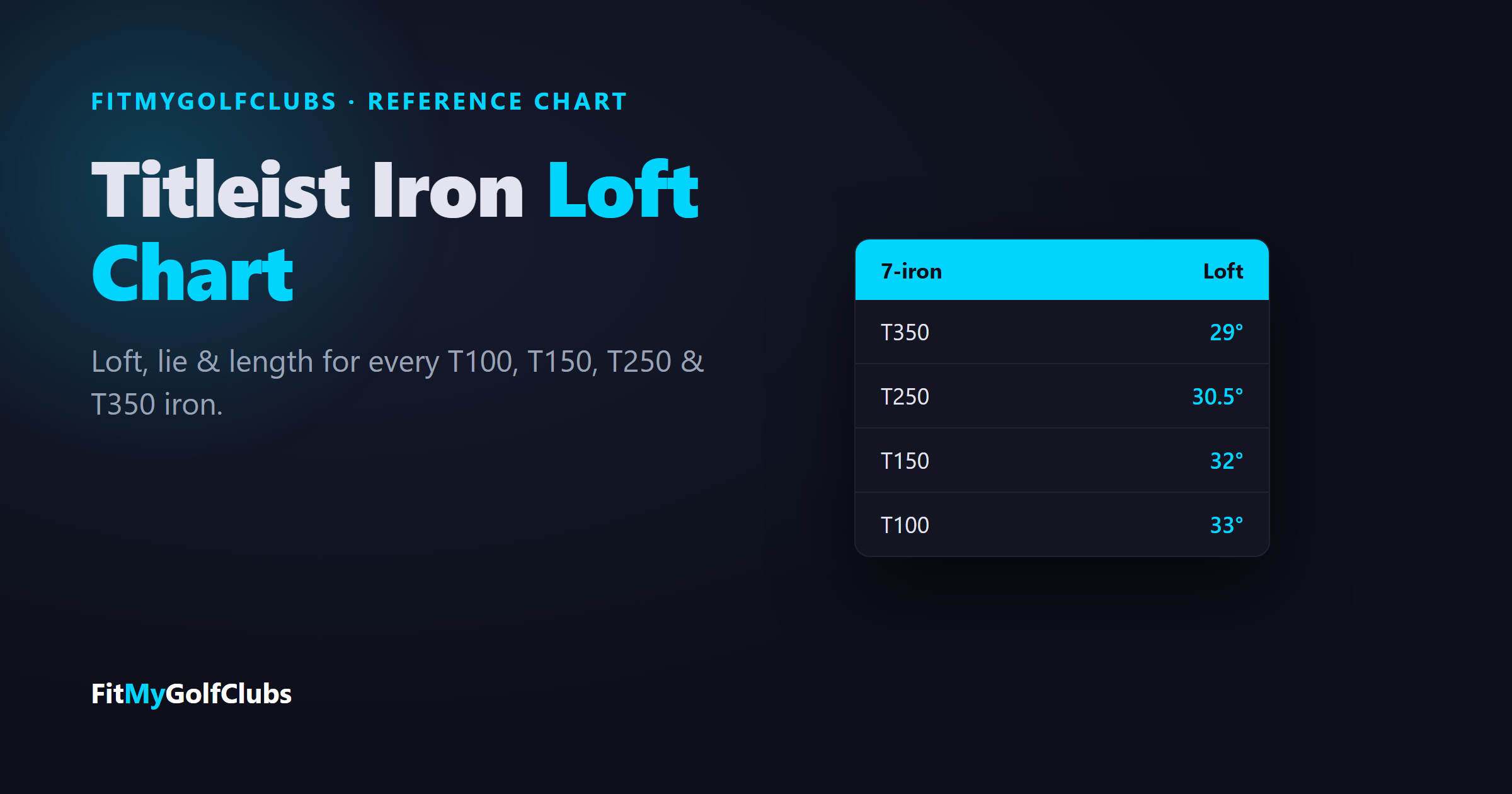
Titleist Iron Loft Chart: T100, T150, T250 & T350 Lofts and Lies
Titleist iron loft chart: loft, lie and length for every T100, T150, T250, T250 Launch Spec and T350 iron, plus the 2023 T200 and what changed.
Golf Club Fitting
September 30, 2026
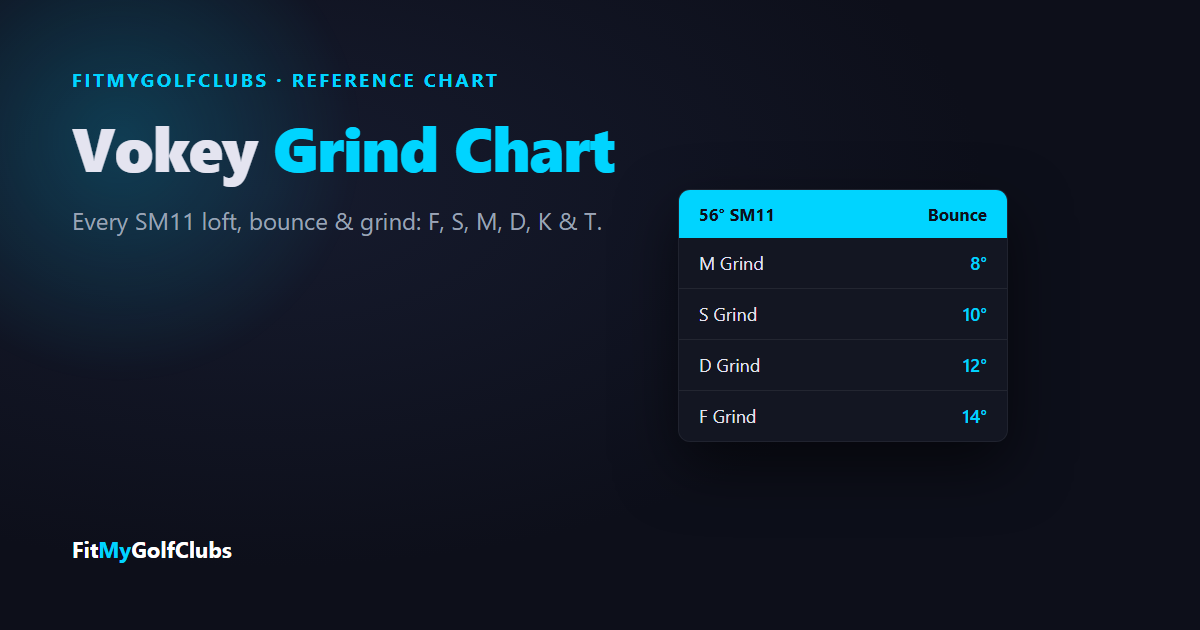
Vokey Grind Chart: Every SM11 Loft, Bounce & Grind
Vokey grind chart: every SM11 loft, bounce and grind (F, S, M, D, K, T), what each grind is for in Vokey's words, and which bounce fits your swing.


© 2026 FitMyGolfClubs. All rights reserved. | Patent Pending
Contact: sean@fitmygolfclubs.com